
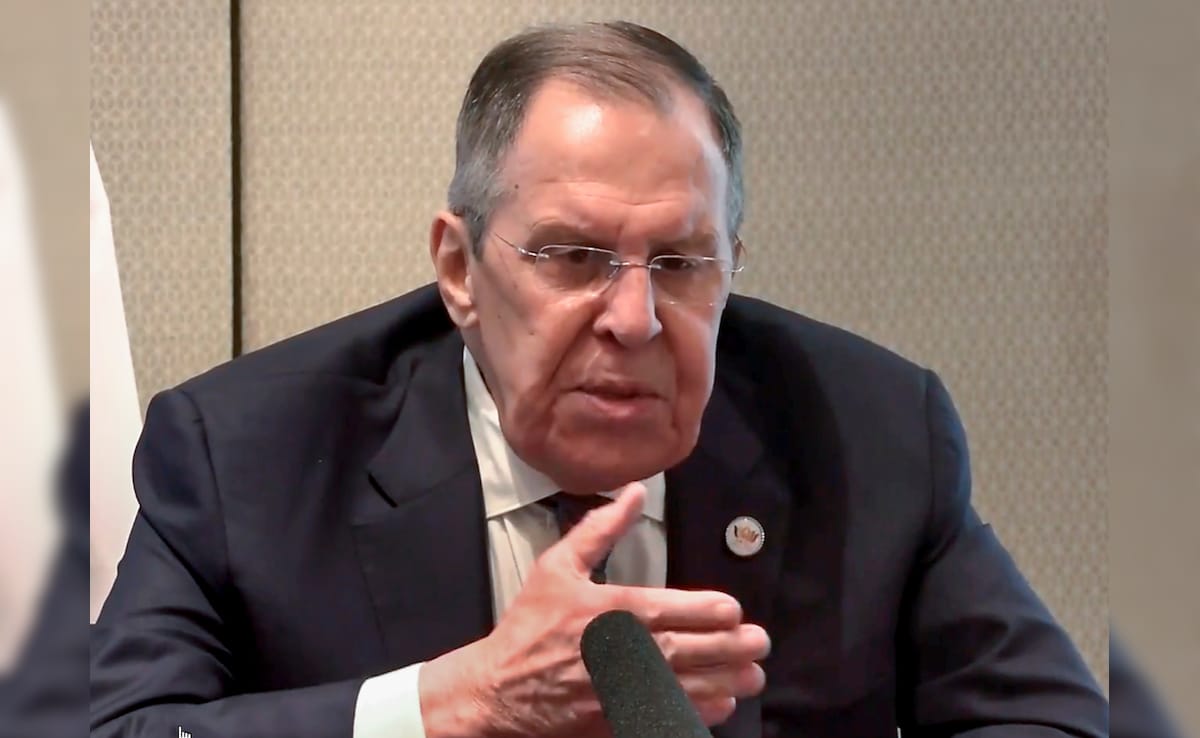
“Can You Leave Us?”: Russian Foreign Minister Sergey Lavrov Confronts Journalist Over Phone Disturbance in New Delhi
NEW DELHI — A routine diplomatic briefing in New Delhi took an unexpected turn of tension this week when Russian Foreign Minister Sergey Lavrov issued a sharp rebuke to a journalist following repeated interruptions. The incident, which occurred during a press interaction, highlighted the simmering frustrations of the veteran diplomat as he navigated a session marked by technical and professional disruptions.
According to reports from the briefing, the proceedings were interrupted multiple times by a member of the press who was allegedly engaged in a telephone conversation while the Foreign Minister was providing answers to official inquiries. The disruptions led to a visible loss of patience from Lavrov, who is known for his uncompromising and often blunt approach to international media engagement.
The confrontation underscored a growing sensitivity regarding media decorum during high-stakes diplomatic visits. As Russia continues to strengthen its ties with various members of the Global South, including India, every interaction in the international spotlight is scrutinized not only for its content but for the conduct of the participants involved.
A Moment of Diplomatic Friction
The atmosphere in the briefing room shifted from formal deliberation to palpable tension as the interruptions persisted. Witnesses noted that the Foreign Minister, who has served in his capacity since 2004, appeared increasingly unamused by the lack of adherence to standard press protocols. Rather than allowing the briefing to proceed in a structured manner, the repeated sounds of a mobile device and the perceived lack of attention from the journalist forced a pause in the official discourse.

During the exchange, Lavrov reportedly directed his frustration toward the individual, questioning the necessity of the interruption and demanding a return to the professional standards expected at a ministerial-level briefing. The intensity of the exchange has since drawn attention to the intersection of personal conduct and the gravity of the geopolitical topics being discussed.
While the specific phrasing of the warning has been subject to various interpretations in circulating media clips, the core of the incident remains clear: a high-ranking official’s demand for respect and order during a session intended for transparent communication.
The Persona of Sergey Lavrov
For those who follow international relations, the reaction from the Russian Foreign Minister is not entirely unexpected. Sergey Lavrov has long cultivated a reputation as a “hardliner” in the diplomatic arena, often using press conferences as a platform to deliver sharp critiques of Western foreign policy and to defend Russia’s strategic interests.

His tenure has been defined by a mastery of diplomatic nuance, often paired with a willingness to engage in direct, sometimes abrasive, verbal combat with journalists who pose adversarial questions. This “unfiltered” style has become a hallmark of Russian diplomacy, serving both to project strength to a domestic audience and to signal defiance to international critics.
In this instance, however, the target of his ire was not a political question, but a breach of professional etiquette. This distinction is significant; it suggests that even within the highly choreographed world of international diplomacy, the fundamental rules of engagement—such as silence and attention during a formal address—remain a point of high sensitivity for state representatives.
Broader Implications for India-Russia Relations
The incident took place against the backdrop of a significant diplomatic visit to India, a nation that maintains a complex and vital relationship with Moscow. As India continues to navigate its role as a leader of the Global South and a key player in the Quad, its relationship with Russia remains a cornerstone of its multi-aligned foreign policy.
Lavrov’s presence in New Delhi is part of a broader effort to consolidate bilateral cooperation in sectors ranging from energy security to defense and technology. For Russia, India represents a critical partner in a multipolar world order, providing a platform to voice perspectives that often diverge from the consensus in Washington or Brussels.
the conduct of such briefings carries weight. They are not merely opportunities for information exchange but are symbolic events that reflect the health and mutual respect inherent in the bilateral relationship. While a journalist’s phone interruption is a minor infraction in most settings, in the context of high-level statecraft, it can become a metaphor for the broader challenges of maintaining order and focus amidst a chaotic global information landscape.
Media Decorum in the Age of Digital Distraction
The New Delhi incident serves as a case study in the challenges facing modern journalism. In an era of constant connectivity, the boundary between a journalist’s professional duties and their personal digital life has become increasingly blurred. For reporters covering fast-moving international summits, the urge to provide real-time updates or communicate with editors via mobile devices is constant.
However, as this event demonstrates, the breach of traditional press room etiquette can have immediate and visible consequences. When a journalist’s device interferes with the ability of a public official to conduct official business, it risks undermining the very transparency that the press is meant to facilitate.
Diplomatic briefings rely on a tacit agreement: the official provides information, and the press provides an attentive, respectful environment for that information to be delivered. When that agreement is broken, the resulting friction can detract from the substantive issues at hand—such as regional security, trade, and geopolitical shifts—and turn the focus toward a spectacle of interpersonal conflict.
Key Takeaways from the New Delhi Briefing
- The Incident: Russian Foreign Minister Sergey Lavrov expressed significant frustration with a journalist whose phone usage repeatedly interrupted a press briefing in New Delhi.
- The Context: The disruption occurred during a high-level diplomatic visit aimed at strengthening bilateral ties between Russia and India.
- Diplomatic Style: The event highlights Lavrov’s long-standing reputation for directness and his low tolerance for perceived disrespect during official functions.
- Professional Standards: The confrontation underscores the ongoing importance of media decorum and the impact of digital distractions on international diplomatic proceedings.
As of this writing, full high-definition recordings and official transcripts of the complete New Delhi briefing are still being processed for public release. Observers will be looking to these records to gain a more comprehensive understanding of the full scope of the exchange and the specific topics Lavrov was addressing at the moment of the interruption.
For more updates on international diplomacy and global affairs, please follow World Today Journal. We encourage you to share your thoughts on the importance of media conduct in the comments below.