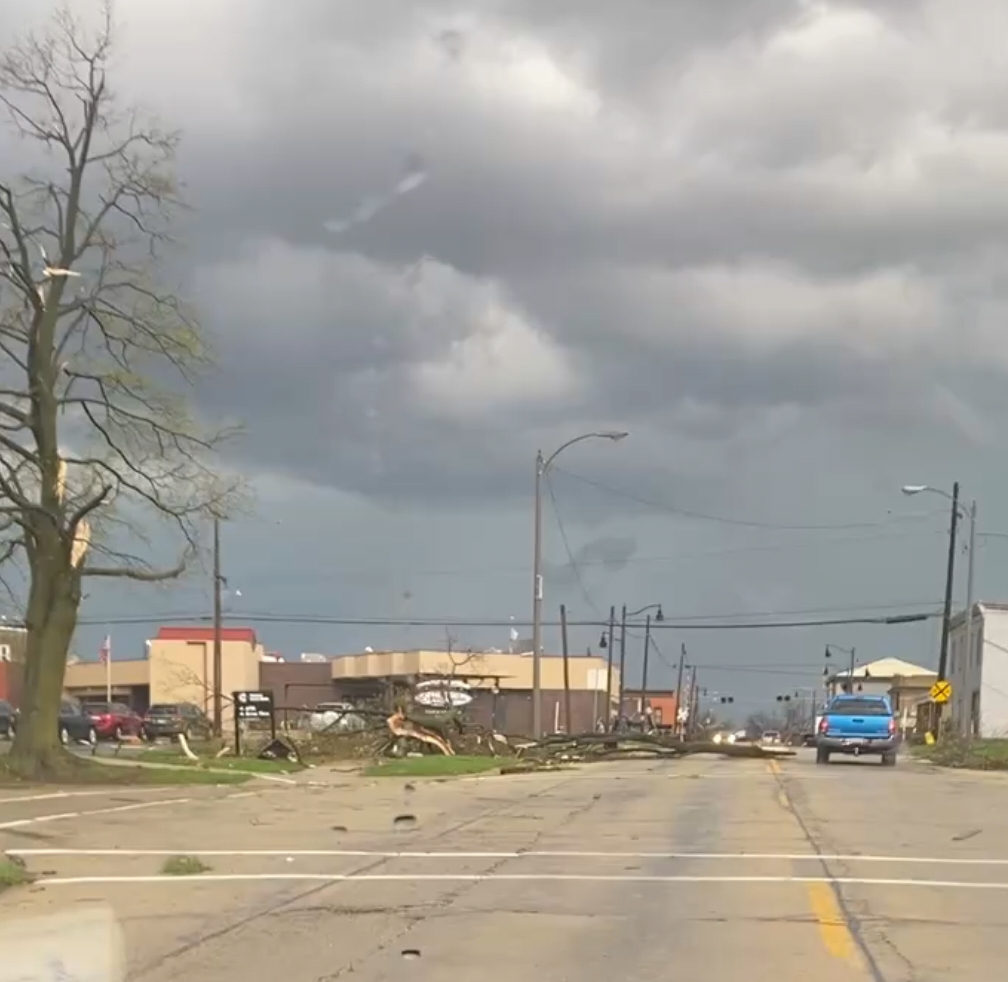
A powerful storm system swept across the Upper Midwest on Friday, bringing destructive winds, large hail and reported tornadoes that damaged homes, downed power lines and disrupted daily life in parts of Illinois, Wisconsin and Minnesota. While the storms caused significant property damage, officials confirmed no fatalities were reported as emergency crews began assessing the impact and clearing debris from rural roads and residential areas.
The National Weather Service issued multiple tornado warnings throughout the day, particularly across Stephenson County in Illinois, Marathon County in Wisconsin and Olmsted County in Minnesota. Survey teams were deployed over the weekend to determine whether the damage resulted from tornadoes or straight-line winds, a standard procedure following severe weather events to improve future forecasting and public safety messaging.
In Lena, Illinois, a village of approximately 2,900 residents located about 117 miles northwest of Chicago, Stephenson County Sheriff Steve Stovall said officials were “extremely fortunate” that the storm did not result in loss of life or serious injury. Speaking to local media, Stovall described widespread damage to homes and infrastructure, including roofs torn off, trees uprooted and power lines downed across the community.
At Lena High School, students participating in a music competition sought shelter when the building shook and the power failed. Fourteen-year-old Leo Zach, a band member, told reporters he helped calm fellow students during the ordeal. After the storm passed, they found blown-out windows in the gym and sections of the roof missing. Similar scenes unfolded across the region, with residents sharing photos and videos online showing damaged garages, scattered debris and crushed fences.
In central Wisconsin, a reported tornado touched down near the communities of Kronenwetter and Ringle, causing structural damage to homes and trapping some residents in basements until they could be freed. Ringle Fire Chief Chris Kielman said emergency crews responded quickly to check on residents and clear blocked roads. Marathon County Sheriff Chad Billeb, with 34 years of service, stated he had not witnessed such widespread destruction in his career, noting that many families would need assistance with repairs and temporary housing.
Meanwhile, in Olmsted County, Minnesota, sheriff’s officials confirmed tornado-related damage across multiple properties in Marion Township, where at least 30 homes were affected. Of those, several sustained significant structural harm, including compromised roofs and shattered windows. Deputies conducted door-to-door wellness checks to ensure residents were safe and had access to essentials like water, heat and communication tools.
The storms were part of a broader pattern of severe weather affecting the Plains and Midwest throughout the spring, a season historically prone to volatile atmospheric conditions due to clashes between warm, moist air from the Gulf of Mexico and cooler, drier air from the north. Meteorologists note that April and May typically see peak tornado activity in the region known as Tornado Alley, which extends from Texas through Oklahoma, Kansas, Nebraska and into the Upper Midwest.
While no deaths were reported from this particular outbreak, the economic toll is expected to be substantial. Early estimates from local officials suggest repair costs could reach into the millions, particularly in rural areas where housing stock may be older and less resistant to high winds. Insurance adjusters began arriving in affected communities by Saturday to start processing claims, with many residents advised to document damage thoroughly before beginning cleanup efforts.
Emergency management agencies in all three states activated their response protocols, coordinating with the Federal Emergency Management Agency (FEMA) as needed. In Wisconsin, Governor Tony Evers declared a state of emergency for Marathon County, unlocking additional resources for debris removal and public infrastructure repairs. Similar declarations were considered in Illinois and Minnesota, though final decisions depended on preliminary damage assessments.
The American Red Cross opened shelters in Lena, Ringle and Rochester, Minnesota, offering temporary lodging, meals and emotional support to displaced residents. Volunteers also distributed comfort kits containing hygiene supplies, blankets and bottled water. Mental health professionals were made available to help individuals cope with the trauma of sudden displacement and property loss, a growing focus in disaster response efforts.
Utility companies reported widespread outages, with thousands of customers losing electricity at the storm’s peak. Crews from Alliant Energy, Xcel Energy and ComEd worked through the night to restore power, prioritizing critical facilities like hospitals and water treatment plants. By Sunday afternoon, most urban areas had service restored, though some remote locations remained without electricity due to downed lines blocked by fallen trees.
Road crews faced significant challenges clearing major routes, especially in Wisconsin where State Highway 29 and County Road X were temporarily impassable due to debris. State transportation departments urged travelers to avoid non-essential trips and check real-time road conditions before departing. In Minnesota, MnDOT reported several county roads closed near Marion Township until trees and power poles could be safely removed.
As recovery continues, officials emphasize the importance of preparedness for future severe weather events. Residents are encouraged to review their emergency plans, identify safe shelter locations in their homes or communities and maintain emergency kits with supplies lasting at least 72 hours. The National Weather Service continues to urge the public to rely on official alerts via NOAA Weather Radio, smartphone alerts and local news outlets rather than unverified social media reports during active weather situations.
The next step in the recovery process involves finalizing damage assessments, which will determine eligibility for state and federal aid programs. FEMA representatives are expected to meet with local officials in the coming week to evaluate whether the damage meets thresholds for individual assistance or public infrastructure grants. Until then, community organizations and volunteer groups remain active in supporting affected families through donation drives and rebuilding efforts.
For ongoing updates, residents can visit the official websites of their county emergency management offices or follow verified social media channels of local law enforcement and weather agencies. Those wishing to contribute to recovery efforts are encouraged to donate through established nonprofits rather than sending unsolicited goods, which can complicate logistics.
What are your thoughts on how communities can better prepare for severe weather seasons? Share your experiences or suggestions in the comments below and consider sharing this article to help spread awareness about storm safety and recovery resources.
Worth a look