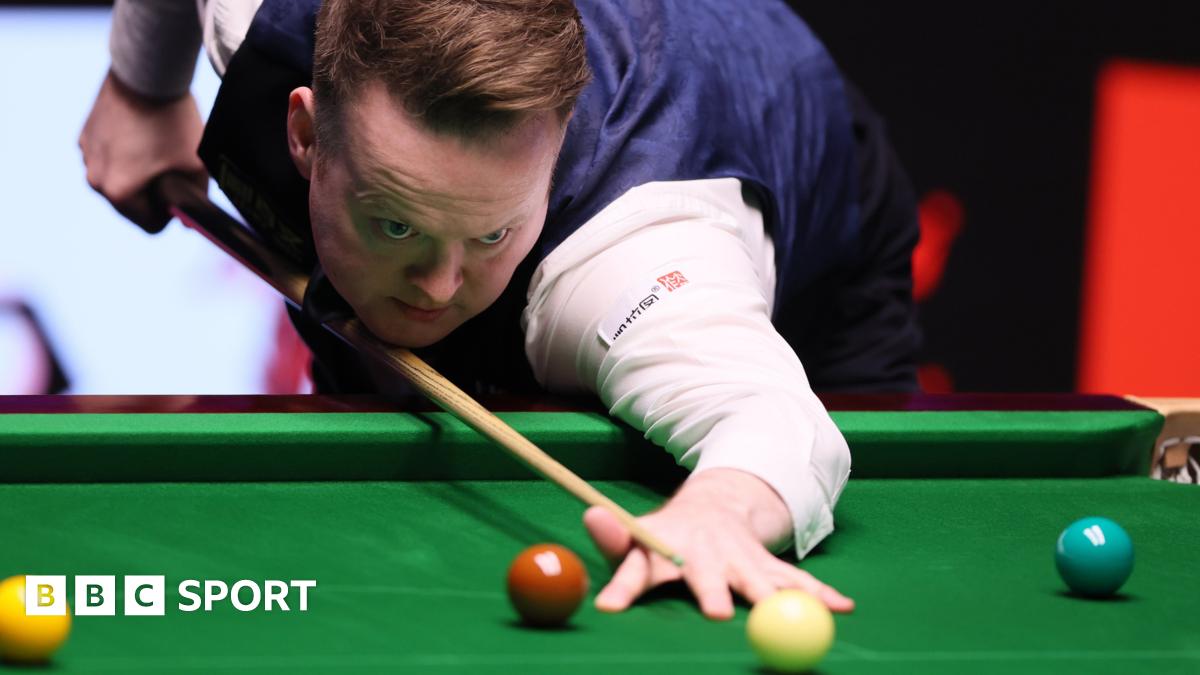
In the high-stakes environment of professional snooker, marginal gains often dictate the difference between a championship run and an early exit. Shaun Murphy, the 2005 World Champion and a perennial contender at the Crucible, has recently drawn significant attention for a tactical shift that has left opponents and spectators alike recalibrating their expectations: his refined approach to the opening break-off shot. For those of us who have followed Murphy’s career since his breakthrough, this adjustment is not merely a stylistic flourish; it is a calculated effort to control the pace of the game from the very first stroke.
The “Shaun Murphy break-off” has become a subject of intense scrutiny within the sport. While the traditional break-off—long considered the gold standard—involves hitting the pack of reds with enough force to ensure the cue ball returns to the baulk cushion, Murphy’s contemporary iteration is arguably more focused on minimizing the potential for an immediate, high-scoring response from his opponent. As he continues to compete at the highest level of the World Snooker Tour, his willingness to experiment with fundamental techniques highlights a player constantly seeking an edge in a sport defined by precision.
The Mechanics of the Modern Break-Off
To understand why Murphy’s new approach is generating buzz, one must first look at the evolution of defensive play in professional snooker. For decades, the objective was simple: hit the pack, leave the white ball safe, and force your opponent into a long, difficult pot. However, as the standard of potting has reached unprecedented heights, players have become increasingly adept at punishing even the slightest inaccuracy. Murphy’s adjustment appears to prioritize a “thinner” contact or a slightly different angle that keeps the cue ball more reliably in the center of the table, reducing the chances of leaving a mid-range red that could lead to a frame-winning break.
This tactical nuance is part of a broader trend where top-tier professionals are moving away from the “textbook” break-off toward variations that offer more control over the distribution of the reds. By controlling the dispersion of the pack, Murphy is essentially dictating the “shape” of the frame before his opponent has even had a chance to settle into their rhythm. It is a psychological game as much as a technical one; by forcing his opponents to navigate a specific, less-than-ideal table layout, he is effectively neutralizing their attacking instincts.
Tactical Evolution in Professional Snooker
The World Snooker Championship remains the ultimate test of a player’s temperament and technical repertoire. Murphy, who has been a consistent presence in the upper echelons of the world rankings, understands that longevity in the sport requires evolution. His willingness to modify his break-off suggests a player who is not content with relying on raw talent alone. In recent seasons, we have seen a shift in how the game is officiated and played, with tighter regulations on conduct and an increased emphasis on governing body standards that push players to maintain focus throughout long-form matches.
Why is this working so well? The answer likely lies in the consistency of the delivery. When a player changes their break-off, there is an inherent risk of leaving the table “open.” However, Murphy’s execution has been remarkably disciplined. By focusing on a specific trajectory that keeps the cue ball away from the side cushions, he minimizes the risk of a “kick” or an awkward bounce. This level of control is essential in an era where the standard of play is so high that one mistake can lead to a century break from an opponent.
Key Takeaways: Why the Break-Off Matters
- Control of the Table: Modern break-offs are designed to limit the opponent’s potting opportunities immediately following the opening shot.
- Psychological Pressure: By changing the expected pattern, a player can disrupt their opponent’s pre-match preparation.
- Risk Management: Murphy’s refined technique reduces the likelihood of “easy” long pots that top players now convert with alarming regularity.
- Adaptability: Even world-class players must continuously update their fundamental skills to stay competitive against younger, aggressive challengers.
A Deeper Look at Murphy’s Approach
Shaun Murphy has always been a student of the game. His transition from a young prodigy to a veteran statesman has been marked by a thoughtful analysis of how the table reacts under pressure. While some critics argue that the break-off is a minor component of a professional’s arsenal, the reality is that in a best-of-19 or best-of-25 frame match, winning the tactical battle in the first few minutes can save significant energy for the later stages of the contest. Every frame won through superior defensive positioning is a frame where the player does not have to rely on high-risk potting.

As we look ahead to the remainder of the season, it will be fascinating to see if other players begin to adopt similar techniques. Snooker is a copycat sport; when a top player finds success with a specific modification, it often ripples through the tour. Whether Murphy’s secret lies in his grip, his stance, or his specific point of contact on the cue ball, he has found a method that works for his game. For the fans, it provides another layer of intrigue to watch as the players line up to take that first shot of the match.
The next major checkpoint for Murphy and his peers will be the upcoming ranking events on the World Snooker Tour calendar, where consistency will be the key to climbing the rankings. As we continue to track these developments, we invite you to join the conversation. Have you noticed a change in the way the top players are approaching the table this season? Share your thoughts in the comments section below, and stay tuned to World Today Journal for our ongoing analysis of the professional snooker circuit.
Worth a look