
In the modern era of hyper-connectivity, our smartphones serve as the central hub for our personal and professional lives. However, this convenience often comes with a trade-off: security. A common question I receive from readers at World Today Journal concerns the risks associated with leaving Bluetooth active at all times. While it may seem like a minor setting, understanding the implications of keeping your device constantly discoverable is a fundamental aspect of maintaining your digital hygiene.
The core concern regarding Bluetooth security revolves around the potential for unauthorized access, a concept often referred to as “Bluejacking” or “Bluesnarfing.” While these terms sound like remnants of early 2000s tech jargon, the underlying mechanics remain relevant. When your device is set to “discoverable” mode, it broadcasts signals that can, in theory, be intercepted by bad actors in close proximity. According to the Cybersecurity and Infrastructure Security Agency (CISA), maintaining awareness of your wireless environment—including Bluetooth and Wi-Fi—is a critical step in protecting sensitive information from unauthorized interception.
Understanding Bluetooth Vulnerabilities and Risk Mitigation
Bluetooth technology relies on short-range radio waves to facilitate communication between devices, such as headphones, smartwatches, and car infotainment systems. The security of these connections has evolved significantly since the technology’s inception. Modern iterations, such as Bluetooth Low Energy (BLE), incorporate sophisticated encryption protocols to prevent eavesdropping. However, no protocol is entirely immune to sophisticated exploitation if the device is running outdated firmware or is left in an insecure state.
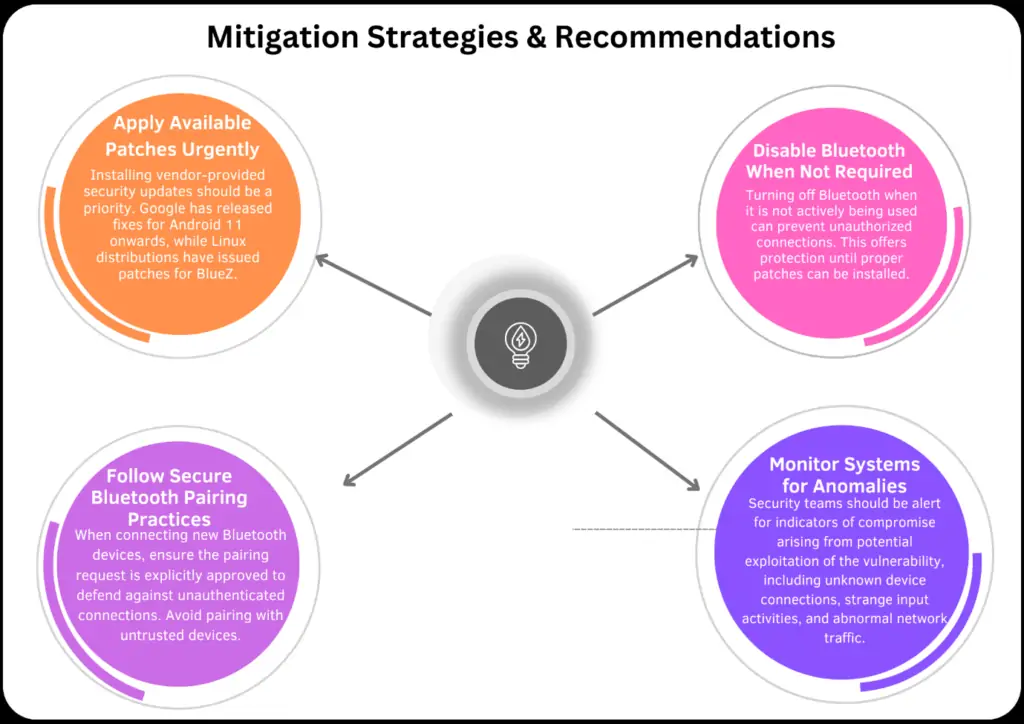
The risk is not necessarily that your entire phone will be “hacked” simply by walking down the street with Bluetooth on. Rather, the danger lies in the exposure of your device’s unique identifier and the potential for pairing requests from malicious sources. Experts consistently emphasize that the most effective way to minimize the attack surface is to disable Bluetooth when it is not in active use. This is particularly important in crowded public spaces, such as airports or transit hubs, where the density of unknown devices increases the likelihood of encountering a malicious node.
Beyond security, there is the practical matter of battery optimization. While modern Bluetooth implementations are highly efficient, they still require power to maintain an active scan for nearby peripherals. Turning off Bluetooth when you are not actively using connected devices can contribute to a marginal increase in daily battery longevity, a factor that remains a priority for users of older hardware or those with high-intensity usage patterns.
Best Practices for Smartphone Security
To ensure your smartphone remains a secure gateway to your data, consider adopting a proactive approach to your device’s connectivity settings. The following steps are recommended by security professionals to safeguard your personal information:
- Toggle Off When Not Needed: If you are not actively using a Bluetooth accessory, disable the feature. This effectively closes the door to unsolicited connection attempts.
- Avoid Public Pairing: Never accept pairing requests from unknown devices in public locations. If a prompt appears on your screen unexpectedly, deny it immediately.
- Keep Software Updated: Smartphone manufacturers frequently release security patches that address vulnerabilities in wireless stacks. Ensure your device is running the latest operating system version, as confirmed by the National Institute of Standards and Technology (NIST), which highlights that regular updates are the primary defense against known exploits.
- Review Connected Devices: Periodically audit the list of “trusted” or “paired” devices in your Bluetooth settings. Remove any hardware you no longer use or do not recognize.
The Evolution of Wireless Security
The industry is moving toward more robust authentication methods to mitigate the risks associated with legacy Bluetooth connections. Newer standards require explicit user interaction for pairing, which drastically reduces the window of opportunity for automated attacks. Despite these advancements, the human element remains the most significant variable in the security equation. User vigilance—such as being mindful of where and when you leave your device discoverable—is just as important as the encryption standards developed by the Bluetooth Special Interest Group (SIG).
As we navigate an increasingly wireless future, the goal is not to abandon the convenience of our peripherals, but to use them with an informed understanding of how they interface with the world around us. By treating Bluetooth as a tool to be toggled rather than a permanent state, you can enjoy the benefits of a connected ecosystem without compromising your digital privacy.
We will continue to monitor updates from major mobile operating system developers regarding new security features and protocols designed to harden wireless connectivity. If you have questions about your specific device’s security settings or recent advisories, please feel free to share your thoughts in the comments section below.
Keep reading