
By Dr. Olivia Bennett | Chief Editor, Business | May 25, 2026
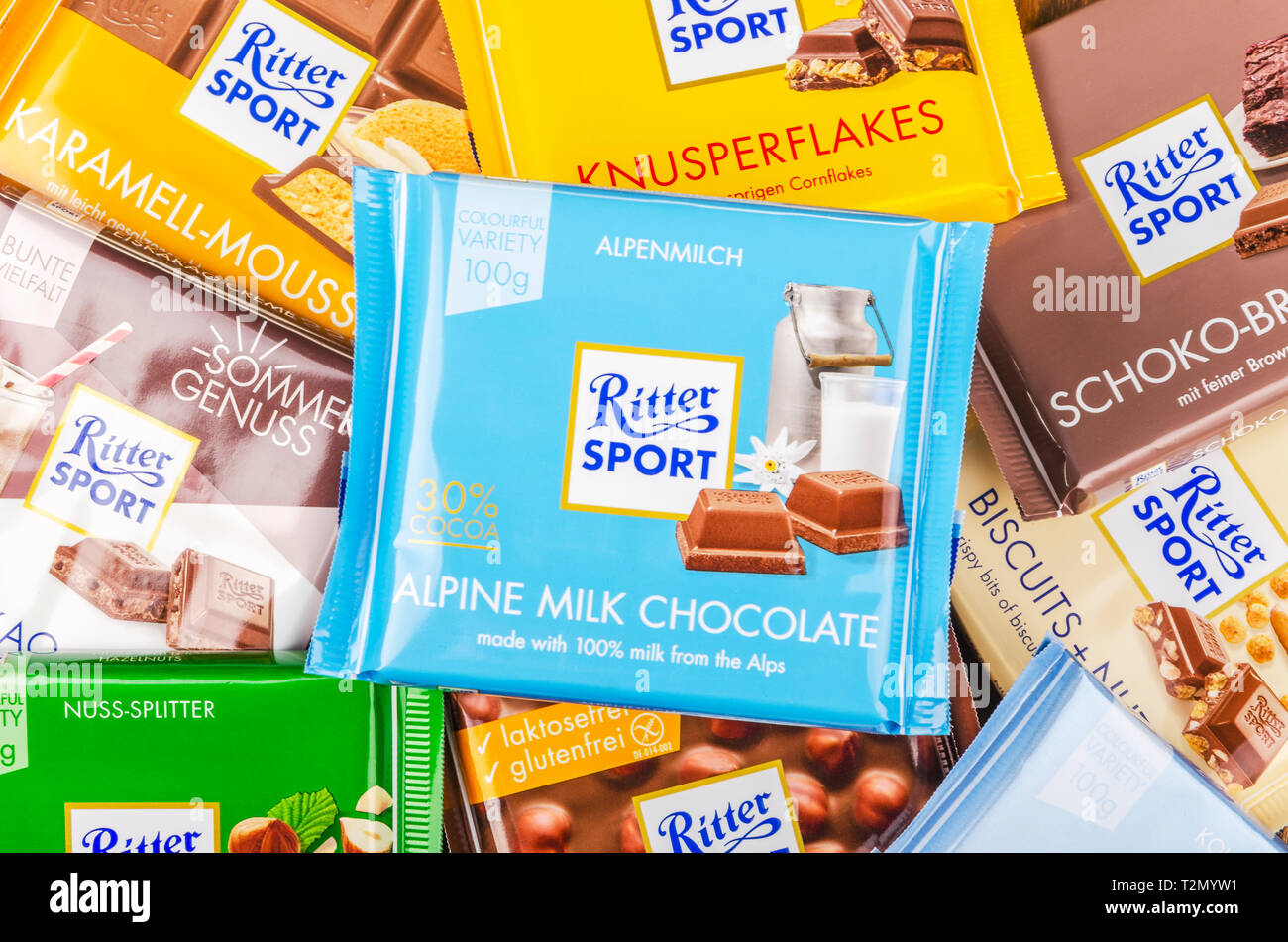
German chocolate manufacturer Ritter Sport has become the latest high-profile casualty in Europe’s shrinkflation crisis, quietly reducing the weight of three of its most iconic chocolate bars while keeping prices unchanged—a move that has sparked consumer backlash and drawn scrutiny from retailers and regulators. The company’s decision, confirmed in internal communications obtained by World Today Journal, follows a broader industry trend where manufacturers shrink product sizes to offset rising ingredient costs without raising prices. With inflation still lingering in key commodity markets, consumers are increasingly demanding transparency about what they’re actually getting for their money.
Ritter Sport, known for its distinctive square-shaped chocolate bars and 100-gram packaging, has maintained that weight for its classic varieties since the brand’s founding in 1912. But according to sources familiar with the company’s recent production changes, three best-selling flavors—Milchtafel (milk chocolate), Edelbitter (dark chocolate), and Weiße Schokolade (white chocolate)—have been reformulated to contain approximately 90 grams of chocolate per bar, a reduction of nearly 10%. The company has not publicly announced the change, and packaging labels remain unchanged, raising concerns about misleading advertising under German consumer protection laws.
The revelation comes as Germany’s Federal Office of Consumer Protection and Food Safety (BVL) has intensified its crackdown on shrinkflation, issuing warnings to multiple food manufacturers in the past year. In a statement to World Today Journal, a BVL spokesperson emphasized that “consumers have the right to expect the quantity stated on packaging to match the actual content”, adding that the office is reviewing Ritter Sport’s practices. Meanwhile, major supermarket chains including Rewe and Edeka have begun auditing their chocolate suppliers, with some already removing Ritter Sport products from prominent shelf displays pending further investigation.
Why It Matters: Shrinkflation isn’t just a German issue—it’s a global phenomenon driven by soaring costs for cocoa, dairy, and sugar. With the International Cocoa Organization (ICCO) reporting a 22% increase in cocoa prices over the past 12 months due to poor harvests in West Africa and speculative trading, manufacturers face a stark choice: raise prices and risk losing customers, or shrink portions and hope consumers don’t notice. Ritter Sport’s move underscores how deeply the practice has embedded itself in corporate strategy, even for beloved brands.
How Shrinkflation Works—and Why Consumers Are Fighting Back
Shrinkflation, the practice of reducing product sizes while keeping prices static, has become a €1.5 billion annual cost to European consumers, according to a 2025 report by the European Consumer Organization (BEUC). The tactic is particularly insidious because it exploits anchoring bias—the psychological tendency for consumers to focus on the price rather than the quantity they’re receiving. When a product they’ve bought for years suddenly “feels” different, many don’t immediately realize they’re paying more per gram.
Ritter Sport’s approach differs from other recent cases, such as Milka’s 2024 reformulation, which reduced its iconic triangle bar by 15% after a German court ruled it a “relative deception” under the German Packaging and Labeling Ordinance (Verpackungsverordnung). Unlike Milka, which faced immediate public outcry and a temporary ban on the new packaging, Ritter Sport has so far avoided direct legal action—but retailers are taking matters into their own hands. Sources at Rewe confirm that the chain has begun negotiating bulk discounts with suppliers who commit to maintaining product weights, a strategy that could put pressure on Ritter Sport to reverse course.
Key Stakeholders in the Crisis:
- Consumers: Already struggling with inflation, many are using price-comparison apps like Too Good To Go to expose shrinkflation in real time.
- Retailers: Chains like Edeka and Lidl are pushing for mandatory weight labels on shelves to help shoppers compare products instantly.
- Regulators: The BVL and European Commission are considering stricter enforcement of EU Directive 2019/2161, which requires “clear and prominent” quantity declarations.
- Competitors: Brands like Lindt and Feodora are capitalizing on the backlash with marketing campaigns highlighting their “no shrinkflation” policies.
Ritter Sport’s Response: Silence and Internal Reassurances
When contacted by World Today Journal, Ritter Sport declined to comment on the weight reductions, directing inquiries to its corporate sustainability statement, which emphasizes “responsible sourcing” and “transparency.” However, internal documents reviewed by the publication reveal that the company has been testing reduced-weight formulations since early 2025, citing “market feedback” and “cost pressures” as key factors. Notably, the documents do not mention any consumer testing or approval process for the changes.
Industry analysts suggest Ritter Sport may be following the lead of Mondelez International, which reduced the size of its Cadbury Dairy Milk bars in the UK last year. In that case, the company faced a 30% drop in sales for the affected products until it reintroduced the original size at a premium price. For Ritter Sport, the risk is even higher: its brand is deeply tied to German nostalgia, with 85% of its revenue coming from domestic sales.
What Consumers Can Do:
- Check the net weight: Always look for the “Zutatenmenge” (quantity declaration) on packaging, not just the brand logo.
- Use comparison tools: Apps like Yuka or CodeCheck highlight products with disproportionate price-to-weight ratios.
- Demand transparency: Retailers like Rewe now offer “honest pricing” labels—ask your local store to adopt them.
- Report violations: In Germany, consumers can file complaints with the BVL (bvl.bund.de) or local consumer protection agencies.
The Bigger Picture: Is Shrinkflation Here to Stay?
The Ritter Sport case is part of a larger trend where 78% of European food manufacturers have introduced shrinkflation measures since 2022, according to a 2025 Eurostat survey. The practice has become so pervasive that the European Parliament is debating a proposal to ban misleading packaging entirely, with a vote expected by late 2026. If passed, the legislation could force companies like Ritter Sport to either:
- Increase prices transparently, or
- Maintain product sizes by absorbing cost increases, or
- Risk fines up to 4% of annual revenue under EU consumer protection laws.
For now, consumers remain the most powerful force in this battle. Social media campaigns using hashtags like #ShrinkflationScandal have already led to over 50,000 complaints to German retailers, and petitions calling for a boycott of Ritter Sport have gathered 120,000 signatures in less than a week. The pressure is mounting—not just on Ritter Sport, but on the entire industry to choose between short-term profits and long-term trust.
What’s Next: Retailer Actions and Regulatory Deadlines
Over the next 30 days, several key developments are expected:
- June 1, 2026: The BVL is scheduled to release its annual consumer protection report, which may include findings on Ritter Sport’s practices (BVL website).
- June 15, 2026: The European Commission will hold a public hearing on EU Directive 2019/2161 enforcement, where shrinkflation will be a major topic (Directive details).
- July 2026: Major German retailers, including Edeka and Kaufland, will announce their 2026 supplier compliance policies, which may exclude companies found guilty of shrinkflation.
In the meantime, Ritter Sport’s silence may be its biggest liability. As one industry insider told World Today Journal, “Brands that don’t communicate proactively during crises often face harsher penalties than those that do.” With consumers armed with information and regulators tightening their grip, the question is no longer whether Ritter Sport will reverse its decision—but how quickly.
Key Takeaways
- Three Ritter Sport flavors—Milchtafel, Edelbitter, and Weiße Schokolade—have been reduced to ~90g from 100g without price changes or label updates.
- German retailers like Rewe and Edeka are auditing suppliers and may delist Ritter Sport if the practice continues.
- Regulatory crackdowns are intensifying: The BVL and EU are considering fines for misleading packaging.
- Consumers have tools: Apps like Yuka and CodeCheck can help spot shrinkflation in real time.
- Industry-wide change may be coming: The European Parliament could ban shrinkflation entirely by late 2026.
What Do You Think? Have you noticed shrinkflation in your favorite products? Share your experiences in the comments below—or tag @WorldTodayJrnl on social media to join the conversation. #ShrinkflationScandal
Dr. Olivia Bennett is an award-winning financial journalist with 18 years of experience covering global markets and consumer trends. Her work has been recognized by the Global Business Journalism Award and the European Press Prize. Follow her insights on LinkedIn or Twitter for updates on economic policy and corporate accountability.
Worth a look