Navigating Government Shutdowns: A Deep Dive into Political Standoffs and Their Consequences
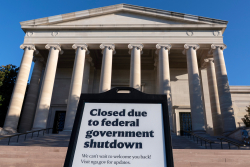
The recent resolution to a prolonged governmental closure, finalized with President Trump‘s signature on a funding bill, brings to the forefront a recurring pattern in American politics: the weaponization of essential government functions. This event,concluding what was historically the longest shutdown on record,immediately prompts analysis – who emerged victorious,who suffered setbacks,and which political faction will bear the brunt of public disapproval? However,focusing solely on winners and losers obscures a more fundamental issue: the increasing tendency of both major parties to prioritize assigning blame over collaboratively seeking effective solutions. This cyclical behavior reveals a deep-seated dysfunction within Washington, D.C., and its impact extends far beyond the political arena, directly affecting the lives of ordinary citizens.
The Anatomy of a Shutdown: How Do They Happen?
Government shutdowns aren’t spontaneous occurrences; they are the result of a failure by Congress to pass appropriations bills – the legislation that authorizes federal agencies to spend money. The Constitution grants Congress the
Typically, this process unfolds annually, with 12 seperate appropriations bills covering different areas of government. When these bills aren’t enacted by the start of the fiscal year (October 1st),a shutdown looms. power of the purse
, meaning it controls federal spending.
The impasse usually arises from disagreements over spending levels, policy riders (provisions attached to appropriations bills), or broader ideological clashes. In the case of the recent shutdown, disputes centered around funding for a border wall, a key promise made during the presidential campaign. According to a November 2024 report by the Congressional Research Service,the number of government shutdowns has increased significantly in recent decades,correlating with heightened partisan polarization. This trend suggests that the willingness to compromise has diminished, making shutdowns a more frequent occurrence.
The Ripple Effects: Who Feels the Impact?
The consequences of a government shutdown are far-reaching and effect a diverse range of individuals and sectors. While some government functions deemed essential – such as national security and air traffic control – continue, hundreds of thousands of federal employees are furloughed, meaning they are temporarily placed on unpaid leave.
Here’s a breakdown of the key impacts:
* Federal Employees: Approximately 800,000 federal workers were affected by the recent shutdown, facing financial hardship and uncertainty. Many struggled to meet basic expenses, relying on unemployment benefits or charitable assistance.
* Government Services: National parks closed, passport processing slowed, and various regulatory agencies operated with reduced staff. This disrupted travel plans, delayed approvals, and hindered economic activity.
* Economic Impact: Shutdowns negatively impact the economy. A January 2025 analysis by the Office of Management and budget estimated that the 35-day shutdown reduced real GDP growth by $3 billion. Businesses reliant on government contracts or services also experienced disruptions.
* Public Trust: Repeated shutdowns erode public trust in government and exacerbate political cynicism. A Gallup poll conducted in February 2025 revealed that only 20% of Americans express confidence in Congress, a historic low.
| Impact Area | Short-Term Effects | Long-Term Effects |
|---|---|---|
| Federal Employees | Pay delays, furlough, financial strain | Decreased morale, potential talent loss |
| Government Services | Disruptions, delays, reduced access | Erosion of public trust, backlog of cases |
| Economy | Reduced GDP, business disruptions | Investment uncertainty, potential credit rating impacts |
Beyond Blame: Addressing the Root Causes of Shutdowns
The cycle of shutdowns isn’t simply a matter of political brinkmanship; it’s a symptom of deeper systemic issues. One key factor is the increasingly rigid budget process. The Budget Control Act of 2011, intended to curb spending, introduced automatic spending cuts (sequestration) that exacerbated budgetary pressures and contributed to future impasses.
Furthermore, the rise of partisan media and the echo chambers it creates have intensified ideological polarization, making compromise more difficult. Politicians are often incentivized to cater to their
Keep reading
- Max Miller Faces Calls to Quit Amid Domestic Abuse Allegations and Trump Concerns
- BE:FIRST Performs at Street Dance Event in Arizona
- California Top-Two Primaries: Strategic Impact on Congressional Races (world-today-news.com)
- US Senate Pursues Bipartisan Bill to Avoid Shutdown Through Dec. 11 (time.news)