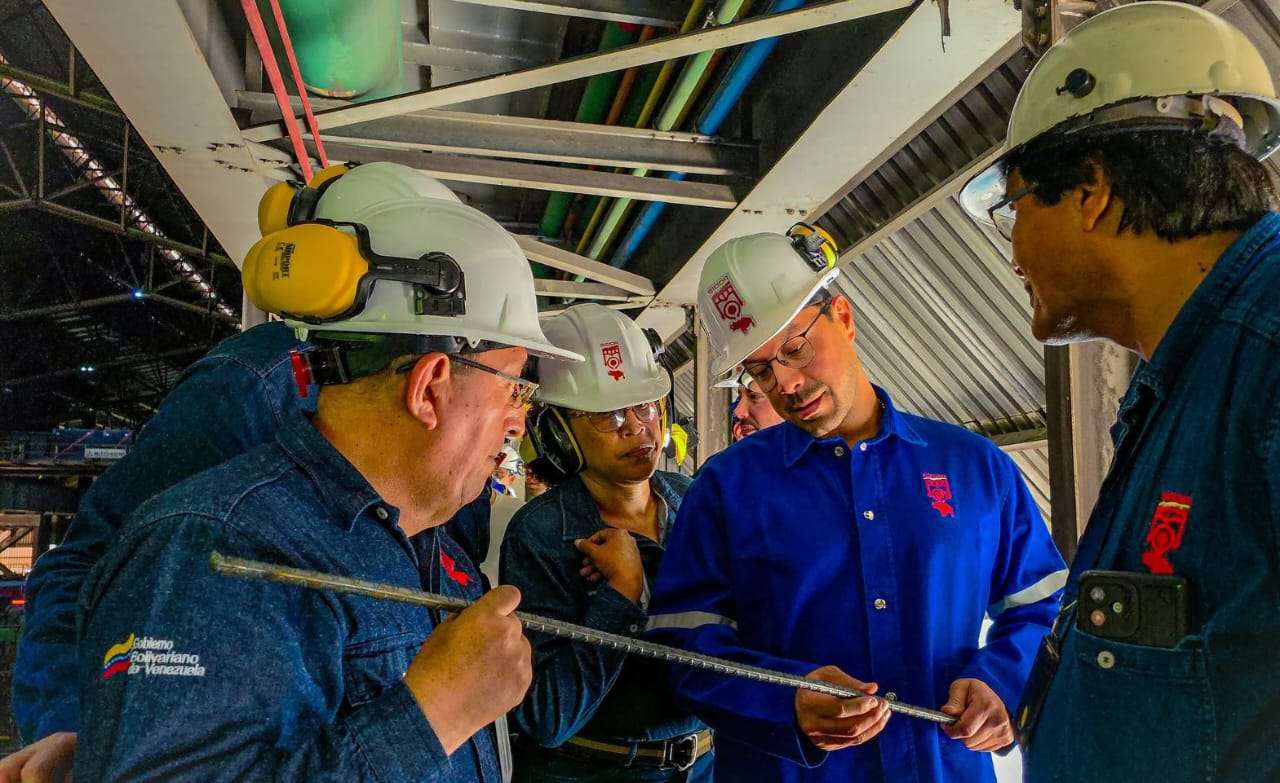
Venezuelan authorities are evaluating the production capacity of Sidor, the state-owned steel company, to supply materials for reconstruction efforts following recent seismic activity in the region. The initiative aims to utilize domestic industrial output to repair infrastructure damaged by earthquakes, reducing reliance on imported construction materials according to reports from local outlets including Diario Primicia.
The Siderúrgica del Orinoco (Sidor), based in Ciudad Guayana, remains the primary producer of long products and flat steel in Venezuela. The current assessment focuses on whether the plant can scale operations to meet the urgent demand for reinforced steel bars and structural beams required for seismic retrofitting and the rebuilding of residential and public works. This move comes as the Venezuelan government seeks to stabilize domestic supply chains for critical infrastructure projects.
The push for increased production at Sidor is tied to the broader necessity of addressing structural vulnerabilities across various states that have experienced seismic tremors. By prioritizing the production of steel specifically graded for construction, the government intends to accelerate the recovery of affected urban centers and rural hubs.
Sidor’s Role in Infrastructure Recovery
Sidor operates as a strategic asset for the Venezuelan state, managing the production of steel that serves as the backbone for the nation’s construction sector. The evaluation of its current output is critical because the availability of high-grade steel directly dictates the speed at which damaged bridges, hospitals, and housing units can be restored to safety standards.
Industry analysts note that the capacity of Sidor has fluctuated over the last decade due to economic challenges and maintenance backlogs. The current government review is designed to identify specific bottlenecks in the production line that may hinder the delivery of materials to seismic zones. According to reports, the focus is on optimizing the blast furnaces and rolling mills to ensure a steady flow of structural steel.
The strategic importance of this domestic production is highlighted by the volatility of international steel prices and the logistical hurdles associated with importing heavy materials. By leveraging Sidor, the administration aims to lower the cost of reconstruction and ensure that materials meet the specific technical requirements for earthquake-resistant building codes.
Impact of Seismic Activity on Venezuelan Construction
Venezuela is situated in a seismically active zone, with significant fault lines running through the northern and western regions. Recent tremors have underscored the fragility of older infrastructure, which often lacks the reinforced steel necessary to withstand high-magnitude events. The demand for new, high-tensile steel is therefore not just a matter of replacement but of upgrading existing structures to prevent future collapses.
The reconstruction process involves two primary phases: the immediate repair of critical lifelines—such as water mains and electricity grids—and the long-term rebuilding of residential complexes. Both phases require massive quantities of steel. The evaluation at Sidor is intended to align the company’s production schedule with the priority list of the Ministry of Public Works and Housing.
Local reports indicate that the coordination between the state steelworks and regional governors is essential to ensure that materials are distributed equitably to the most affected areas. This logistical chain includes the transport of heavy steel from the industrial hub of Bolívar state to the northern coastal regions and the Andean highlands, where seismic risks are most acute.
Challenges to Steel Production Scaling
While the intent to use Sidor for reconstruction is clear, the company faces several operational hurdles. The Venezuelan steel industry has struggled with consistent access to raw materials and the need for technological upgrades to its aging machinery. For Sidor to meet the projected demand for reconstruction, it must maintain a stable energy supply and a consistent flow of iron ore and coal.
The evaluation process includes a review of the workforce and technical expertise available at the plant. Ensuring that the steel produced meets international safety standards for seismic resistance requires precise metallurgical control. Experts suggest that any failure in quality control could lead to further structural risks in the rebuilt infrastructure.
Furthermore, the financial viability of scaling production is under scrutiny. The government must balance the cost of increasing Sidor’s output against the budget allocated for disaster recovery. This involves assessing whether the plant can operate at a loss for the sake of national security or if a new pricing model for “reconstruction steel” is necessary.
Economic Implications for the Domestic Market
A successful increase in Sidor’s production could have a ripple effect on the broader Venezuelan economy. By providing a reliable source of cheap, domestic steel, the government could stimulate the local construction industry, creating jobs for engineers, architects, and laborers involved in the rebuilding process.
Conversely, if Sidor cannot meet the demand, the government will be forced to turn to international markets, which would deplete foreign currency reserves and potentially slow the pace of reconstruction. The ability to produce steel internally is viewed as a matter of economic sovereignty and resilience in the face of natural disasters.
The current assessment is also seen as a test of the “industrial recovery” plans promoted by the state. If Sidor can successfully pivot to support the reconstruction effort, it may serve as a blueprint for other state-owned enterprises to align their production with urgent national needs.
The next phase of this process involves the publication of the formal capacity report by Sidor’s management, which will determine the exact tonnage of steel that can be diverted to reconstruction projects in the coming quarter. This report will dictate the timeline for the first wave of major structural repairs in the affected regions.
Readers are encouraged to share this report and provide comments on the intersection of industrial capacity and disaster recovery in the comments section below.
Keep reading