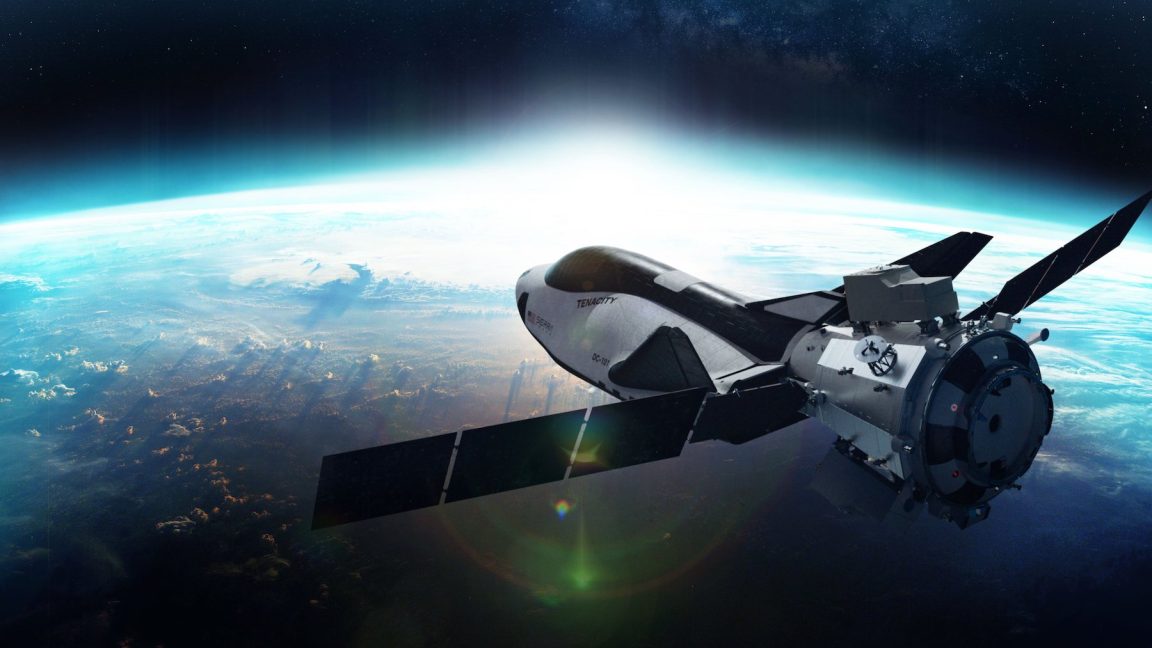
Dream Chaser’s Shift in Focus: From ISS Resupply to Defense Tech and the Future of Space Transportation
The future of Sierra Space’s Dream Chaser spacecraft is undergoing a significant pivot. Initially designed as a versatile resupply vehicle for the International Space Station (ISS), Dream Chaser is now strategically repositioning itself to capture a growing share of the burgeoning defense technology market. This shift, announced recently by NASA and Sierra Space, raises questions about the spacecraft’s original mission and its potential role in the evolving landscape of low-Earth orbit (LEO). but what does this change really mean for the future of space transportation, and what hurdles remain for Dream Chaser to overcome?
The End of Guaranteed ISS missions
For years, dream Chaser was slated to deliver critical cargo to the ISS under NASA’s Commercial Resupply Services 2 (CRS-2) contract. However, a recent proclamation from NASA indicates the agency is no longer bound by a specific number of resupply missions. This doesn’t necessarily signal a complete abandonment of ISS support, but it removes a crucial guarantee for sierra Space.
Sierra Space frames this change as a positive, offering increased “adaptability” as they pursue contracts within the national defense sector. Fatih Ozmen, executive chair at Sierra Space, stated that the transition allows Dream Chaser to meet the needs of “diverse mission profiles, including emerging and existential threats and national security priorities.” This signals a clear intention to leverage the spacecraft’s unique capabilities – its runway landing and reusable design - for government and potentially classified missions.
Propulsion System Certification: The Lingering Challenge
While the shift towards defense contracts appears strategic, a key obstacle remains: certification of Dream Chaser’s propulsion system. Sources indicate NASA has yet to approve the spacecraft’s complex engine array. Dream Chaser utilizes over two dozen small rocket engines, each capable of operating at varying thrust levels for precise orbital maneuvers. This sophisticated system, while offering extraordinary control, requires rigorous testing and validation before being cleared for approach to the ISS – a highly sensitive surroundings.
The certification process is critical. Without it, the spacecraft cannot safely dock with the station, effectively sidelining its original resupply purpose.This delay underscores the complexities of spaceflight and the stringent safety standards required for crewed and cargo missions. learn more about NASA’s safety standards for spacecraft.
berger’s Law and the Revised Timeline
Sierra Space is currently targeting a “late 2026” debut for Dream Chaser. Though, as space journalist Eric Berger aptly points out, this timeline is highly likely subject to what he calls “Berger’s Law” – a humorous yet accurate observation that launch dates tend to slip further into the future. Realistically, a launch no earlier than 2027 is more probable.
This delay has significant implications. With the ISS scheduled for deorbiting in 2030, and with SpaceX’s Dragon and Northrop Grumman’s Cygnus already providing robust resupply capabilities, the window for Dream Chaser to fulfill its initial purpose is rapidly closing. According to a recent report by Space Foundation, the global space economy is projected to reach $1.7 trillion by 2033, with a significant portion dedicated to space logistics and transportation. Competition in this sector is fierce, and delays can be fatal. https://www.spacefoundation.org/space-economy/
The future: Commercial space Stations and Defense Applications
Despite the challenges, Dream Chaser’s future isn’t necessarily bleak. The emergence of commercial space stations in LEO presents a potential new market. Companies like blue Origin (Orbital Reef) and Nanoracks (Starlab) are developing private platforms that will require reliable and versatile transportation services.
However, to succeed in this competitive landscape, Sierra Space must demonstrate Dream Chaser’s reliability, frequency of flights, and cost-effectiveness. Competing with established players like SpaceX and Northrop Grumman will require significant innovation and efficient operations. The focus on defense applications offers a potentially lucrative pathway, leveraging the spacecraft’s unique capabilities for national security missions. this could include rapid deployment of assets, on-orbit servicing, and potentially even space domain awareness.
What Makes Dream Chaser Different?
Dream Chaser stands out from traditional capsule-based spacecraft due to its unique winged design. This allows for a gentle runway landing, similar to the Space Shuttle, reducing stress on cargo and potentially enabling the return of delicate scientific experiments. Its reusability
Related reading