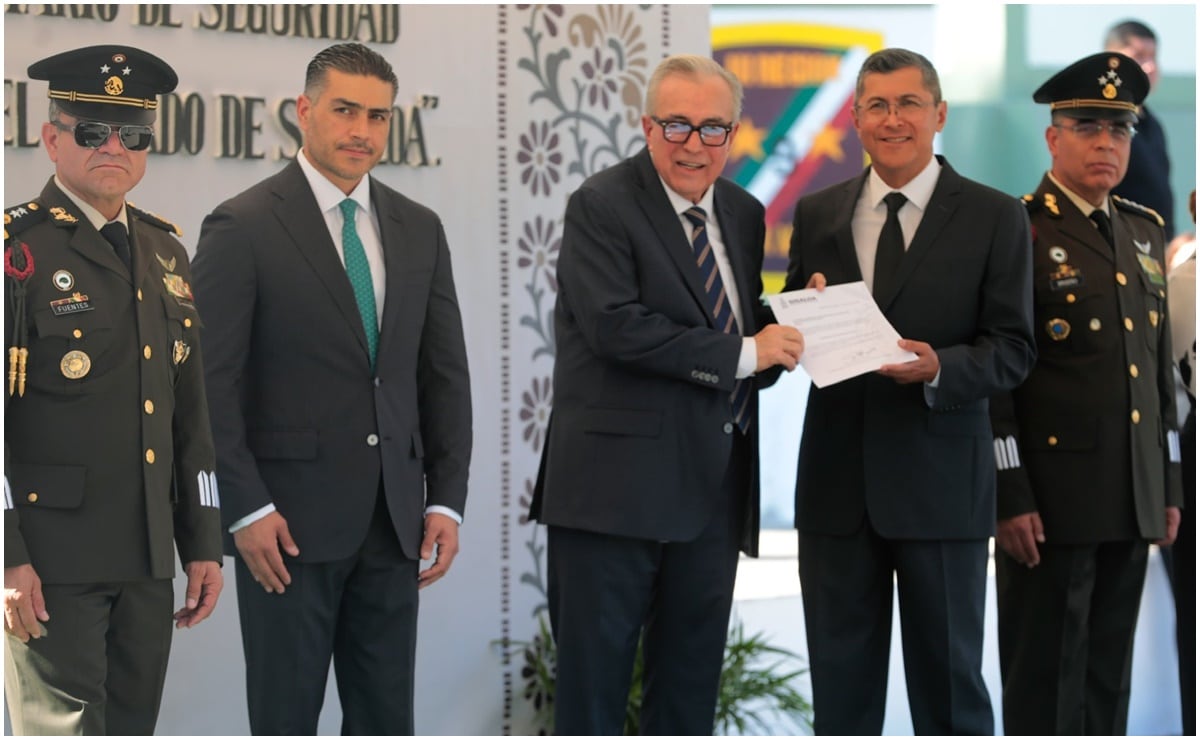
Culiacán, Mexico – Óscar Rentería Schazarino has resigned from his position as Secretary of Public Security for the state of Sinaloa, effective March 12, 2026, after serving for approximately fifteen months. The unexpected departure of the active brigadier general raises questions about the ongoing security landscape in a region grappling with significant cartel-related violence. While the official reasons for his resignation remain undisclosed, speculation suggests a potential return to active duty within the Mexican military or a possible advancement within the Secretary of National Defense (SEDENA). This marks the third change in leadership of Sinaloa’s security apparatus under Governor Rubén Rocha Moya’s administration, highlighting the challenges in maintaining stability in the state.
Rentería Schazarino’s appointment in December 2024 followed the brief tenure of Gerardo Mérida Sánchez, who was removed from the position after only four months amidst a surge in conflict between rival cartel factions, commonly referred to as “Los Chapitos” and “Los Mayos.” The rapid turnover in security leadership underscores the volatile security situation in Sinaloa, a key transit point for illicit drugs and a frequent battleground for powerful criminal organizations. The appointment of a military figure to lead the state’s security efforts reflects a broader trend in Mexico of relying on the armed forces to combat organized crime, a strategy that has yielded mixed results.
A Military Background and a Complex Security Environment
Rentería Schazarino’s background is deeply rooted in the Mexican military. He was proposed for the position by Ricardo Trevilla Trejo, the current Secretary of National Defense, and officially took office on December 21, 2024. Notably, his swearing-in ceremony took place at the Ninth Military Zone in Culiacán, rather than at the Governor’s office, signaling the significant role of the military in his appointment and oversight. This decision, according to reports, stemmed from a desire to demonstrate the strong support of the national security cabinet for his leadership. His command included the Grupo de Operaciones Especiales (GOES), a specialized unit comprised exclusively of military personnel operating as state police agents.
The timing of Rentería Schazarino’s arrival coincided with a particularly intense period of conflict between the “Chapitos” – the sons of imprisoned drug lord Joaquín “El Chapo” Guzmán – and “Los Mayos,” a rival faction within the Sinaloa Cartel. This internal struggle has led to increased violence and instability throughout the state, impacting both residents and businesses. The Mexican government has deployed significant resources to Sinaloa in an attempt to quell the violence, including personnel from the Army, National Guard, and Navy. The cooperation between these federal forces and state authorities was repeatedly emphasized by officials as crucial to maintaining order.
Preceding Leadership and a Pattern of Change
Before Rentería Schazarino, Gerardo Mérida Sánchez held the position of Secretary of Public Security, but his tenure was short-lived, lasting from August to December 2024. Prior to Mérida Sánchez, Cristóbal Castañeda Camarillo, also a military officer, served in the role and was subsequently appointed to a similar position in the State of Mexico. This pattern of frequent changes in leadership raises concerns about the long-term stability and effectiveness of Sinaloa’s security strategy. Each transition necessitates a period of adjustment and familiarization, potentially disrupting ongoing operations and allowing criminal organizations to exploit vulnerabilities.
Governor Rocha Moya acknowledged the demand for adjustments within the state’s police forces upon Rentería Schazarino’s appointment, stating that an evaluation of the situation led to the decision to build changes to the command structure of the State Preventive Police. This suggests a recognition of the challenges facing law enforcement and a willingness to adapt strategies to address the evolving security threats. The governor also highlighted the importance of cooperation between the military, National Guard, and Navy in addressing the insecurity plaguing the state.
Federal Support and Ongoing Challenges
During Rentería Schazarino’s swearing-in ceremony, Secretary of Security and Citizen Protection, Omar García Harfuch, was present, emphasizing the federal government’s commitment to supporting Sinaloa’s security efforts. Harfuch affirmed that the operations of federal forces in the state had been significant and consistent, with ongoing oversight from President Claudia Sheinbaum Pardo. This underscores the federal government’s recognition of the severity of the situation in Sinaloa and its willingness to provide resources and support to address it.
Despite the federal support and the efforts of successive security secretaries, Sinaloa continues to face significant challenges related to organized crime. The ongoing conflict between cartel factions, coupled with high levels of impunity and corruption, creates a complex and dangerous environment for both law enforcement and civilians. The resignation of Rentería Schazarino adds another layer of uncertainty to the security landscape, raising questions about the future direction of the state’s security strategy. The lack of publicly stated reasons for his departure fuels speculation and underscores the sensitive nature of the situation.
Looking Ahead: Uncertainty and Potential Shifts
The appointment of a successor to Rentería Schazarino will be closely watched by both residents of Sinaloa and security analysts. The choice of a latest leader will likely signal the direction the state’s security strategy will take in the coming months. Whether the governor opts for another military figure or a civilian with law enforcement experience remains to be seen. Regardless of the choice, the new secretary will face the daunting task of restoring order and security to a state deeply affected by cartel violence.
The situation in Sinaloa is emblematic of the broader challenges facing Mexico in its fight against organized crime. The reliance on the military to address security concerns, while sometimes necessary, raises concerns about the militarization of public security and the potential for human rights abuses. Addressing the root causes of violence, such as poverty, inequality, and corruption, will be crucial to achieving long-term stability in the region. The departure of Rentería Schazarino serves as a stark reminder of the complexities and challenges inherent in this ongoing struggle.
As of March 13, 2026, no announcement has been made regarding Rentería Schazarino’s replacement. The Governor’s office has not released a statement regarding the reasons for his resignation, and further details are expected to emerge in the coming days. The ongoing security situation in Sinaloa remains fluid, and residents are urged to remain vigilant and report any suspicious activity to the authorities.
The next official update regarding the appointment of a new Secretary of Public Security is anticipated within the next week. We will continue to monitor the situation closely and provide updates as they turn into available. Your thoughts and perspectives on this developing story are welcome in the comments section below. Please share this article with others who may be interested in learning more about the security challenges facing Sinaloa.
Worth a look