
Widespread Muscle Condition Affecting Chicken Breasts in Slovakia Raises Quality Concerns
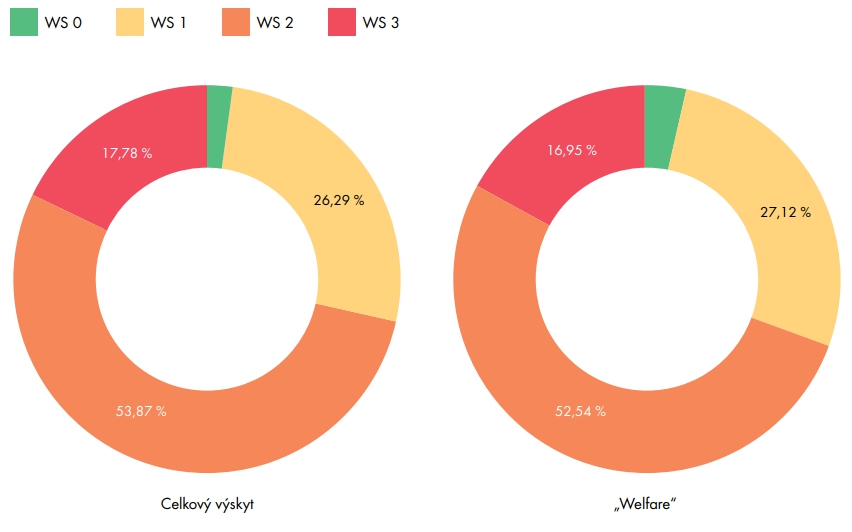
Bratislava – A recent investigation has revealed that a significant majority – 97.94 percent – of chicken breasts sold in Slovak retail chains exhibit signs of a muscle abnormality known as white striping disease. The findings, released by the non-profit organization Humánny pokrok (Humane Progress), raise questions about the quality and production methods of chicken meat available to consumers in the country. The prevalence of this condition, linked to rapid growth rates in broiler chickens, is prompting calls for greater transparency and a shift towards more sustainable farming practices.
White striping disease, characterized by visible white lines running parallel to the muscle fibers, is a degenerative condition affecting the muscle tissue of poultry. According to experts, it’s a direct consequence of breeding chickens for extremely rapid growth, a practice common in intensive farming operations. This accelerated growth can outpace the development of muscle tissue, leading to an increased proportion of fat and connective tissue within the meat. While not currently considered a public health risk, the condition can negatively impact the texture and flavor of the chicken breast, potentially diminishing the overall eating experience.
The Humánny pokrok study, conducted in October 2025, analyzed 388 samples of chicken breasts, fillets, and boneless, skinless chicken portions from major retailers across Slovakia, including Tesco, Billa, Coop Jednota, Kaufland, Lidl, Terno, Kraj, Fresh, Yeme, and Biedronka. The investigation spanned five cities – Bratislava, Košice, Žilina, Banská Bystrica – and the municipality of Miloslavov. Notably, even chicken products labeled as “welfare” showed a high incidence of white striping, with 96.61 percent of those samples exhibiting the condition. The organization’s full report, titled “Tučný kurací podvod” (Fatty Chicken Fraud), details the extent of the issue and associated muscle deformities.
Prevalence Across Retailers
The study revealed significant variation in the prevalence of white striping across different retail chains, although some retailers had limited sample sizes. Lidl recorded a 100 percent incidence rate, followed closely by Tesco at 98.88 percent and Coop Jednota at 98.15 percent. Billa showed a rate of 96.38 percent, while Kaufland registered 94.44 percent. The report noted that Terno, Kraj, Fresh, and Yeme also showed 100% incidence, but with smaller sample sizes. These findings suggest that white striping is a widespread problem, affecting nearly all chicken breast products available to Slovak consumers.
Martin Smrek, director of Humánny pokrok, emphasized the implications of these findings. “Slovak retail chains are still flooded with meat from fast-growing breeds, which demonstrably has a negative impact on its quality,” he stated. “In practice, Which means that consumers are paying for a lower-quality product. While many European countries are moving away from these types of products, they remain the standard in Slovakia. Slovak consumers deserve the same quality of food as customers abroad.”
The Rise of ‘Fast-Growing’ Chickens and Consumer Demand
The issue of white striping is intrinsically linked to the widespread practice of raising “fast-growing” broiler chickens. These breeds have been genetically selected to reach market weight in a significantly shorter timeframe – often just six to nine weeks – compared to traditional breeds. While this increases efficiency and lowers production costs, it also places immense stress on the chickens’ musculoskeletal systems, contributing to the development of white striping and other welfare concerns. According to research published by the University of Arkansas in 2022, the rapid growth rates associated with modern broiler breeds are a primary driver of skeletal and muscular abnormalities. The Poultry Science Association provides further information on broiler genetics and welfare.
Though, consumer awareness of these issues is growing. A September 2025 survey conducted by the Focus agency revealed that 68.3 percent of Slovaks support a ban on fast-growing chicken breeds. 66.2 percent of respondents indicated a willingness to pay a higher price for chicken raised under conditions that prioritize animal welfare. This suggests a growing demand for more ethically and sustainably produced poultry products.
Humánny pokrok has been actively campaigning for change, launching a petition in July 2025, titled “STOP rýchlokurčatám” (STOP Fast Chickens), which has already garnered over 32,000 signatures. The petition calls for an end to the practice of raising fast-growing chickens and advocates for improved animal welfare standards in poultry production. Individuals can participate in the petition at www.rychlokurcata.sk.
European Trends and Potential Solutions
The situation in Slovakia is not unique. Across Europe, there is a growing movement towards more sustainable poultry production. Several retail chains in more developed European markets have begun phasing out meat from fast-growing breeds, responding to consumer demand for higher welfare products. For example, in the Netherlands, a significant number of supermarkets now exclusively sell chicken from slower-growing breeds certified by animal welfare organizations. The European Union is also considering revisions to its animal welfare legislation, which could potentially impact poultry farming practices across the bloc. The European Commission’s Directorate-General for Health and Food Safety provides updates on EU animal welfare policy. More information can be found on their website.
The prevalence of white striping in Slovak chicken breasts highlights a critical issue within the country’s food system. While the condition doesn’t pose an immediate health risk, it raises concerns about the quality of meat available to consumers and the welfare of the chickens themselves. The growing consumer demand for higher welfare products, coupled with increasing awareness of the negative impacts of fast-growing breeds, suggests that change is possible. The key will be for retailers and producers to respond to these demands and prioritize quality and sustainability over cost efficiency.
The next step in this developing story will be to monitor the response of Slovak retail chains to the findings of the Humánny pokrok study. Consumers are encouraged to voice their concerns to retailers and demand greater transparency regarding the origin and production methods of the chicken they purchase. Share your thoughts and experiences in the comments below.
Worth a look