
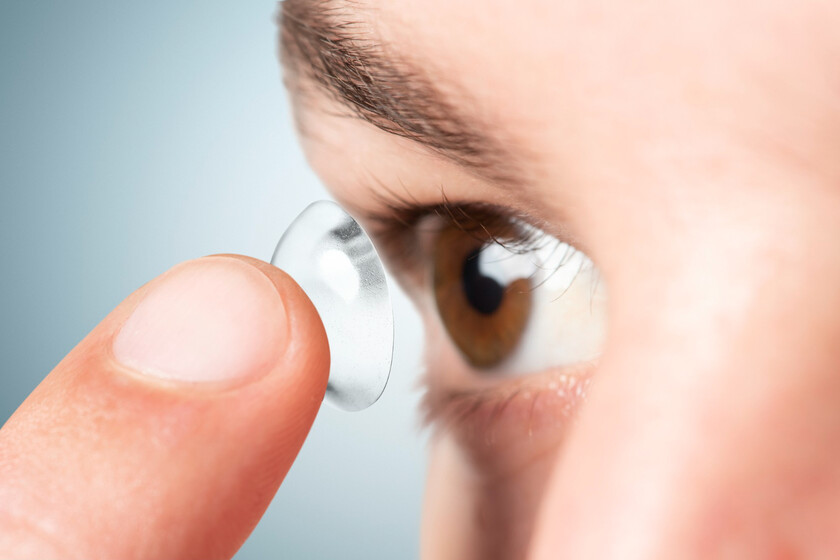
Imagine a world where the treatment for clinical depression does not involve a daily prescription pill or invasive brain surgery, but rather a pair of contact lenses. For millions of people worldwide, the struggle with depression is often a battle between the side effects of pharmacological interventions and the limitations of traditional psychotherapy. However, a groundbreaking development in bioelectronics suggests that the key to restoring mood may lie not in the bloodstream, but in the eyes.
Researchers in South Korea have developed a new class of bioelectronic smart contact lenses designed to treat depression by stimulating the brain through the retina. This innovative approach, recently detailed in the journal Cell Reports Physical Science, represents a potential “third way” in psychiatric care—one that avoids both the systemic chemical changes of medication and the surgical risks of deep brain stimulation.
By utilizing the eye as a gateway to the central nervous system, this technology aims to reset the neural circuits responsible for mood and anxiety. In initial animal trials, the results were striking: the ocular stimulation was found to be as effective as conventional antidepressants, providing a glimpse into a future where mental health treatment is non-invasive, targeted, and rapid.
The Retina: A Direct Gateway to the Brain
To understand why contact lenses can treat a psychiatric disorder, one must look at the unique anatomy of the human eye. The retina is not merely a light-sensing tissue; This proves, an extension of the central nervous system. This anatomical connection provides a direct biological route to the deep-seated regions of the brain that regulate emotional states and anxiety.
Historically, “smart lenses” have been developed primarily for monitoring health metrics—such as measuring intraocular pressure for glaucoma patients or detecting glucose levels in tears for diabetics. This new research marks a pivotal shift from monitoring to therapy. Instead of simply reading data from the eye, these bioelectronic lenses use embedded electrodes to send active electrical signals back into the brain.
This “back door” approach allows clinicians to bypass the blood-brain barrier, which often complicates the delivery of pharmacological drugs, and avoids the need to implant electrodes directly into brain tissue. By stimulating the retina, the researchers can influence the deeper neural circuits that control mood without the need for invasive cranial surgery.
How Bioelectronic Stimulation Works: Temporal Interference
One of the primary challenges of electrical brain stimulation is precision. Delivering a charge to a specific deep-brain target without stimulating the surrounding tissue—which can cause discomfort or unintended side effects—is notoriously difficult. To solve this, the South Korean team employed a sophisticated technique known as temporal interference.

Temporal interference involves the use of multiple high-frequency electrical fields that overlap at a specific point in the brain. While the individual high-frequency fields are too quick to trigger neurons, their intersection creates a low-frequency “envelope” that can selectively stimulate target neurons at a precise depth. This allows the bioelectronic lenses to reach the mood-regulating centers of the brain while remaining comfortable and non-disruptive for the wearer.
This method transforms the contact lens from a corrective optical tool into a therapeutic device capable of modulating brain activity in real-time, offering a level of precision that was previously only possible through implanted electrodes.
Breakthrough Results in Animal Models
The efficacy of these smart contact lenses was tested in a study involving mice with induced depression. The experimental design was rigorous, focusing on whether non-invasive ocular stimulation could match the results of the gold standard in psychiatric medicine: antidepressants.
For a period of three weeks, the affected mice received 30 minutes of daily stimulation via the bioelectronic lenses. The study found that this targeted stimulation was as effective as conventional antidepressants, such as Prozac, in reducing depressive symptoms and restoring normal behavioral patterns.
The significance of this finding lies in the speed and nature of the recovery. While many antidepressants take weeks to reach full therapeutic effect and often come with a heavy load of systemic side effects, the ocular stimulation targeted the brain’s mood circuits directly, achieving comparable results without altering the chemistry of the entire body.
A New Paradigm in Depression Treatment
For decades, the treatment of depression has been fought on two primary fronts: the pharmacological and the physical. Pharmacological treatments, such as Selective Serotonin Reuptake Inhibitors (SSRIs), focus on regulating neurotransmitters throughout the brain. Physical treatments, such as Transcranial Magnetic Stimulation (TMS) or Deep Brain Stimulation (DBS), focus on stimulating specific regions of the brain.
The bioelectronic lens approach creates a hybrid model. It is “physical” in that it uses electrical stimulation, but it is “non-invasive” in that it requires no surgery and no chemical ingestion. This could be a game-changer for patients who are “treatment-resistant”—those who do not respond to medication or who cannot tolerate the side effects of drugs like weight gain, insomnia, or emotional blunting.
As an internal medicine physician, I find the potential for reducing the systemic burden of psychiatric medication particularly promising. When we can treat a brain-based disorder without affecting the liver, kidneys, or digestive system, we improve the overall health trajectory of the patient.
The Road to Human Application
While the results in mice are highly encouraging, the transition to human clinical trials is a complex process. Researchers must ensure that the electrodes are biocompatible for long-term wear and that the temporal interference patterns can be accurately calibrated for the larger and more complex human brain.

the psychological impact of wearing a therapeutic device in the eye will need to be studied. However, the non-invasive nature of a contact lens makes it far more palatable than the alternative of brain implants, potentially increasing patient adherence to treatment.
The development of these lenses signals a broader trend in “electroceuticals”—the use of electrical stimulation to treat diseases that were previously managed only by chemicals. From treating chronic pain to managing autoimmune disorders, the shift toward bioelectronic medicine is accelerating.
Key Takeaways: Bioelectronic Lenses for Depression
- The Innovation: South Korean scientists developed bioelectronic contact lenses that treat depression via retinal stimulation.
- The Mechanism: The retina acts as a “back door” to the brain’s mood and anxiety circuits; “temporal interference” is used to target deep brain areas without discomfort.
- The Evidence: In a study published in Cell Reports Physical Science, mice treated with 30 minutes of daily stimulation for three weeks showed efficacy similar to Prozac.
- The Advantage: This method is non-invasive, avoiding both the systemic side effects of drugs and the surgical risks of brain implants.
The next critical checkpoint for this technology will be the transition to primate models and eventually the first phase of human safety trials. While we are not yet at the stage of prescribing contact lenses for depression in a clinic, the proof-of-concept established in this study opens a promising new chapter in neuropsychiatry.
Do you believe non-invasive bioelectronics are the future of mental health care? We invite you to share your thoughts in the comments below or share this article with others interested in medical innovation.