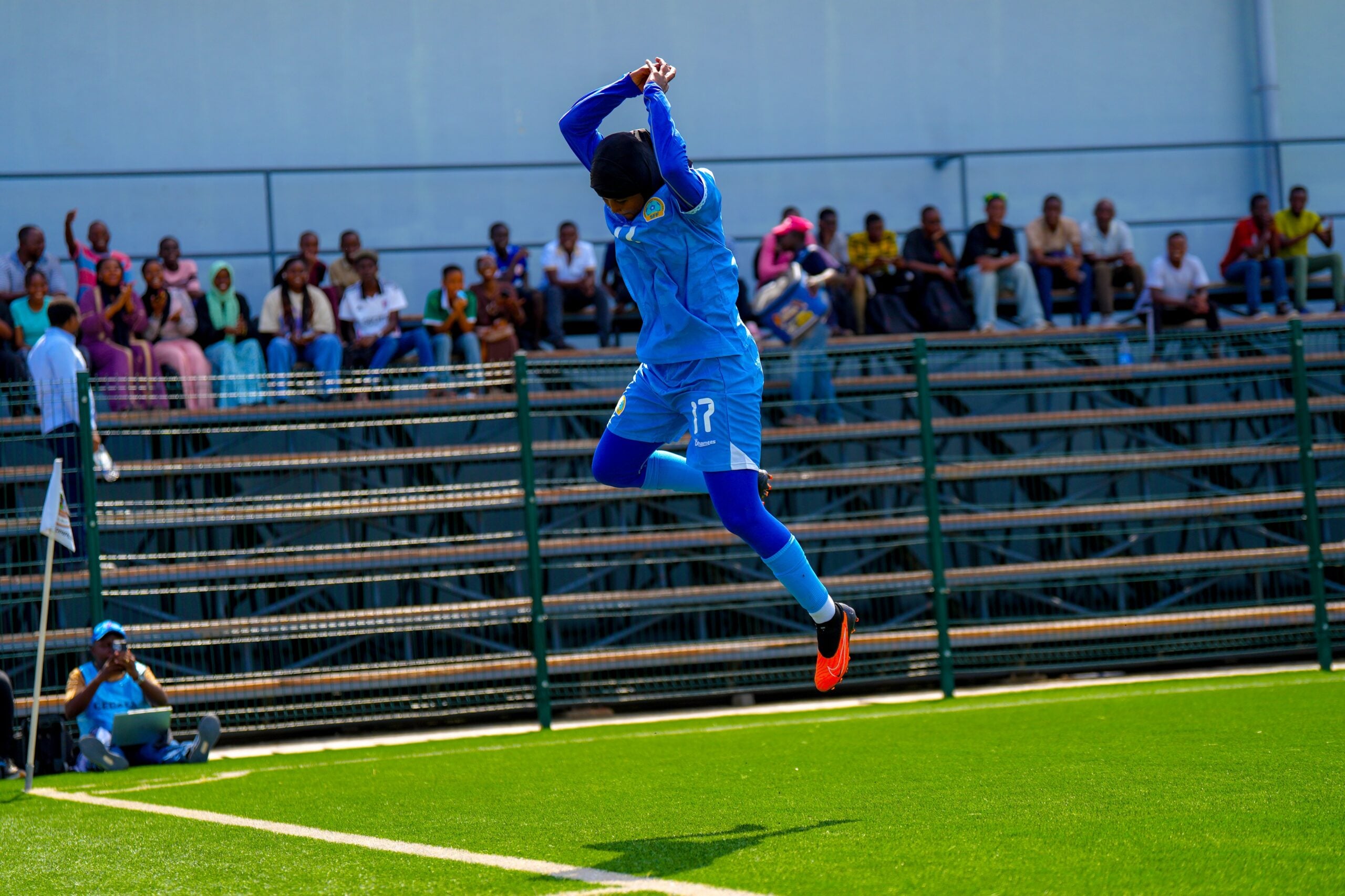
Somalia’s U-17 women’s national football team made history on Saturday by defeating Sudan 8-2 in the CECAFA Women’s U-17 Championship, securing their first-ever international victory in the tournament held in Dar es Salaam, Tanzania. The match, played at the National Stadium, marked a significant milestone for Somali women’s football, which has faced decades of underdevelopment and systemic barriers.
The victory was spearheaded by forward Najmo Mohamed, who scored a hat-trick and was named player of the match according to tournament officials and match reports from Goal.com. Somalia’s coach, Abdiqani Mohamed, described the win as a turning point for the team, which has struggled to compete at the international level due to limited resources and infrastructure.
This triumph comes as part of a broader push to develop women’s football in Somalia, a country where the sport has historically been marginalized. The Somali Football Federation has been working with international partners, including FIFA and CAF, to expand opportunities for young athletes, particularly in regions where access to training and competition has been restricted.
Why This Victory Matters for Somali Women’s Football
Somalia’s 8-2 win over Sudan is not just a statistical achievement—it represents a cultural and structural shift in a nation where women’s sports have long been sidelined. According to FIFA’s Women’s Football Development Program, Somalia ranks among the lowest in Africa for female participation in organized football, with fewer than 5% of registered players being women. The U-17 team’s success could serve as a catalyst for greater investment in youth programs and grassroots initiatives.
Najmo Mohamed, the standout performer in the match, has emerged as a key figure in Somalia’s football renaissance. At just 16 years old, she has already become a symbol of hope for young girls in Mogadishu and other cities where football fields are rare and training opportunities even scarcer. Her performance in Dar es Salaam has drawn attention from scouts and coaches, potentially opening doors for Somali players in international academies.
Sudan, meanwhile, has been a consistent performer in the CECAFA tournament, finishing as runners-up in the 2022 edition. Their defeat to Somalia underscores the competitive balance shifting in East Africa, where countries like Tanzania, Uganda, and Ethiopia have long dominated youth football. The match was Somalia’s first appearance in the CECAFA Women’s U-17 Championship, a regional tournament that includes teams from East and Central Africa.
How Somalia’s Team Overcame Decades of Neglect
The road to this victory has been fraught with challenges. Somalia’s women’s national team has not competed in an international tournament since the 1990s, a gap exacerbated by decades of civil war and instability. The U-17 squad, assembled in 2023, trained under difficult conditions, often relying on makeshift pitches and limited equipment.
According to a report by BBC Sport, the Somali Football Federation received a $250,000 grant from FIFA in 2022 to revive women’s football programs. The funds were used to establish training centers in Mogadishu and Hargeisa, as well as to send coaches to regional tournaments for exposure. The U-17 team’s participation in the CECAFA Championship was made possible through partnerships with local Tanzanian clubs and the East African Football Federation (CECAFA).

Coach Abdiqani Mohamed emphasized the team’s resilience in a post-match interview with Al Jazeera:
“This win is not just about the score. It’s about proving that Somali girls can compete at the highest level. For years, we were told it was impossible. Today, we showed the world it is possible.”
The team’s journey to Dar es Salaam included a grueling travel schedule, with players arriving from Mogadishu just days before the tournament. Logistical hurdles, including visa delays and transportation issues, nearly derailed their participation. Despite these obstacles, their performance has reignited conversations about the potential of Somali women’s football.
What Happens Next for Somalia’s U-17 Women?
With their historic victory, Somalia’s U-17 women now face the challenge of maintaining momentum. The team is scheduled to play their next match in the CECAFA tournament on March 20, 2024, against Kenya at the National Stadium in Dar es Salaam. A win against Kenya would secure their place in the knockout stages, where they could potentially advance to the final.
Beyond the tournament, the Somali Football Federation has set ambitious goals for the team. Federation president, Mohamed Omar Osman, told The Guardian that the aim is to qualify for the 2026 African Women’s Championship, a step that would elevate Somalia’s profile on the continent:
“This victory is just the beginning. We want to build on this success and give our girls the opportunities they deserve. The world is watching, and we will not let them down.”
International observers, including CAF’s Women’s Football Development Officer, Fatima Mohamed, have praised Somalia’s progress. In a statement to CAF Online, she highlighted the need for sustained support:
“Somalia’s achievement is a testament to the power of grassroots football. However, long-term success will require continued investment in infrastructure, coaching, and youth development programs.”
A Look at the Match: Somalia’s Dominant Performance
The 8-2 scoreline reflected Somalia’s dominance in the match, with the team controlling possession and creating multiple scoring opportunities. Najmo Mohamed’s hat-trick—scoring in the 12th, 34th, and 67th minutes—was complemented by goals from midfielder Ayaan Abdi (2x), defender Khadija Ali, and forwards Fadumo Hassan and Maryam Warsame.
Sudan’s defense struggled to contain Somalia’s attacking trio, with Mohamed’s speed and technical ability proving decisive. The match was played in front of a modest crowd of approximately 3,000 spectators, a mix of local fans and supporters of both teams. The atmosphere was electric, with Somali players celebrating each goal to cheers from the stands.
Here’s a breakdown of the goals:
- 12′ Najmo Mohamed (penalty)
- 18′ Ayaan Abdi (header)
- 34′ Najmo Mohamed (close-range finish)
- 45+1′ Khadija Ali (long-range shot)
- 55′ Fadumo Hassan (rebound)
- 67′ Najmo Mohamed (volley)
- 72′ Ayaan Abdi (through ball)
- 89′ Maryam Warsame (tap-in)
Sudan’s two goals came from defenders Amina Eltayeb and Fatima Ahmed, who both scored in the first half. Despite the deficit, Sudan’s coach, Ahmed Hassan, praised Somalia’s effort:
“They played with a lot of heart and skill. Today, they proved they belong in this competition.”
The Broader Impact: Can This Victory Spark Change?
Somalia’s triumph extends beyond football. In a country where women’s rights have been a contentious issue, the team’s success has resonated deeply. Local media outlets, including Hiiraan Online, have highlighted the match as a symbol of progress for Somali women. Social media platforms have been flooded with messages of support, with hashtags like #SomaliaWomenFootball and #NajmoMohamed trending regionally.
However, challenges remain. Women’s football in Somalia still faces significant hurdles, including cultural resistance, limited funding, and security concerns. The Somali Football Federation has been working with UN Women and local NGOs to address these issues, focusing on education and community engagement to promote female participation in sports.
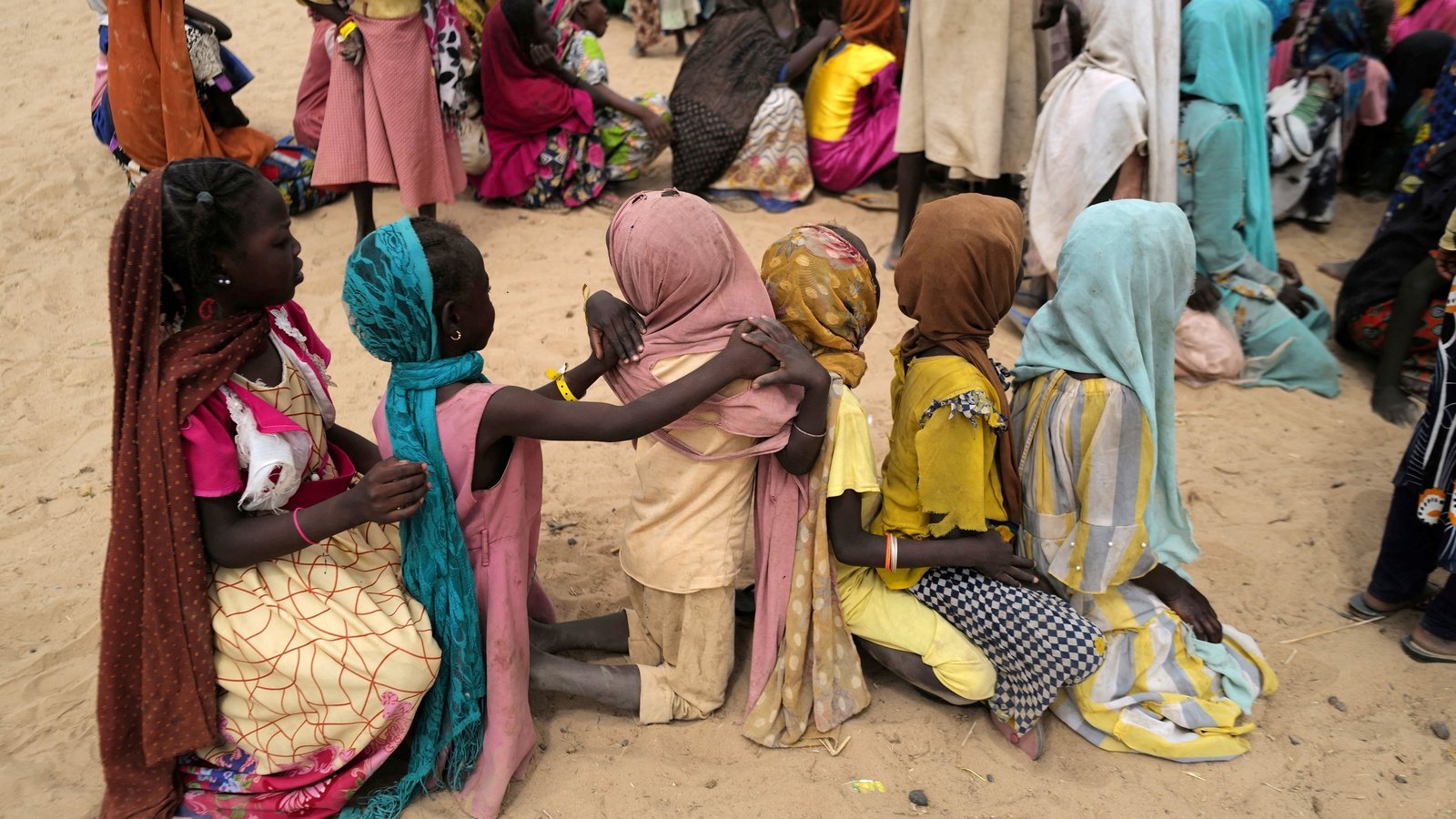
For Najmo Mohamed, the victory is a personal milestone. Growing up in Mogadishu, she often played on makeshift fields with boys, a rarity in a society where girls are often discouraged from sports. Her journey from a local pitch to an international stage has inspired thousands of young Somali girls to pursue their dreams.
In an interview with Deutsche Welle, Mohamed shared her hopes for the future:
“I want to show all the girls in Somalia that no matter where you come from, you can achieve great things. Football is my passion, and I will keep fighting for it.”
Next Steps: What to Watch in the CECAFA Tournament
Somalia’s next match against Kenya on March 20, 2024 will be a critical test of their tournament form. Kenya, ranked among the top teams in the region, will look to bounce back from their previous loss to Uganda. The match is expected to draw significant attention, with analysts predicting a closely contested game.
If Somalia advances to the knockout stages, they will face either Tanzania or Ethiopia in the semifinals. A victory in that match would set up a final against the winner of the other semifinal, which could feature Sudan or Rwanda. The tournament champion will earn the right to represent the region in the 2025 CAF U-17 Women’s World Cup qualifiers.
For now, Somalia’s players are celebrating their historic achievement. As coach Abdiqani Mohamed put it:
“This is only the beginning. We will keep pushing, keep dreaming, and keep fighting for our girls.”
For updates on Somalia’s progress in the CECAFA tournament, follow CECAFA’s official website or check FIFA’s tournament page.
Readers are encouraged to share their thoughts on Somalia’s historic victory and the future of women’s football in the region. What does this win mean for Somali athletes? How can international organizations better support grassroots development? Join the conversation in the comments below.
Keep reading