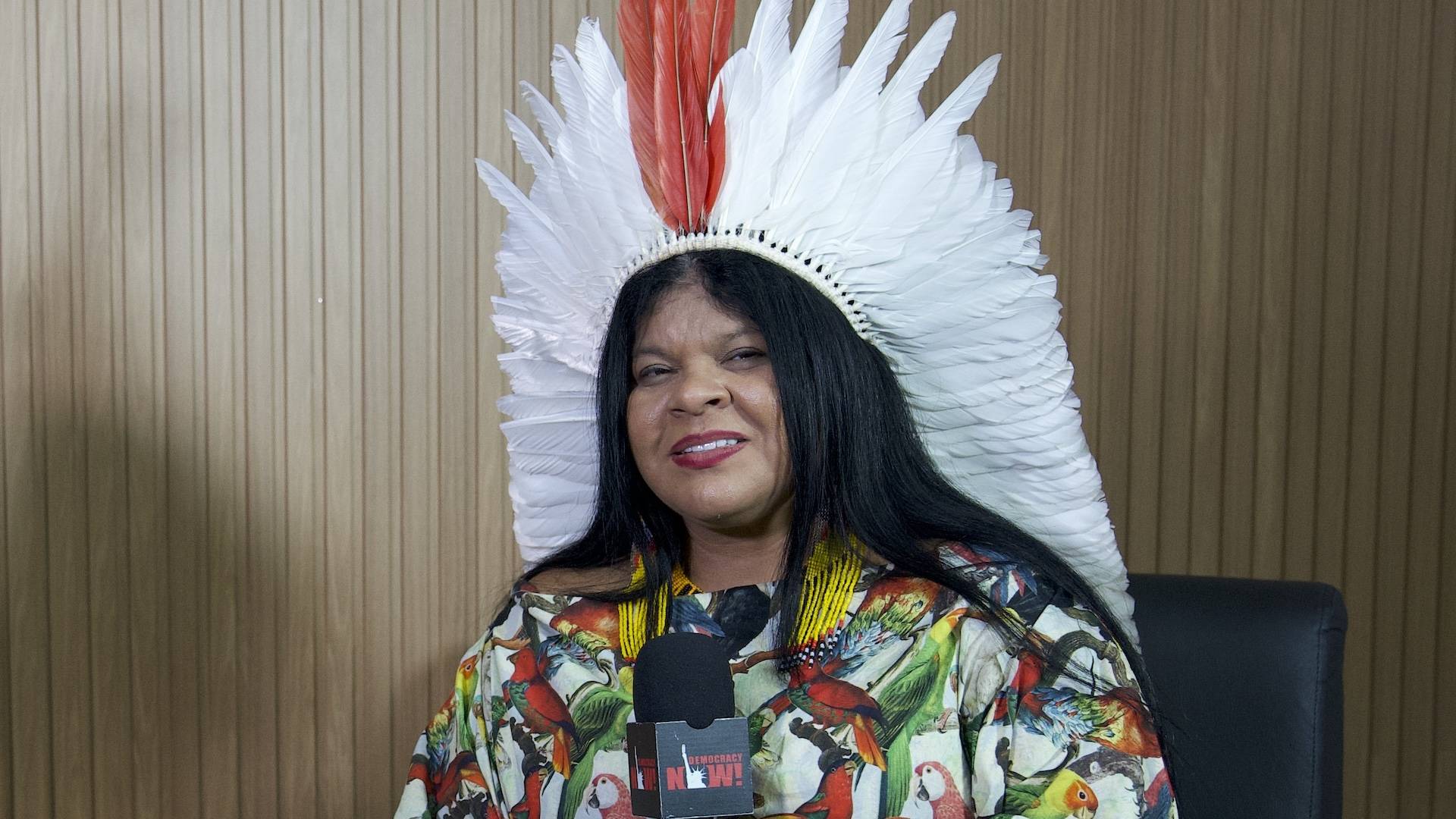
Sônia Guajajara on Bolsonaro‘s Legacy, Trump’s Interference, and the Complexities of COP30 in the Amazon
Sônia Guajajara, Brazil’s first Minister of Indigenous Peoples, recently delivered a powerful message from the UN Climate Summit (COP30) in Belém, the gateway to the amazon rainforest. Her statements underscore a pivotal moment for Brazil, Indigenous rights, and the global fight against climate change. This article delves into her key points, offering context and analysis on the challenges and hopes for the future.
A Reckoning for Bolsonaro & The Fight Against Fascism
Guajajara didn’t mince words when discussing the previous administration of Jair Bolsonaro. She described a deeply challenging period marked by neglect, aggressive attacks on Indigenous rights, and a disastrous handling of the COVID-19 pandemic.
“Together with the neglect and the offensive attack from Bolsonaro, we also had a pandemic, where he not only neglected the pandemic, but also he was responsible for some measures that was against us,” she explained. Bolsonaro’s actions, she asserts, actively dismantled protections for Indigenous communities.
However, Guajajara emphasized the resilience and agency of Indigenous peoples. They organized, mobilized, and played a crucial role in opposing Bolsonaro’s policies, ultimately contributing to his political downfall.
“We reacted. We organized. We were fundamental to be able to destroy fascism,” she stated, expressing hope for justice and accountability. The expectation is that Bolsonaro will be held responsible for his actions, possibly through imprisonment.
Defending Sovereignty Against External interference
The situation took an international turn when former U.S. President Donald Trump demanded the dropping of legal cases against Bolsonaro, mirroring accusations of attempting to subvert democratic processes in the United States. Guajajara’s response was firm.
This interference, she stressed, is “not acceptable.” President Lula da Silva, she noted, has taken a strong stance defending Brazil’s sovereignty and democratic institutions, a position widely supported by the Brazilian people. This highlights a critical principle: Brazil’s justice system must operate independently, free from external pressure.
COP30 in Belém: A Double-Edged Sword
Hosting COP30 in Belém, while seemingly a positive step, has sparked debate. The location spotlights the Amazon’s crucial role in global climate regulation.However, critics point to infrastructure projects undertaken for the summit, such as a new four-lane highway, that resulted in rainforest destruction.
Guajajara acknowledges this complexity. She argues that the controversy reveals underlying issues of environmental racism and prejudice against the people who live in the Amazon.
* Beyond the Trees: She emphasized that the Amazon isn’t just about forests and animals; it’s home to diverse cultures and communities who are actively protecting the rainforest.
* Indigenous Voices Matter: Guajajara insists that the impact of infrastructure projects should be assessed by the people who live there, not imposed from outside.
* Addressing Infrastructure Needs: She recognizes the legitimate need for improved infrastructure in many Amazonian communities, but stresses the importance of ensuring development doesn’t come at the expense of the surroundings or indigenous rights.
Why This Matters to You
The issues raised by Sônia Guajajara are not confined to Brazil.They resonate globally, impacting:
* Climate Change: The Amazon is a vital carbon sink. Its preservation is essential for mitigating climate change.
* Indigenous Rights: Protecting Indigenous land rights is crucial for both environmental conservation and social justice.
* Democratic Principles: The attempt to shield Bolsonaro from accountability sets a hazardous precedent for democratic backsliding.
* Global Sovereignty: External interference in a nation’s legal processes undermines international law and respect for national sovereignty.
Guajajara’s message is a call to action. It’s a reminder that addressing climate change and protecting our planet requires respecting indigenous knowledge, upholding democratic principles, and ensuring accountability for those who threaten both.
Further Exploration:
* Learn more about the work of Sônia Guajajara and the Brazilian Ministry of Indigenous Peoples: https://www.gov.br/mi/pt-br
* Stay updated on COP30 and the Amazon rainforest: [https://www.un.org/climatechange/cop30](https://www.un.org/climatechange/cop3
Keep reading