
Sony WH-1000XM6 vs. Sennheiser Momentum 5: Analyzing the Next Generation of Flagship Audio
The premium wireless headphone market is entering a period of heavy anticipation as rumors circulate regarding the upcoming Sony WH-1000XM6 and the Sennheiser Momentum 5. While neither manufacturer has officially released these successors, the current industry benchmarks—the Sony WH-1000XM5 and the Sennheiser Momentum 4—provide the technical foundation for what consumers can expect from the next wave of flagship audio technology.
The competition between Sony and Sennheiser has historically defined the high-end active noise cancellation (ANC) segment. Sony has traditionally dominated through aggressive software integration and industry-leading noise suppression, while Sennheiser has maintained a stronghold among listeners prioritizing acoustic fidelity and driver precision. As the industry moves toward more advanced artificial intelligence and higher-resolution Bluetooth codecs, the gap between these two philosophies continues to narrow.
The Current Benchmark: Sony WH-1000XM5 and Sennheiser Momentum 4
To understand the trajectory of the unreleased WH-1000XM6 and Momentum 5, one must first examine the established performance of their predecessors. The Sony WH-1000XM5, released in May 2022, shifted the design language of the series toward a more streamlined, non-folding aesthetic. This model introduced the Integrated Processor V1 and the HD Noise Cancelling Processor QN1, which work in tandem to manage eight microphones for enhanced environmental awareness.
In contrast, the Sennheiser Momentum 4, released in August 2022, focused on maximizing battery endurance and soundstage width. Sennheiser utilized 42mm transducer systems to deliver a signature sound profile that emphasizes dynamic range and instrument separation. While Sony’s approach is heavily reliant on digital signal processing (DSP) to shape the listening experience, Sennheiser tends to rely on the physical properties of their drivers to achieve high-fidelity results.
For consumers deciding between the current models or waiting for the next generation, the choice often hinges on whether the priority is absolute isolation or pure audio texture. Sony’s ecosystem is designed for the modern commuter, offering seamless multi-point connection and highly responsive touch controls. Sennheiser caters to the enthusiast who views headphones as a primary instrument for high-resolution music consumption.
Noise Cancellation: The Battle of Algorithms and Microphones
Active noise cancellation technology has evolved from simple phase-reversal techniques into complex, AI-driven systems. Sony has been a primary driver of this evolution. The WH-1000XM5 utilizes real-time analysis of ambient noise to adjust the level of cancellation constantly. This is particularly effective in high-frequency environments, such as office chatter or wind noise, where traditional ANC often struggles.
Sennheiser’s approach to ANC, as seen in the Momentum 4, focuses on a more naturalistic transparency mode. Rather than creating a “vacuum” effect that some users find uncomfortable, Sennheiser aims to blend the external world with the audio feed in a way that feels less processed. This makes the Momentum series highly effective for users who need to remain aware of their surroundings without removing their headset.
As the industry moves toward the WH-1000XM6 and Momentum 5, experts expect a further integration of machine learning. This will likely allow headphones to distinguish between different types of sounds—such as an approaching vehicle versus a person speaking—and adjust the attenuation levels accordingly. Such advancements could solve the current limitation where ANC often inadvertently suppresses mid-range frequencies essential for human speech clarity.
Audio Fidelity: Audiophile Precision vs. Consumer Tuning
The divergence in sound signatures between Sony and Sennheiser remains the most significant factor for potential buyers. Sony’s tuning is traditionally “consumer-friendly,” meaning it features a slightly emphasized low-end response that provides a sense of warmth and impact. This makes their headphones excellent for modern pop, hip-hop, and electronic music. Furthermore, Sony’s support for the LDAC codec allows for high-resolution audio streaming over Bluetooth, which is essential for maximizing the potential of wireless playback.
Sennheiser, however, maintains a reputation for a more balanced and “flat” frequency response. The Momentum 4 provides a wide soundstage, allowing listeners to perceive the spatial positioning of instruments more clearly. This characteristic is highly valued by listeners of classical, jazz, and complex progressive rock. Sennheiser also utilizes aptX Adaptive technology, which offers a low-latency, high-bitrate alternative to Sony’s LDAC, particularly beneficial for Android users and those consuming high-definition video content.
The upcoming Momentum 5 is expected to push these boundaries further by potentially incorporating even larger drivers or improved materials to reduce harmonic distortion. Meanwhile, the WH-1000XM6 will likely focus on refining the digital processing to ensure that even with heavy bass emphasis, the clarity of the upper mids and highs remains intact.
Battery Life and Practicality for Travelers
For frequent travelers, battery life is often as critical as sound quality. Sennheiser has set a high bar in this category. The Momentum 4 offers an impressive 60 hours of playback with ANC enabled, significantly outpacing the industry average. This endurance reduces the frequency of charging cycles and makes the device highly reliable for long-haul international flights.
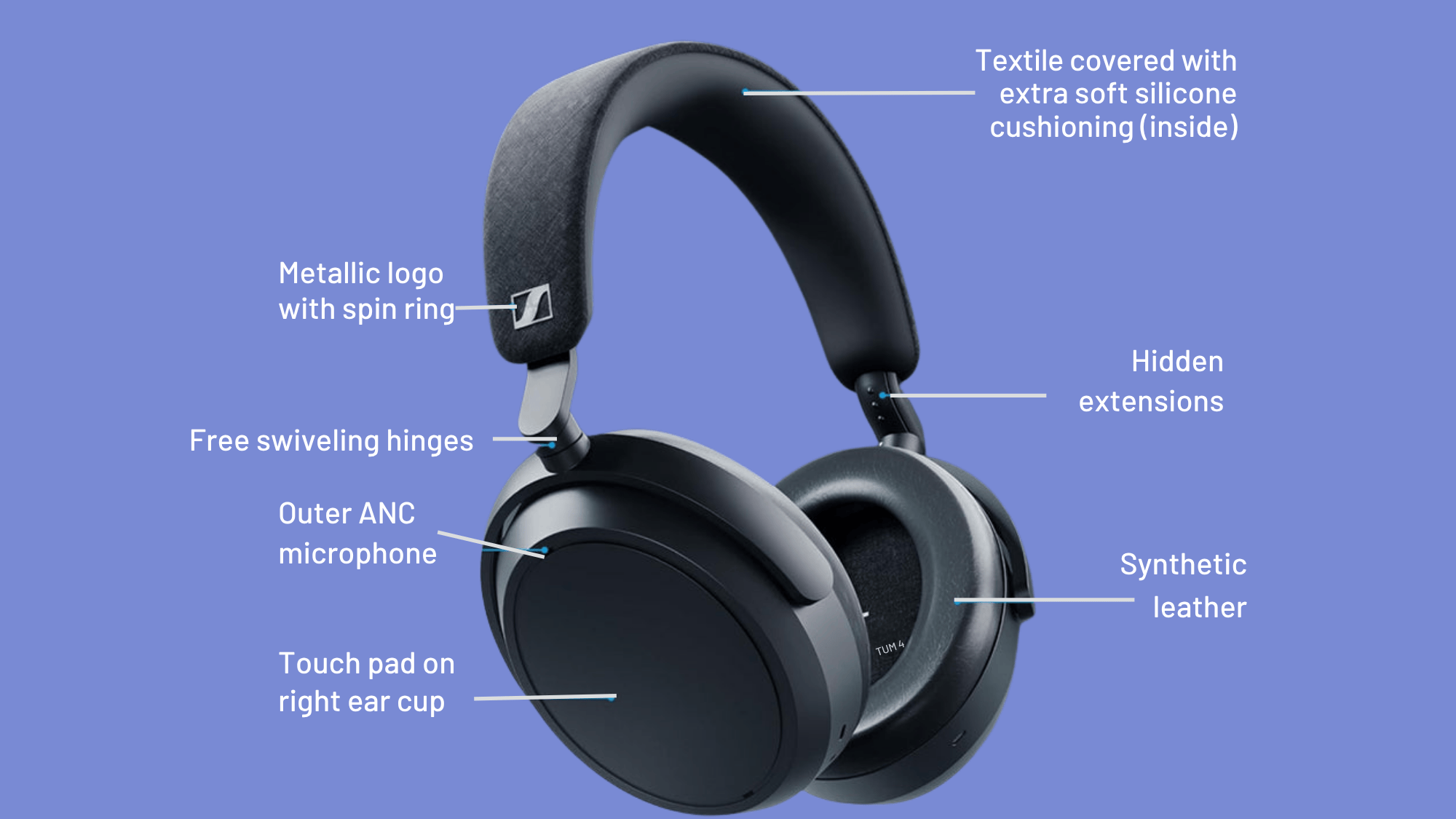
Sony’s WH-1000XM5 offers approximately 30 hours of battery life with ANC on. While this is lower than Sennheiser’s offering, Sony compensates with highly efficient fast-charging capabilities. According to Sony’s official specifications, just three minutes of charging can provide up to three hours of playback, a feature designed to assist users in high-pressure, time-sensitive situations.
The next generation of flagships will likely see a race toward even higher density battery technology. As Bluetooth standards evolve and power consumption becomes more efficient, the goal for the WH-1000XM6 and Momentum 5 will be to maintain high-performance ANC and high-resolution audio without compromising the slim profile of the headphone chassis.
What to Expect from the XM6 and Momentum 5
While official product roadmaps for the Sony WH-1000XM6 and the Sennheiser Momentum 5 are not public, industry trends suggest several key areas of development. The integration of more sophisticated AI is a certainty, as both companies seek to improve the “intelligence” of their transparency and ambient modes.
Another area of focus will be the refinement of the “wearable” experience. Sony may look to improve the ergonomics of the XM5’s headband, which some users have noted can cause pressure points during extended use. Sennheiser may look to further integrate smart features into their app ecosystem, allowing for even more granular control over the acoustic profile of the headphones.
Finally, the battle for codec dominance will continue. As more devices support LE Audio and the LC3 codec, both Sony and Sennheiser will need to ensure their hardware is optimized for these new, more efficient standards to provide better stability and lower latency in crowded wireless environments.
Comparison of Current Flagship Specifications
| Feature | Sony WH-1000XM5 | Sennheiser Momentum 4 |
|---|---|---|
| Driver Size | 30mm | 42mm |
| Battery Life (ANC On) | ~30 Hours | ~60 Hours |
| Primary Codecs | LDAC, AAC, SBC | aptX Adaptive, AAC, SBC |
| ANC Focus | Maximum Isolation/AI-Driven | Natural Transparency/Acoustic Balance |
| Weight | ~250g | ~293g |
Frequently Asked Questions
Should I wait for the Sony WH-1000XM6?
If your current headphones are functional and you are satisfied with the WH-1000XM5’s performance, waiting may not be necessary unless you are specifically looking for advancements in AI-driven noise cancellation or improved ergonomics. Sony typically follows a 2-year release cycle for its flagship series.
Is Sennheiser better for music production?
While these are consumer-grade wireless headphones, Sennheiser’s Momentum series is generally considered to have a more neutral and accurate frequency response, making them better suited for critical listening and monitoring compared to the more bass-heavy Sony models.

Does LDAC matter for everyday use?
LDAC allows for much higher data transfer rates than standard Bluetooth, which results in better audio quality. However, to benefit from it, you must be using a compatible device (mostly Android) and high-quality streaming services like Tidal or Qobuz.
Which has better noise cancellation for airplanes?
Sony’s WH-1000XM5 is widely regarded as having superior noise cancellation for low-frequency engine drone, making it a preferred choice for frequent flyers who prioritize silence above all else.
Official announcements regarding the release dates for the Sony WH-1000XM6 or the Sennheiser Momentum 5 have not yet been made by either company. We will continue to monitor official press releases and industry filings for updates.
What are your thoughts on the current Sony vs. Sennheiser rivalry? Let us know in the comments below and share this article with your fellow audio enthusiasts.
Worth a look