
In the complex ecosystem of modern healthcare and public infrastructure, the intersection of hygiene, sustainability, and spatial efficiency is where true operational excellence is found. For those of us in the medical community, we understand that the environment is not merely a backdrop for care—It’s a critical component of patient safety and public health. One often overlooked yet vital element of this environment is the infrastructure of waste management.
Effective waste segregation is more than a matter of convenience; it is a fundamental requirement for reducing cross-contamination and promoting environmental stewardship. The transition toward a modular waste receptacle system represents a shift in how facility managers approach the logistics of disposal, moving away from static, one-size-fits-all bins toward adaptable systems that evolve with the needs of the building and its occupants.
As the Editor of Health at World Today Journal, I have spent over a decade observing how medical innovation often focuses on the microscopic—the new drug, the precision surgical tool—while ignoring the macroscopic systems that keep a facility running. However, the integration of sustainable, high-durability waste solutions is a primary driver in achieving LEED certification and maintaining a sterile, organized environment in high-traffic corridors.
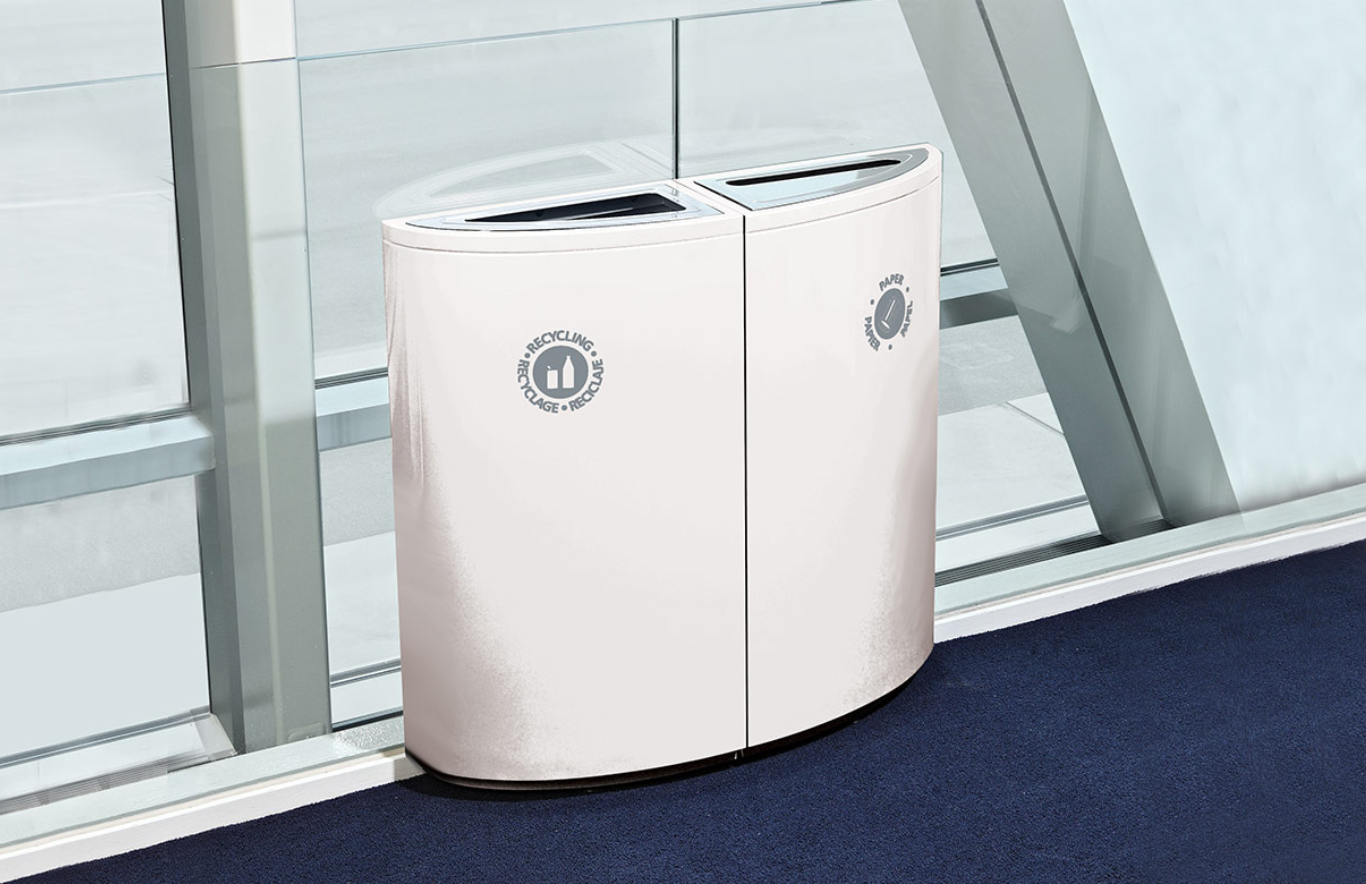
The SOTARE® line, designed by QDesign and produced by the Magnuson Group, exemplifies this evolution. By utilizing a curvilinear, modular design, these systems allow institutions to customize their waste and recycling footprints based on actual usage patterns rather than guesswork, ensuring that waste streams are managed efficiently without obstructing the flow of patients, staff, or visitors.
The Evolution of Modular Waste Management in Public Spaces
Traditional waste bins are often intrusive, occupying fixed amounts of space regardless of whether the volume of waste justifies their size. In a hospital or a busy public terminal, every square inch of floor space is a variable in the equation of safety and accessibility. Modular systems solve this by offering a “building block” approach to waste collection.
The SOTARE® system utilizes a curvilinear geometry that minimizes sharp corners—a critical design choice in healthcare settings where carts, wheelchairs, and stretchers are constantly in motion. By reducing the risk of collisions and facilitating easier cleaning around the base of the unit, these receptacles contribute to a safer physical environment. This modularity allows a facility to start with a single unit and expand the configuration as recycling mandates grow or as foot traffic increases in specific zones.
From a public health perspective, the ability to clearly segregate waste streams—separating general landfill waste from paper and plastics—reduces the burden on sanitation staff and decreases the likelihood of hazardous materials being misplaced. When a waste system is intuitive and visually organized, compliance rates for recycling programs increase significantly, directly impacting the institution’s carbon footprint.
SOTARE®: A Versatile Approach to Waste Segregation
The technical versatility of the SOTARE® family is rooted in its geometric flexibility. The system is anchored by a 34-gallon half-elliptical unit, which can be paired with two quarter-elliptical units to create a variety of configurations. This allows the system to fit snugly into corners or stand as a centralized hub in an open lobby.
To meet diverse recycling-program requirements, the system offers fourteen different top options. These include specialized openings for waste, paper, and circle-top configurations. This level of customization is essential because a “one-size-fits-all” bin often leads to “wish-cycling”—where users throw non-recyclable items into recycling bins because the opening is too generic—or complete abandonment of the recycling effort due to a lack of clear categorization.
Design Specifications and Material Integrity
In any healthcare or high-traffic environment, the material of a waste receptacle is as vital as its shape. SOTARE® units are constructed from powder-coated steel, a choice that prioritizes both longevity and hygiene. Unlike plastic bins, which can crack over time or absorb odors, powder-coated steel provides a non-porous, durable surface that can withstand rigorous industrial cleaning protocols without degrading.

The powder-coating process creates a hard, protective layer that is resistant to scratches and corrosion. In a clinical setting, where harsh disinfectants are used daily to prevent the spread of healthcare-associated infections (HAIs), the resilience of the outer shell is paramount. A damaged bin can harbor bacteria in scratches or pits; a smooth, powder-coated surface ensures that sanitization is comprehensive.
Environmental Impact and LEED v4 Certification
Sustainability in the built environment is no longer optional; it is a mandate. The Leadership in Energy and Environmental Design (LEED) framework provides a globally recognized standard for green building. The SOTARE® system is designed to contribute to various LEED v4 prerequisites and credits, specifically those related to waste management and material sourcing.
By facilitating a more robust recycling program through its modular configurations, the SOTARE® system helps facilities divert a higher percentage of waste from landfills. LEED v4 credits often reward projects that implement comprehensive recycling strategies and use materials with low environmental impact. The use of steel—a highly recyclable material—further aligns the product with the circular economy goals of modern architecture.
For healthcare administrators, achieving LEED certification is not just about the “green” label; it is about creating a “healing environment.” There is a documented psychological link between sustainable, clean, and well-organized spaces and the recovery rates of patients. When a facility invests in high-quality, sustainable infrastructure, it signals a commitment to the long-term health of both the patient and the planet.
Integrating SOTARE® with the VALUTA® Ecosystem
One of the most significant advantages of the SOTARE® line is its interoperability. All SOTARE® units can be configured to work alongside units in the VALUTA® family. This compatibility ensures that as a facility grows or undergoes renovation, the waste management system can be expanded without requiring a complete replacement of existing hardware.
This synergy allows for the creation of massive, multi-stream waste centers that can handle everything from general refuse to specific recyclables and hazardous waste containers, all while maintaining a consistent design aesthetic. For the interior designer and the facility manager, this means they can maintain a professional, cohesive look throughout a building while tailoring the functionality of each station to the specific needs of the room—whether it is a narrow hallway, a wide waiting area, or a sterile surgical wing.
Practical Considerations for Facility Implementation
When implementing a modular waste system, facility managers should consider the “footprint vs. Function” ratio. The goal is to provide enough capacity to prevent overflow—which is a primary source of odors and pest attraction—without creating obstacles that impede the flow of traffic. The 34-gallon capacity of the SOTARE® half-elliptical unit provides a substantial volume that balances frequent emptying cycles with spatial efficiency.

Key factors for successful deployment include:
- Traffic Analysis: Placing quarter-elliptical units in corners to maximize floor space in narrow corridors.
- Visual Cueing: Utilizing the 14 top options to create clear, intuitive distinctions between waste and recycling streams.
- Maintenance Scheduling: Leveraging the powder-coated steel’s durability to implement a standardized cleaning schedule that aligns with hospital hygiene protocols.
By treating waste management as a piece of critical infrastructure rather than an afterthought, institutions can improve their operational efficiency and contribute to a healthier, more sustainable public sphere.
The next step for many facilities looking to upgrade their environmental standards is the transition to LEED v4.1, which further refines the requirements for waste diversion and material transparency. As these standards evolve, the need for adaptable, modular hardware like the SOTARE® system will only increase.
We invite our readers to share their experiences with sustainable facility design in the comments below. How is your institution balancing the needs of waste management with the requirements of patient flow and sustainability?