
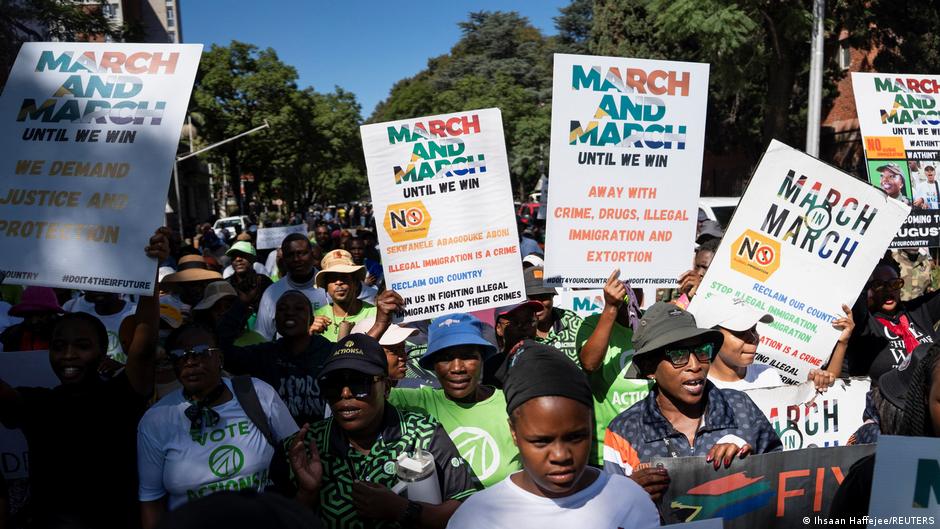
South Africa’s government has issued a stark warning ahead of planned anti-migrant protests on June 30, urging calm as tensions rise in cities including Johannesburg, Pretoria, and Durban. Authorities cite deepening economic hardship and unemployment—as key drivers behind growing xenophobic sentiment, with officials expressing concerns that the demonstrations could spiral into violence. The protests follow a pattern of sporadic anti-immigrant flare-ups that have marred South Africa’s social fabric since the early 2000s, with recent spikes tied to economic desperation and competition for scarce resources.
A government spokesperson has reiterated its commitment to protecting migrant communities. The spokesperson stated that the government will not tolerate violence or discrimination. Meanwhile, civil society groups warn that the protests risk exacerbating an already fragile situation, with migrants—particularly from Zimbabwe, Mozambique, and Somalia—facing increased harassment and displacement.
Analysts attribute the resurgence of anti-migrant rhetoric to a confluence of factors: persistent unemployment and a perceived lack of government solutions.
South African authorities have warned of potential unrest ahead of the June 30 protests, with police increasing patrols in affected areas. The government has urged peaceful demonstrations while cautioning that violence will not be tolerated.
Why Are Protests Planned for June 30?
The demonstrations were organized by a coalition of community groups, which has historically led anti-immigrant campaigns. While organizers cite “overpopulation” and “resource strain” as justifications, critics argue the rhetoric masks deeper economic anxieties.

Historically, anti-migrant violence in South Africa has resulted in deaths and displacements.
How Is the Government Responding?
A government spokesperson has emphasized that migrants contribute significantly to South Africa’s economy. The spokesperson stated that foreign nationals are part of society and must be protected. The government has pledged to deploy additional police officers to monitor protest hotspots, while the South African Police Service (SAPS) has warned that any violence will be met with swift action.
However, skepticism remains regarding past government responses to xenophobic outbreaks.
Who Is Most Affected?
Migrant communities—particularly those from Zimbabwe, Mozambique, and Somalia—are bracing for potential backlash. The UN Refugee Agency estimates that migrants currently live in informal settlements across South Africa, many without legal status. A UNHCR spokesperson has warned that the situation could put migrants at significant risk.
Businesses owned by migrants have also reported increased threats.
What Happens Next?
The immediate focus is on June 30, but analysts warn that the protests could extend if tensions persist. The government has scheduled an emergency cabinet meeting to assess the situation.
In the longer term, the protests underscore the need for economic reforms.
Key Takeaways
- Protests planned for June 30 in Johannesburg, Pretoria, and Durban, with police deploying additional officers.
- Unemployment and economic hardship fuel anti-migrant sentiment.
- Migrants from Zimbabwe, Mozambique, and Somalia are most at risk.
- Government warns of violence but faces criticism for past responses.
- Economic reforms remain central to long-term stability.
The next official update will come from the South African government following the June 30 protests. For real-time developments, follow SAPS alerts and official government statements. Share your thoughts or concerns in the comments below.