Seventy years after Sophie Williams-de Bruyn and 20,000 women marched on Pretoria’s Union Buildings against apartheid pass laws, South African leaders and survivors marked National Women’s Day on August 9, 2026, confronting a modern landscape marred by soaring unemployment, gender-based violence, and systemic inequality.
Seventy years ago, Sophie Williams-de Bruyn was 18 years old when she helped lead a historic gathering of about 20,000 women to the Union Buildings in Pretoria, the administrative capital of South Africa. On August 9, 1956, these women carried petitions against apartheid laws designed to restrict the movement of Black South Africans by extending pass laws to women. That silent protest at the seat of government became a defining moment in the country’s liberation struggle and established National Women’s Day.
On Sunday, Williams-de Bruyn, now 88, returned to those same steps to mark the 70th anniversary of the march. While South Africa transitioned to democracy in 1994 with a constitution guaranteeing equality, the commemoration served as a stark reckoning with contemporary crises.
Sophie Williams-de Bruyn and Nobel Laureate Malala Yousafzai Urge a New Generation to Resist
Addressing the crowd at the Union Buildings, Williams-de Bruyn described the current socio-political climate as a painful paradox
where political liberation has failed to shield vulnerable populations from daily insecurity. She noted that women continue to bear the brunt of crime, poverty, and institutional decay.
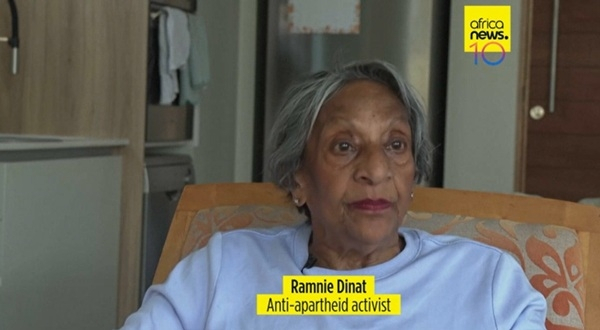
Sophie Williams-de Bruyn reflected that the joy of that solidarity and the triumph of knowing they could break the back of oppression remained a fire burning deep within her even today.
Gender-Based Violence and the Staggering Crisis Facing Women in South Homes and Streets
While women have ascended to prominent roles in South African society—including chief justice, parliament speaker, and public protector—activists emphasize that representation has not altered the dangerous daily realities for the majority.

Sophie Williams-de Bruyn stated that they had fought to banish the pass laws, yet today their women were prisoners in their own homes, adding that gender-based violence continued to cast a dark cloud on their society and that every single day she wept for the girl child, the daughters, the mothers, and the grandmothers who were abused, violated, and silenced.
Sophie Williams-de Bruyn
At Constitution Hill in Johannesburg, where the notorious Women’s Jail once detained anti-apartheid icons like Winnie Madikizela-Mandela and Albertina Sisulu under brutal, segregated conditions, Visitors Services Manager Nolubabalo Memese observed that a different monster now restricts freedom of movement and basic safety.
Economic Disparities, Unemployment
The economic landscape mirrors these deep social fractures.
Athletic Excellence on Global Stages Highlights Enduring Potential
Despite systemic economic and social barriers, South African sportswomen continue to redefine international standards across disciplines, building directly on the legacy forged seven decades ago. Deputy Minister of Sport, Arts and Culture Peace Mabe highlighted how these achievements demonstrate the enduring potential of female athletes to overcome adversity and represent the nation with distinction on the world stage.
- At the 2026 Commonwealth Games in Glasgow, Lara van Niekerk defended her women’s 50-metre breaststroke title to win gold, while Aimee Canny secured two silver medals.
- Para-swimmer Danika Vyncke won silver and set a new African record in the women’s 50-metre freestyle S13 at the Glasgow games.
- Erin Gallagher added a bronze medal in the women’s 100-metre butterfly.
- At the Paris 2024 Olympic and Paralympic Games, Tatjana Smith claimed gold and silver in the pool, Jo-Ané van Dyk earned silver in women’s javelin, and Simone Kruger captured gold in the women’s discus.
- Paralympic wheelchair tennis champion Kgothatso Montjane became the first Black South African woman to compete in all four major tennis tournaments, adding a 2024 Wimbledon doubles title to her accomplishments.
As younger generations navigate these overlapping economic, physical, and institutional obstacles, veterans of the liberation struggle emphasize that civic vigilance remains the primary instrument for change. Marking the end of the commemoration, Williams-de Bruyn issued a call to action.
Sophie Williams-de Bruyn urged young women not to wait for anyone’s permission, telling them to stand up, use their voices, and fight for their futures, as well as against poverty and abuse, urging them to finish the march they began 70 years ago just as they had fought against apartheid, and expressing her wish that the spirit of 1956 would rise again in each of their hearts.
Sophie Williams-de Bruyn
Keep reading