
The geopolitical landscape of the North Atlantic and the Indo-Pacific is facing a period of acute volatility as the United States begins a strategic pivot in its overseas military presence. Following a series of diplomatic clashes over the conflict with Iran, the Pentagon announced on Friday, May 1, 2026, that the U.S. Will withdraw approximately 5,000 troops from Germany over the next six to 12 months.
The decision serves as a direct response to friction between President Donald Trump and German Chancellor Friedrich Merz. The drawdown, which includes one brigade combat team, follows public criticism from Chancellor Merz, who suggested that U.S. Efforts in the war with Iran had been humiliated
by Iranian negotiators. This move signals a broader shift in U.S. Foreign policy, where military basing and alliance commitments are increasingly tied to active cooperation in specific conflict zones.
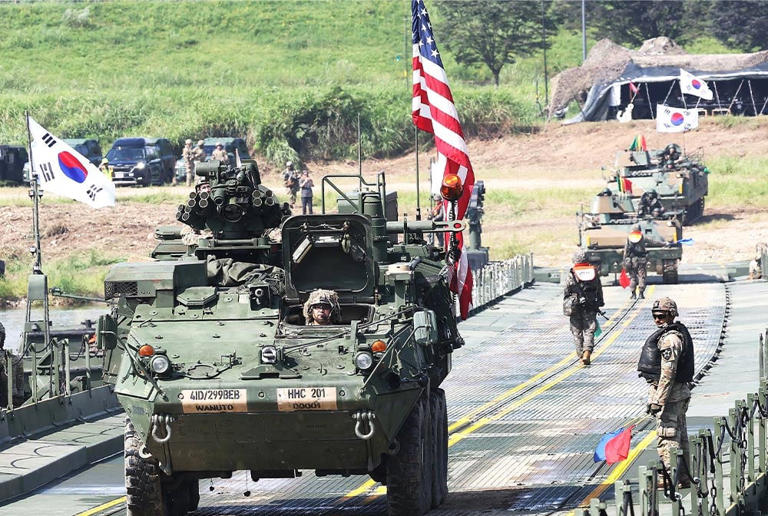
As the U.S. Leverages its military footprint to pressure European allies, the ripple effects are being felt in East Asia. In Seoul, the South Korean government has been forced to address mounting speculation that a similar “punitive” troop reduction could be applied to the Korean Peninsula. While the U.S. Has not officially announced cuts to the U.S. Forces Korea (USFK), the precedent set in Germany has heightened anxieties regarding the stability of the 28,500-strong American presence in South Korea.
The Germany Drawdown: A Tool of Diplomatic Leverage
The withdrawal of 5,000 personnel from Germany is not merely a logistical shift but a calculated political signal. According to reports from AP News, the move fulfills a threat made by President Trump after Germany and other NATO allies showed a perceived lack of cooperation regarding the U.S.-led war against Iran.
Specifically, the U.S. Administration has expressed frustration over the refusal of some allies to provide naval assistance to secure the Strait of Hormuz. The U.S. Currently maintains over 36,000 active-duty troops in Germany, making it the largest contingent of American forces in Europe. By removing a brigade combat team, the Trump administration is demonstrating that the “security umbrella” provided by the U.S. Is conditional upon the strategic alignment of its partners.
The timing of the announcement is critical. President Trump arrived to speak at a charter school in The Villages, Florida, on May 1, 2026, shortly after the Pentagon confirmed the timeline for the withdrawal. The move is expected to complicate NATO’s regional cohesion, as German bases have long been central to American global power projection.
Seoul’s Response: Denials and Strategic Anxiety
The announcement in Europe triggered an immediate reaction from the South Korean Ministry of National Defense. On April 30, 2026, the ministry stated that there are no discussions between South Korea and the U.S. Regarding a reduction of U.S. Forces stationed in Korea
, according to reporting by Yonhap News Agency.
Despite the official denial, the “Germany model” has created a climate of uncertainty in Seoul. The core of the concern lies in whether the Trump administration views USFK not as a permanent security guarantee, but as a bargaining chip for economic concessions or increased defense spending. Analysts suggest that if the U.S. Continues to link troop levels to “cooperation” in unrelated global conflicts—such as the war with Iran—South Korea may find its security posture vulnerable to the whims of U.S. Diplomatic frustrations.
However, some defense experts argue that the strategic value of the Korean Peninsula differs fundamentally from that of Germany. Lee Sang-kyu, chief of the nuclear security research division at the Korea Institute for Defense Analyses, has indicated that a meaningful reduction in USFK is less likely due to the peninsula’s critical importance in containing North Korean and Chinese influence. Rather than a total drawdown, experts suggest the U.S. Might push for a restructuring of forces or a significant increase in the “burden-sharing” payments provided by Seoul.
Comparing the Strategic Risks
| Region | Action/Status | Primary Driver | Estimated Impact |
|---|---|---|---|
| Germany | Withdrawal of ~5,000 troops | Dispute over Iran war support | Reduction of one brigade combat team |
| South Korea | No official reduction discussed | Strategic containment of NK/China | Potential pressure for higher cost-sharing |
The Economic Dimension: Tariffs and Trade
The military withdrawals are occurring alongside a broader U.S. Strategy of using economic levers to enforce geopolitical compliance. The administration has hinted at tariff increases for allies who fail to contribute to U.S. Security objectives. For South Korea, this creates a “double-bind” scenario: the risk of losing military protection while simultaneously facing economic penalties through increased tariffs on exports.
The synergy between troop withdrawals in Europe and the threat of tariffs suggests a shift toward a transactional foreign policy. In this framework, the U.S. No longer views alliances as based on shared values or long-term treaties, but as service-contracts where the U.S. Provides security in exchange for specific, immediate political or economic gains.
What Happens Next for the Alliance
The immediate focus for the international community will be the execution of the German withdrawal over the next 6 to 12 months. The logistical complexity of moving a brigade combat team will provide a window for diplomatic renegotiation, but the precedent of “punitive withdrawal” has already been established.
For South Korea, the next critical checkpoint will be the upcoming reviews of the Special Measures Agreement (SMA), which governs the cost-sharing for USFK. Any shift in the U.S. Position on these payments, combined with the rhetoric surrounding the Germany withdrawal, will indicate whether Seoul is next in line for a forced restructuring of its security relationship with Washington.
World Today Journal will continue to monitor the Pentagon’s troop movements and the South Korean Ministry of Defense’s official statements. We invite our readers to share their perspectives on the shift toward transactional alliances in the comments below.