
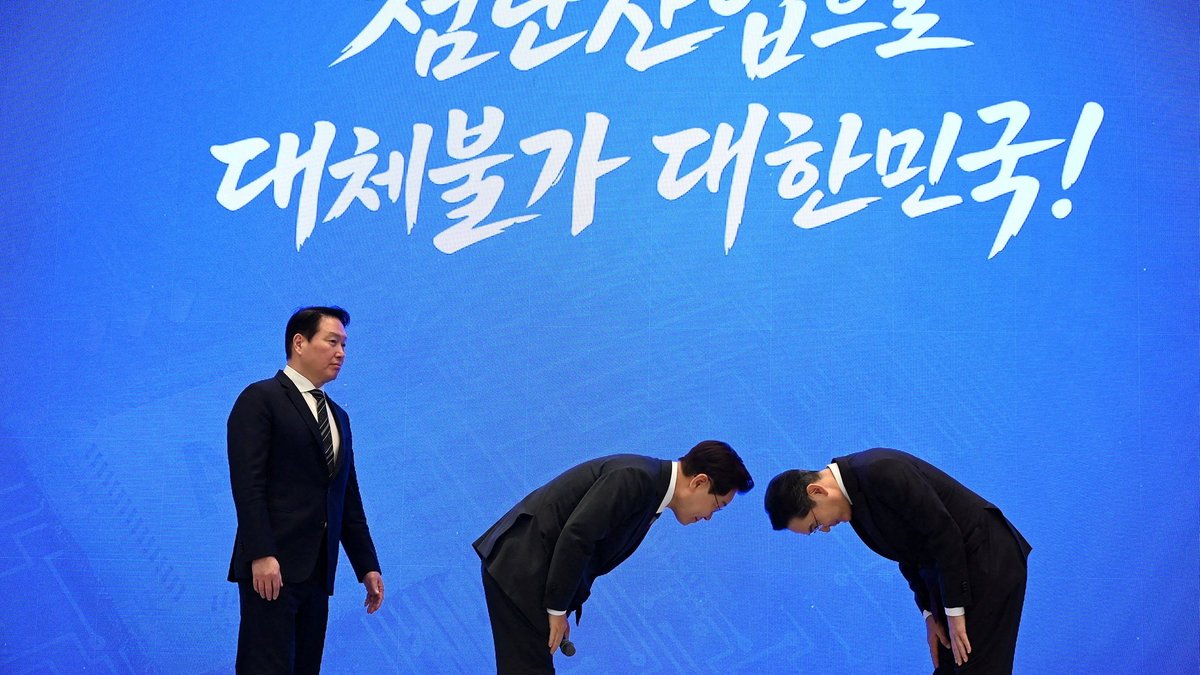
South Korea’s government has approved a $100 million investment package to revive domestic microchip manufacturing and expand AI data center infrastructure, marking a strategic pivot to reduce dependence on foreign semiconductor suppliers and accelerate its digital sovereignty ambitions. The initiative, announced by the Ministry of Trade, Industry and Energy (MOTIE) this week, includes direct funding for semiconductor startups, tax incentives for chip design firms, and partnerships with global tech giants to establish AI-ready data centers in Seoul and Busan. Analysts describe the move as a critical step in countering supply chain vulnerabilities exposed by recent global chip shortages.
The funding will be allocated across three key pillars: MOTIE’s official statement confirms that 40% will support microchip design and testing facilities, 30% will go toward AI data center construction, and the remaining 30% will fund workforce training programs. The initiative follows a broader $50 billion semiconductor strategy unveiled last year, which aims to position South Korea as a top-five global semiconductor hub by 2030. “This is not just about chips—it’s about securing our digital future,” said a senior MOTIE official, requesting anonymity during briefings.
South Korea’s push comes as global demand for advanced semiconductors surges, with AI-driven data centers consuming nearly 30% more power annually, according to International Energy Agency (IEA) projections. The country’s current reliance on TSMC and Samsung for domestic chip supply has left it vulnerable to geopolitical disruptions, particularly as the U.S. and China escalate trade tensions. The new investment aligns with similar moves by Taiwan and the U.S., which have allocated billions to shore up their own semiconductor ecosystems.
Why South Korea Is Betting Big on Microchips and AI Infrastructure
The $100 million initiative is part of a broader five-year plan to revitalize South Korea’s semiconductor industry, which has faced declining global market share amid rising competition from China and the U.S. The country’s chipmakers, including Samsung Electronics and SK Hynix, have historically dominated memory chip production but have struggled to compete in cutting-edge logic chips—critical for AI and high-performance computing.
Key components of the investment include:
- $40 million for semiconductor R&D: Funding will support startups developing next-generation chip designs, particularly in AI acceleration and quantum computing. The Korea Institute of Science and Technology (KISTI) will lead a public-private consortium to accelerate prototyping.
- $30 million for AI data centers: Two new facilities in Seoul and Busan will prioritize energy-efficient cooling systems and edge computing capabilities, targeting hyperscale cloud providers like Google and Microsoft. The Electronics Times reports that Samsung and LG CNS are among the bidders for construction contracts.
- $30 million for workforce training: Programs will upskill engineers in semiconductor fabrication and AI infrastructure management, with partnerships announced with universities like Seoul National University and Pohang University of Science and Technology (POSTECH).
Industry observers note that South Korea’s timing is strategic. With global chip shortages persisting—SEMICONductor Industry Association data shows a 15% year-over-year increase in lead times for advanced process nodes—companies are increasingly looking to diversify supply chains. “This investment isn’t just about catching up; it’s about leapfrogging,” said Lee Jung-woo, a semiconductor analyst at Goldman Sachs, in a recent interview. “South Korea can’t afford to be a follower in the AI race.”
How the Investment Compares to Global Competitors
South Korea’s $100 million package, while substantial, pales in comparison to the scale of investments from the U.S. and China. The U.S. CHIPS and Science Act allocated $52 billion to domestic semiconductor manufacturing, while China has committed over $150 billion to its “Made in China 2025” initiative, with a focus on advanced chips and AI infrastructure. However, South Korea’s approach differs in its emphasis on collaboration rather than state-led monopolies.
A comparison of recent semiconductor investments:

| Country | Investment ($) | Focus Areas | Key Players |
|---|---|---|---|
| United States | $52 billion | Fab expansion, R&D, workforce training | Intel, TSMC, GlobalFoundries |
| China | $150+ billion | Advanced nodes, AI chips, supply chain control | SMIC, Huawei, BYD |
| South Korea | $100 million | Startups, AI data centers, workforce upskilling | Samsung, SK Hynix, KISTI |
| Taiwan | $40 billion (TSMC alone) | Fab capacity, R&D, global partnerships | TSMC, MediaTek |
While South Korea’s investment is smaller in absolute terms, its focus on strategic niches—such as AI-optimized data centers and semiconductor design—could yield outsized returns. “The real competition isn’t just about who builds the most fabs; it’s about who owns the IP and the data,” said Dr. Park Seung-ho, a professor at POSTECH. “South Korea’s bet on AI infrastructure is a smart way to future-proof its tech sector.”
Who Stands to Gain—and Who Could Be Left Behind?
The initiative is expected to benefit several key stakeholders:
- Semiconductor startups: Firms like Magic Semiconductor and Innosilicon will gain access to funding for R&D, potentially accelerating their time-to-market for AI chips. The Korea Startup Forum reports a 25% increase in semiconductor-related pitches since the announcement.
- Tech giants: Companies like Google and Microsoft are likely to partner with South Korean data center providers, given the country’s strategic location between Asia and Europe. Samsung and SK Hynix may also see indirect benefits as demand for AI-optimized chips rises.
- Workers: The training programs aim to address a critical skills gap, with Korea Statistics indicating a 40% shortfall in semiconductor engineers by 2025.
However, risks remain. Critics argue that without broader industry consolidation—such as mergers between Samsung and SK Hynix—the country may struggle to compete with China’s vertically integrated chipmakers. Additionally, the IMF’s latest economic outlook warns that global economic slowdowns could delay private-sector participation in the initiative.
What Happens Next: Key Deadlines and Milestones
The first phase of the investment will launch within three months, with MOTIE targeting the following milestones:
- Q4 2024: Selection of semiconductor startups and data center bidders. MOTIE’s RFP process will open in October.
- Q1 2025: Groundbreaking for AI data centers in Seoul and Busan. Construction is expected to take 18–24 months.
- Q2 2025: Launch of workforce training programs in partnership with POSTECH and SNU.
- 2026: First commercial deployments of AI-optimized chips from funded startups.
The next official update from MOTIE is scheduled for October 15, 2024, when the ministry will announce the selected startups and data center partners. In the meantime, industry stakeholders are urged to submit proposals via the MOTIE portal.
Why This Matters for Global Tech Supply Chains
South Korea’s investment is more than a domestic policy—it’s a signal to the world that the semiconductor and AI infrastructure race is entering a new phase. With geopolitical tensions reshaping global trade, countries are increasingly prioritizing self-sufficiency in critical technologies. For businesses and investors, the key questions are:

- Will South Korea’s focus on AI data centers create a new hub for cloud computing in Asia?
- Can its semiconductor startups compete with China’s state-backed firms?
- How will this investment affect global chip prices and supply chain stability?
Analysts at Bloomberg Intelligence predict that South Korea’s move could reduce its reliance on foreign chips by 10–15% within five years, though full independence remains unlikely. “The real test will be execution,” said Kim Min-jae, a semiconductor economist at the Bank of Korea. “Policy support is necessary, but private-sector innovation will determine whether this becomes a success story.”
Frequently Asked Questions
Q: How much will South Korea’s AI data centers cost to build?
A: The $30 million allocated for AI data centers is for initial construction and infrastructure. Each facility is estimated to cost between $15–$20 million, with the remainder covering energy-efficient cooling systems and edge computing hardware. Data Center Dynamics reports that similar projects in Singapore and Japan have ranged from $20–$50 million per site.
Q: Will this investment help South Korea reduce its reliance on TSMC?
A: While the initiative aims to boost domestic chip design and testing, South Korea will likely continue relying on TSMC for advanced manufacturing, particularly for nodes below 7nm. The focus is on design and AI infrastructure, not full fab capacity. SEMICON notes that no country has achieved full semiconductor independence, but South Korea’s strategy could reduce its exposure to supply chain disruptions.
Q: Are there any risks to this investment?
A: Key risks include:
- Slow private-sector adoption due to economic uncertainty.
- Competition from China’s state-backed chipmakers.
- Potential delays in construction or R&D timelines.
The IMF’s latest report highlights that global economic slowdowns could impact funding availability for startups.
For the latest updates, monitor MOTIE’s official announcements and Korea Startup Forum for bid opportunities.
What do you think about South Korea’s strategy to revive its semiconductor industry and expand AI infrastructure? Share your insights in the comments below—or let us know if you’d like to see deeper coverage on a specific aspect of the plan. For more on global tech policy, explore our Technology section.