
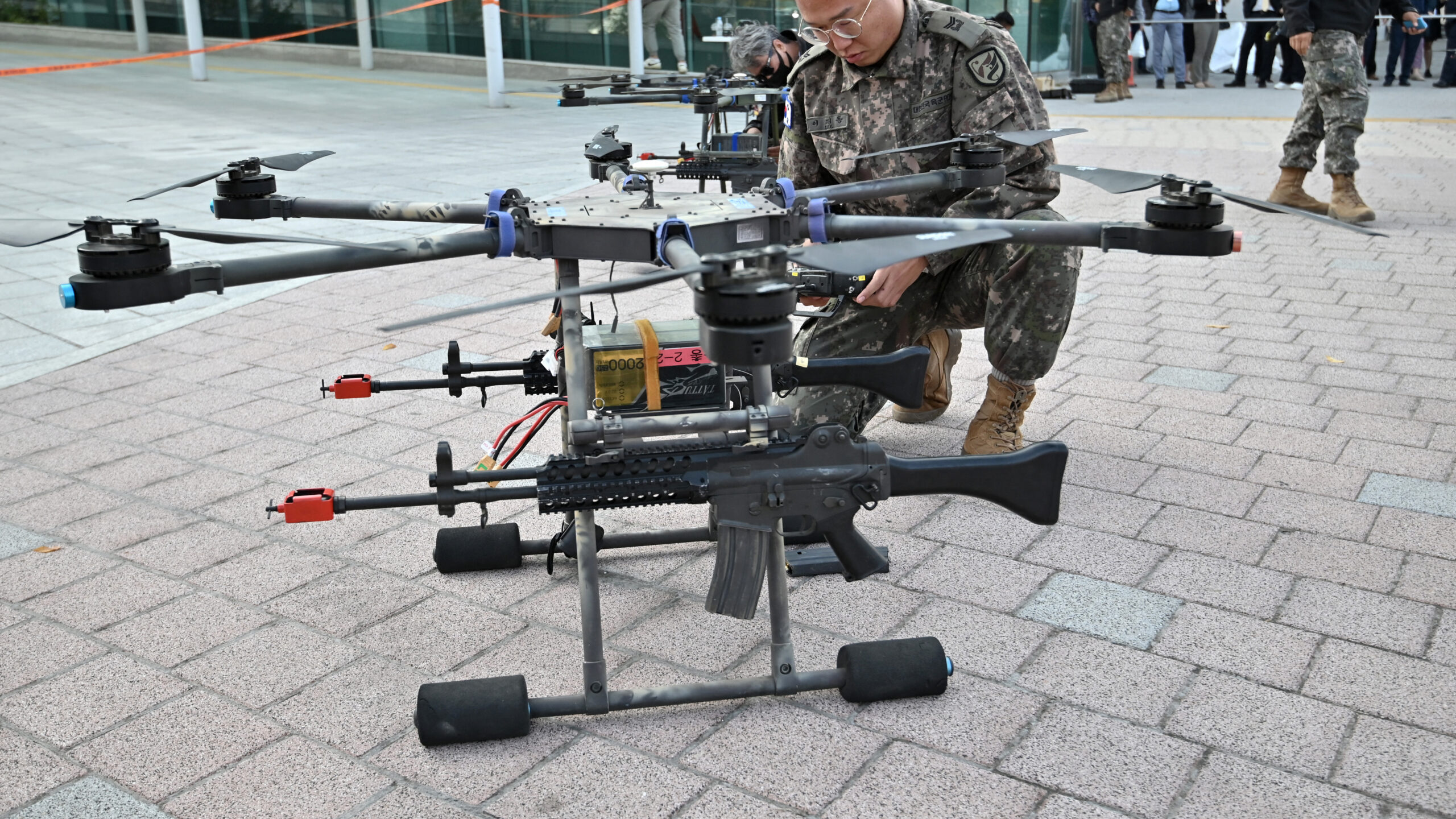
The South Korean military is launching a massive training initiative to equip its nearly 500,000 personnel with drone operational skills, treating unmanned aerial vehicles (UAVs) as standard personal combat equipment. This strategic shift aims to integrate drone technology across all branches of the armed forces to maintain a technological advantage during the ongoing security standoff with North Korea.
According to briefings from the South Korean Ministry of National Defense, the military intends to make drones a “universal combat tool” for all troops. The reform seeks to ensure that individual soldiers can operate these systems with the same proficiency they apply to personal firearms, effectively turning drones into a “second personal weapon.”
This reorganization follows tactical shifts observed in recent global conflicts, specifically in Ukraine and the Middle East. By moving away from a reliance on heavy, expensive assets and toward “attritable”—or cheap and expendable—technology, Seoul is preparing for a new era of decentralized, high-tech warfare.
How is South Korea training its military to use drones?
The South Korean defense strategy involves a fundamental change in infantry training. Instead of reserving drone operations for specialized units, the military plans to incorporate UAV handling into the standard curriculum for all service members. This approach ensures that even small, decentralized units can conduct their own surveillance and precision strikes without waiting for high-level command authorization.

The training focuses on two primary applications for the individual soldier:
- Tactical Surveillance: Using small, handheld drones to scout terrain, identify enemy positions, and monitor troop movements in real-time.
- Precision Strikes: Utilizing expendable, low-cost drones equipped with small munitions to engage targets with minimal risk to human personnel.
By treating drones as personal equipment, the military aims to increase the “situational awareness” of the individual soldier. This allows for faster decision-making on the battlefield, a necessity when facing the highly militarized border of North Korea.
Why are drone technologies reshaping South Korean defense?
Defense officials have cited the evolving nature of modern warfare as the primary driver for these reforms. The conflict in Ukraine has demonstrated that large-scale, conventional military movements are increasingly vulnerable to low-cost drone technology. In that theater, small, commercially available drones have been used to disrupt much larger armored formations and provide constant battlefield intelligence.
South Korea is adapting to these lessons by prioritizing “expendable” technology. Rather than investing solely in large, expensive reconnaissance aircraft, the Ministry of National Defense is shifting resources toward mass-produced, low-cost drones. This allows the military to lose equipment during missions without significant financial or strategic setbacks, a concept known as attritable warfare.
This shift is also a response to the specific threat posed by North Korea. As the North continues to develop its own drone capabilities, South Korea is seeking to create a “technological edge” that compensates for the sheer size and traditional manpower of the North Korean military. The goal is to use precision and intelligence to offset the North’s numerical advantages.
How will South Korea reorganize its drone command structure?
A significant component of this reform involves the restructuring of the existing drone operations command. Previously, this headquarters held direct command authority over various combat units. Under the new plan, the organization will be restructured to focus on a different priority: collaboration with the domestic technology sector.
According to reports, the reorganized command will serve as a bridge between the military and South Korean industry. This shift is designed to accelerate the development and procurement of commercial drone technology for military use. By working closely with private companies, the South Korean military can integrate the latest civilian innovations—such as advanced battery life, autonomous navigation, and AI-driven imaging—into their combat systems more rapidly than through traditional government procurement cycles.
This industry-centric model aims to create a continuous loop of innovation, where commercial advancements are quickly adapted for defense, and military requirements drive further technological breakthroughs in the private sector.
| Feature | Traditional Infantry Model | Drone-Integrated Model |
|---|---|---|
| Primary Tools | Personal firearms, grenades | Firearms, UAVs, expendable drones |
| Intelligence | Visual and manual reconnaissance | Real-time aerial surveillance |
| Strike Capability | Direct fire and heavy artillery | Precision drone-led strikes |
| Command Focus | Centralized unit control | Decentralized, industry-linked |
What technologies will be used to counter drone threats?
As South Korea integrates more drones into its own ranks, it is simultaneously developing robust defenses to protect against enemy UAVs. The military is planning to deploy a variety of counter-drone systems designed to detect, disrupt, and destroy incoming unmanned threats.

Key technologies being prioritized include:
- Directed Energy Weapons (DEW): This includes high-powered lasers capable of burning through the chassis of a drone or blinding its optical sensors.
- Microwave Weapons: High-power microwave (HPM) systems can be used to emit electromagnetic pulses that fry the electronic circuits of multiple drones simultaneously, making them highly effective against “drone swarms.”
- Electronic Warfare (EW): Systems designed to jam the radio frequencies used for drone control and GPS signals, effectively “grounding” the aircraft by severing its link to the operator.
The deployment of these technologies is intended to create a multi-layered defense shield, protecting critical infrastructure, command centers, and frontline troops from the growing threat of aerial unmanned attacks.
The South Korean Ministry of National Defense is expected to provide further updates regarding the specific timeline for the rollout of these training programs and the procurement of new counter-drone hardware in upcoming budget filings. For the latest official information on South Korean defense policy, interested parties can monitor the official Ministry of National Defense announcements.
What do you think about the shift toward drone-centric warfare? Share your thoughts in the comments below and share this article with your network.