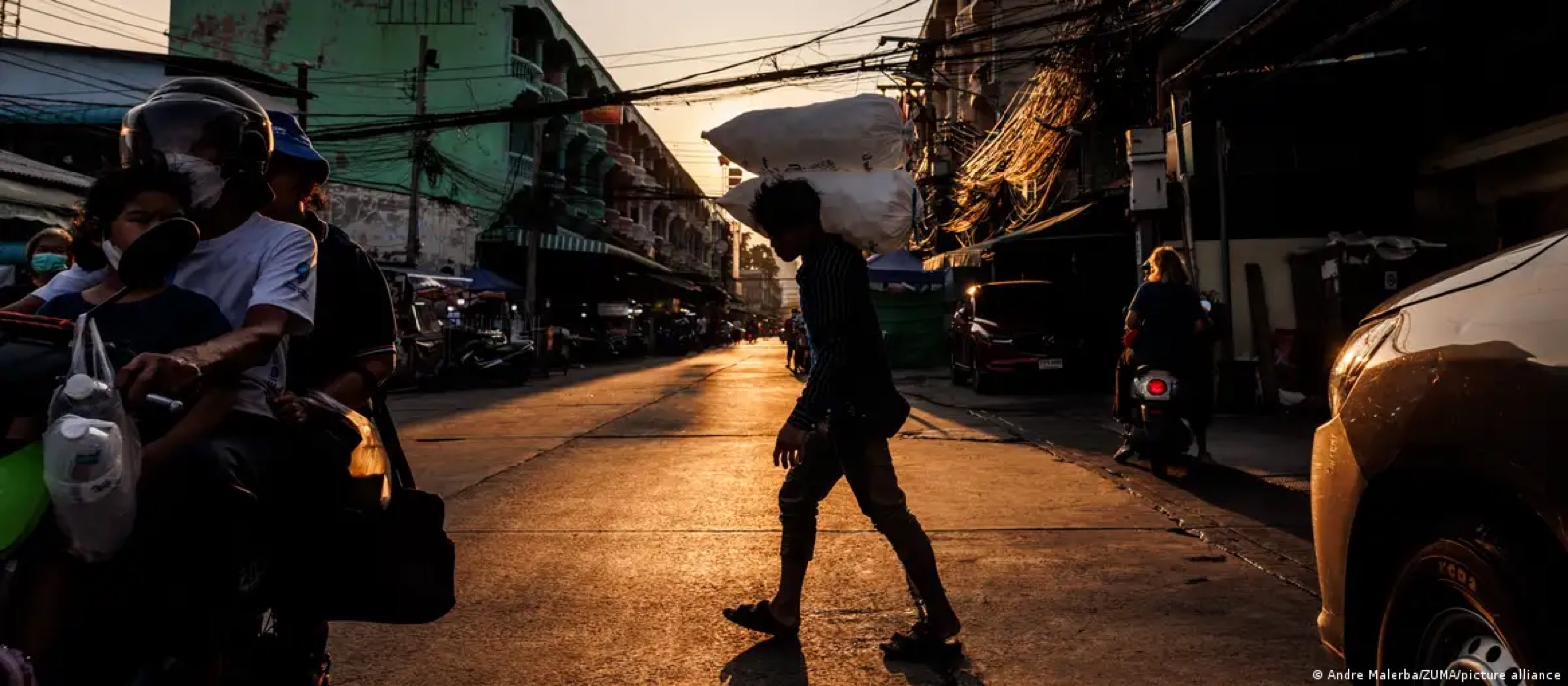
Southeast Asian nations are preparing for a powerful El Niño expected to peak between November 2026 and February 2027. This climate event threatens to create a “compound shock” when combined with existing economic pressures, including high energy and fertilizer costs resulting from the ongoing conflict in the Middle East.
Compound Risks to Regional Food Security
The convergence of climate anomalies and geopolitical instability has left Southeast Asia’s agricultural sector highly vulnerable. Experts warn that the region, which accounts for nearly one-tenth of global agricultural exports, is facing a compound shock effect
that could endanger millions of tonnes of food production.

The situation is particularly dire for rice, the region’s primary staple. Projections indicate a potential reduction in rice output of 2% to 8% compared to a normal year.
“Southeast Asia’s agricultural sector is exceptionally vulnerable to a new El Nino shock, given that its two primary commodities, rice and palm oil, are highly concentrated and uniquely sensitive to climate anomalies.”
Jason Lee, chair of the Global Heat Health Information Network’s Southeast Asia Hub
Economic Fallout from Middle East Conflict
The economic strain is compounded by the disruption of energy and fertilizer supplies through the Strait of Hormuz. The International Energy Agency (IEA) projects the region’s energy import bill will reach $160bn this year, doubling the $80bn bill recorded in 2024, with potential to hit $245bn in the future.

Vulnerabilities in Thailand, Philippines, and Indonesia
Different countries face varied levels of exposure based on their import dependencies. Thailand has been identified as a prime example of compound risk due to its reliance on imported fertilizers and its exposure to global energy price hikes. Meanwhile, nations such as the Philippines and Singapore are highly exposed to global food price shocks as net importers. In the Philippines, retail rice prices remained high despite government interventions, forcing the state to declare a food security emergency in February 2025.
“In the rain-fed rice areas, there will likely be higher incidence of localized droughts and in the irrigated rice areas there will likely be water stress due to lower reservoir and irrigation levels.”
Paul Teng, visiting senior fellow in the ISEAS–Yusof Ishak Institute’s Climate Change in Southeast Asia Program
Palm oil production, primarily in Indonesia and Malaysia, faces a delayed but significant impact. Impacts on palm oil yields are expected to manifest six to 12 months after peak temperatures due to reduced fresh fruit bunch formation.
Public Health and Haze Hazards
Beyond food prices, the El Niño event increases the probability of severe transboundary haze, particularly in Indonesia and Thailand. These fires, which historically occurred in 1997 and 2015 during positive Indian Ocean Dipole events, threaten to further disrupt both agricultural output and outdoor labor productivity.
Rather than relying on traditional single-hazard playbooks, experts suggest elevating food security to a national security concern. Coordination between ministries and targeted support for smallholder farmers, rather than broad, blunt price controls, remain the primary recommendations for mitigating the long-term impact of these overlapping crises.
Worth a look
- How Korean Streaming Giants Wavve and Tving are Fighting Subscription Fatigue with FAST Channels
- USS Fort Worth Retires After 14 Years and Imperial County Pet Adoption News
- Israel Raises Security Concerns Over Trump-Brokered Hamas Disarmament Deal (time.news)
- Oxford Homeowner Faces Storm Damage and Bridgeport Fire Chief Retires (news-usa.today)