
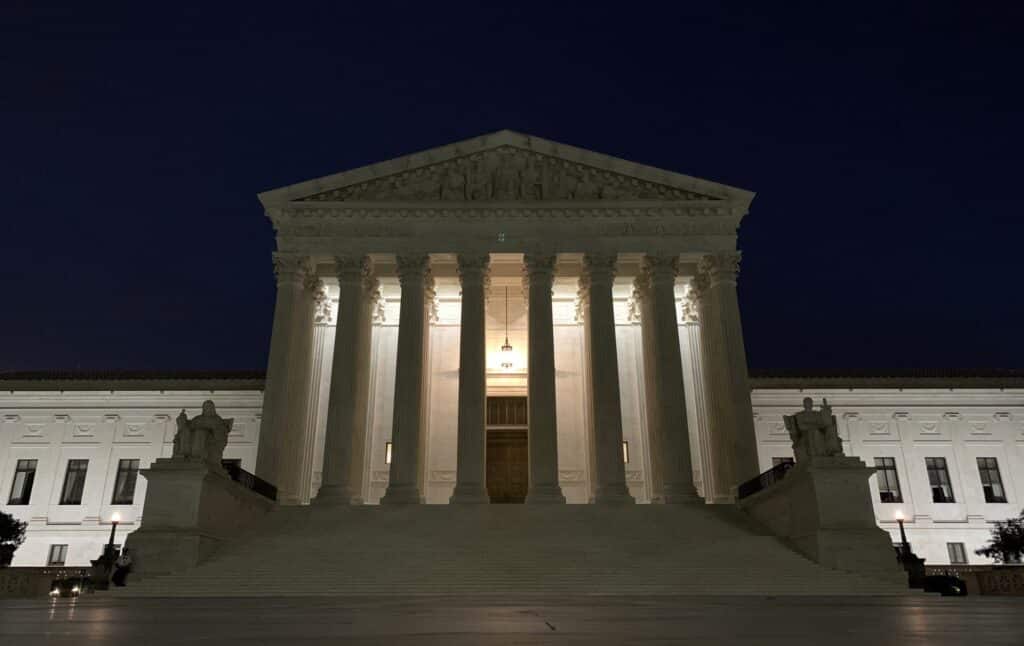
Political landscapes across the American South are shifting as Republican leadership in key states moves to redraw congressional boundaries, a process that could significantly alter the balance of power in the U.S. House of Representatives. In Tennessee and Alabama, efforts to revise electoral maps are gaining momentum following a series of complex legal battles and high-stakes rulings from the U.S. Supreme Court regarding the Voting Rights Act.
The push to redraw congressional maps is not merely a technical exercise in geography but a strategic effort to maximize partisan advantage. By adjusting the borders of voting districts, state legislatures can influence which candidates are likely to win, potentially eliminating Democratic strongholds and creating more seats for Republican representatives. This process, often referred to as gerrymandering, has become a focal point of intense legal and political conflict in the Southern United States.
At the center of this struggle is the interpretation of Section 2 of the Voting Rights Act (VRA), a landmark piece of federal legislation designed to prevent racial discrimination in voting. While some Supreme Court decisions have reinforced the necessity of protecting minority voting power, other recent rulings have provided a legal opening for states to challenge the requirement of creating majority-minority districts, provided they can argue that race was not the predominant factor in the map’s design.
These developments are particularly critical as the United States approaches future election cycles. The outcome of these redistricting efforts will determine not only who represents these states in Washington but likewise the overall ideological lean of the House, where the margin of control is often razor-thin.
The Battle Over Alabama’s Congressional Map
Alabama has been a primary theater for redistricting litigation. The state’s struggle reached a climax in the case of Allen v. Milligan, where the U.S. Supreme Court addressed whether Alabama’s congressional map illegally diluted the voting power of Black citizens. On June 8, 2023, the Court ruled that Alabama’s map likely violated Section 2 of the Voting Rights Act by failing to create a second congressional district where Black voters had a reasonable opportunity to elect a candidate of their choice .
This ruling forced Alabama to move toward a map that included two majority-Black districts, a significant shift from previous attempts by the state legislature to maintain a single such district. However, the political climate remains volatile. Republican governors and legislators continue to navigate the narrow corridor between court-mandated minority protections and their goal of securing a Republican-leaning delegation.
The impact of the Allen v. Milligan decision was felt immediately, as it reaffirmed that the “Gingles” test—the legal standard used to determine if a minority group is sufficiently large and geographically compact to form a majority district—remains the governing law. For Alabama, this meant a mandatory reconfiguration of its boundaries to ensure fair representation for its substantial Black population.
Tennessee’s Push to Eliminate Democratic Seats
In Tennessee, the redistricting strategy has taken a more aggressive turn toward partisan consolidation. Recent efforts by Republican allies, including U.S. Senator Marsha Blackburn, have urged state lawmakers to redraw the congressional map to target the state’s only Democratic-held House seat. According to reports from April 29, 2026, proposals have emerged to divide Tennessee into nine Republican-leaning districts, effectively eliminating the sole Democratic presence in the state’s House delegation .
This strategy focuses heavily on the Memphis area and Nashville, where Democratic support is concentrated. By splitting these urban centers across multiple districts, Republicans can dilute the Democratic vote, making it nearly impossible for a Democratic candidate to secure a majority in any single district. This approach is a classic example of “cracking”—a gerrymandering technique used to break up a community of interest to minimize its influence.
The drive to redraw the Tennessee map follows a broader trend of Southern states attempting to capitalize on Supreme Court rulings that have narrowed the scope of the Voting Rights Act. While federal courts have previously upheld some of Tennessee’s maps by ruling that they were gerrymandered for partisan reasons—which is generally legal—rather than racial reasons, the push for a new map seeks to push those boundaries even further.
Comparing Redistricting Strategies in the South
| State | Primary Legal Driver | Strategic Goal | Current Status |
|---|---|---|---|
| Alabama | VRA Section 2 (Allen v. Milligan) | Balance minority protections with GOP seats | Court-mandated second Black-majority district |
| Tennessee | Partisan Advantage/SCOTUS Precedents | Eliminate the sole Democratic House seat | Proposed move toward 9 Republican districts |
Why This Matters: The Broader Implications for U.S. Democracy
The movement to redraw maps in the South is more than a regional dispute. it is a fundamental conflict over the nature of representative democracy. When districts are drawn to guarantee a specific outcome, the primary election becomes the only meaningful contest, often pushing candidates toward more extreme ideological positions to avoid being “primaried” from the right or left.
For voters, the consequences are tangible. “Cracking” and “packing”—the two primary tools of gerrymandering—can abandon millions of citizens feeling that their vote is meaningless because the outcome of the general election has been pre-determined by the map-makers. This often leads to lower voter turnout and a sense of alienation from the political process.
these efforts highlight the tension between the judiciary and the legislature. The U.S. Supreme Court has largely stepped back from policing partisan gerrymandering, declaring it a “political question” beyond the reach of federal courts. However, it continues to police racial gerrymandering. This creates a loophole where map-makers can claim their motives are purely partisan—even when those partisan lines happen to align perfectly with racial demographics—to avoid violating the Voting Rights Act.
Key Stakeholders and Affected Groups
- Minority Voters: Specifically Black communities in the “Black Belt” of Alabama and urban centers like Memphis and Nashville, whose voting power is often the target of redistricting.
- State Legislatures: Republican-led bodies in the South who hold the power to draw and pass new maps.
- Federal Courts: The referees who must determine if a map violates the U.S. Constitution or the Voting Rights Act.
- The U.S. House of Representatives: The ultimate destination where these map changes manifest as shifts in the majority power.
What Happens Next?
The next critical checkpoint for these redistricting efforts will be the filing of new legal challenges in Tennessee as the proposed nine-district map moves toward potential adoption. Advocacy groups and civil rights organizations are expected to file lawsuits alleging that the elimination of the Democratic seat is a proxy for racial discrimination, mirroring the arguments that successfully challenged Alabama’s maps in the past.
In Alabama, the focus remains on the implementation and long-term stability of the current maps, with ongoing monitoring to ensure that the mandated minority protections are not eroded through subsequent administrative changes.
As these legal battles unfold, the eyes of the world remain on the American South, where the map is being redrawn not just to reflect the population, but to redefine political power for a generation. We invite our readers to share their perspectives on the impact of redistricting in the comments section below.