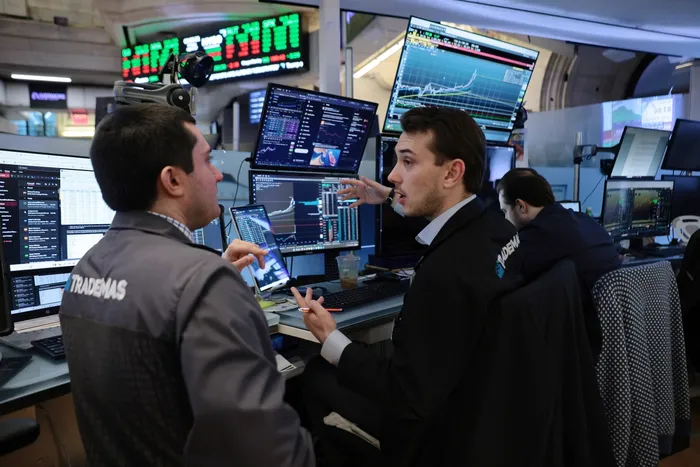
Global equity markets continued their upward trajectory in mid-April 2025, with the S&P 500 index crossing the psychologically significant 7,100 threshold for the first time in its history. The milestone came amid a broad-based rally driven by easing geopolitical tensions, declining energy costs, and resilient corporate earnings, signaling renewed investor confidence in the U.S. Economic outlook despite persistent inflationary pressures and global uncertainties.
The S&P 500 closed at 7,126 on April 17, marking a 4.54% weekly gain and its highest level ever recorded. The benchmark index’s ascent past 7,100 followed a series of positive developments, including reports that Iran had reopened the Strait of Hormuz, reducing fears of major oil supply disruptions. This development, combined with softer-than-expected U.S. Producer price data and stronger-than-anticipated bank earnings, helped fuel a risk-on sentiment across global markets.
According to data from S&P Dow Jones Indices, the S&P 500’s rise to 7,126 represented not only a new all-time high but also the fastest ascent from 6,000 to 7,000 points in the index’s history, achieved in approximately 14 months. The milestone underscores the resilience of U.S. Equities amid a complex macroeconomic environment marked by fluctuating interest rates, ongoing geopolitical friction, and evolving monetary policy expectations from the Federal Reserve.
Geopolitical Easing Fuels Market Optimism
A key catalyst for the April rally was the de-escalation of tensions in the Middle East, particularly surrounding Iran’s maritime activities. On April 17, Iranian officials confirmed through state media that the Strait of Hormuz — a critical chokepoint through which roughly 20% of global oil trade passes — was fully open and operating normally. The announcement followed diplomatic engagements between U.S. And Iranian representatives in Oman, where both sides discussed potential frameworks for reducing regional hostilities.
The Strait’s reopening had an immediate impact on energy markets. West Texas Intermediate (WTI) crude futures fell more than 10% to approximately $84 per barrel by week’s finish, according to data from the U.S. Energy Information Administration (EIA). Brent crude also declined sharply, trading below $88 per barrel. The drop in oil prices alleviated concerns about inflationary pressures from energy costs and provided relief to energy-intensive sectors such as transportation, utilities, and homebuilding.
Treasury yields also declined in tandem, with the 10-year U.S. Treasury note yield closing at 4.25% on April 17, down from 4.36% earlier in the week, as reported by the U.S. Department of the Treasury. Lower yields reduced borrowing costs and made equities more attractive relative to fixed-income assets, further supporting the equity rally.
Corporate Earnings and Economic Data Bolster Confidence
Investor sentiment was strengthened by better-than-expected inflation data. The U.S. Bureau of Labor Statistics reported that the Producer Price Index (PPI) rose 4.0% year-over-year in March 2025, below the consensus forecast of 4.6%. This marked the second consecutive month of PPI readings coming in under expectations, suggesting that wholesale price pressures may be moderating.
Major financial institutions also delivered stronger-than-anticipated results. JPMorgan Chase, Bank of America, Morgan Stanley, and Wells Fargo all reported first-quarter earnings that exceeded analyst estimates, particularly in investment banking and trading divisions. According to FactSet, 78% of S&P 500 companies had reported Q1 earnings by April 18, with 82% surpassing profit forecasts and 76% beating revenue expectations.
Technology stocks continued to lead the market advance, with Microsoft and Oracle posting gains of over 4% on April 15 following strong cloud infrastructure updates. Semiconductor firms such as NVIDIA and Advanced Micro Devices also saw increased buying interest, driven by optimism around artificial intelligence infrastructure spending.
the initial public offering of drone manufacturer Aevex Aerospace generated notable market attention. The company raised $320 million in its Nasdaq debut on April 17, with shares rising 23% on the first day of trading, according to Bloomberg data. The successful IPO underscored continued investor appetite for innovation-driven equities, particularly in aerospace and defense technology sectors.
Market Breadth and Volatility Trends
The rally was not confined to large-cap stocks. The Russell 2000 index, which tracks small-cap companies, gained 5.56% for the week, reflecting broad participation across market capitalizations. The Nasdaq Composite surged 6.84% to close at an all-time high of 18,450, led by strength in software, semiconductor, and digital services sectors.
Market volatility, as measured by the CBOE Volatility Index (VIX), declined significantly over the week. The VIX closed at 17.48 on April 17, down 9.1% from the prior week’s close, according to data from the Chicago Board Options Exchange. A VIX reading below 20 typically indicates relatively low investor fear, suggesting that market participants were growing more complacent about near-term downside risks.
Despite the positive momentum, some analysts cautioned that risks remain. The International Monetary Fund (IMF) had earlier in the week warned of a potential global growth slowdown, citing persistent inflation, high debt levels, and fragmented trade patterns. However, markets largely discounted the warning, focusing instead on improving corporate fundamentals and easing geopolitical headwinds.
What the 7,100 Milestone Means for Investors
The S&P 500’s breach of 7,100 represents more than a numerical milestone — it reflects a shift in market psychology. Historically, such round-number thresholds have acted as psychological barriers, and their breach often signals the end of a correction phase and the resumption of a bullish trend. The index’s V-shaped recovery from its April low of approximately 6,650 to above 7,100 in under two weeks suggests that the March–April pullback was viewed by many investors as a tactical correction rather than the start of a prolonged bear market.
Paul Stanley, chief investment officer at Granite Bay Wealth Management, noted in an interview with The Epoch Times that “the speed and V-shaped nature of the recovery suggest this was a correction, not the start of a downturn.” He added that lower-than-expected earnings expectations heading into Q1 had created a favorable environment for positive surprises, which in turn fueled the rally.
Nonetheless, challenges persist. Inflation remains above the Federal Reserve’s 2% target, with the Consumer Price Index (CPI) rising 2.8% year-over-year in March. Geopolitical tensions, while eased in the Strait of Hormuz, remain fluid, particularly concerning Iran’s nuclear program and regional alliances. The U.S. National debt surpassed $36 trillion in April 2025, according to the Treasury Department, raising long-term fiscal sustainability concerns.
Looking ahead, investors will closely monitor the Federal Reserve’s next policy meeting scheduled for May 6–7, 2025, where officials are expected to hold interest rates steady at the current range of 5.25%–5.50%. Futures markets imply a 60% probability of at least one rate cut by September, according to CME Group’s FedWatch Tool.
For now, the S&P 500’s climb past 7,100 serves as a reminder of the enduring strength of U.S. Capital markets — and the importance of staying informed amid volatility. Readers seeking real-time updates can follow official data releases from the U.S. Bureau of Economic Analysis, the Federal Reserve, and S&P Dow Jones Indices.
What do you think about the market’s recent performance? Share your thoughts in the comments below, and experience free to share this article with others interested in global financial trends.
Worth a look