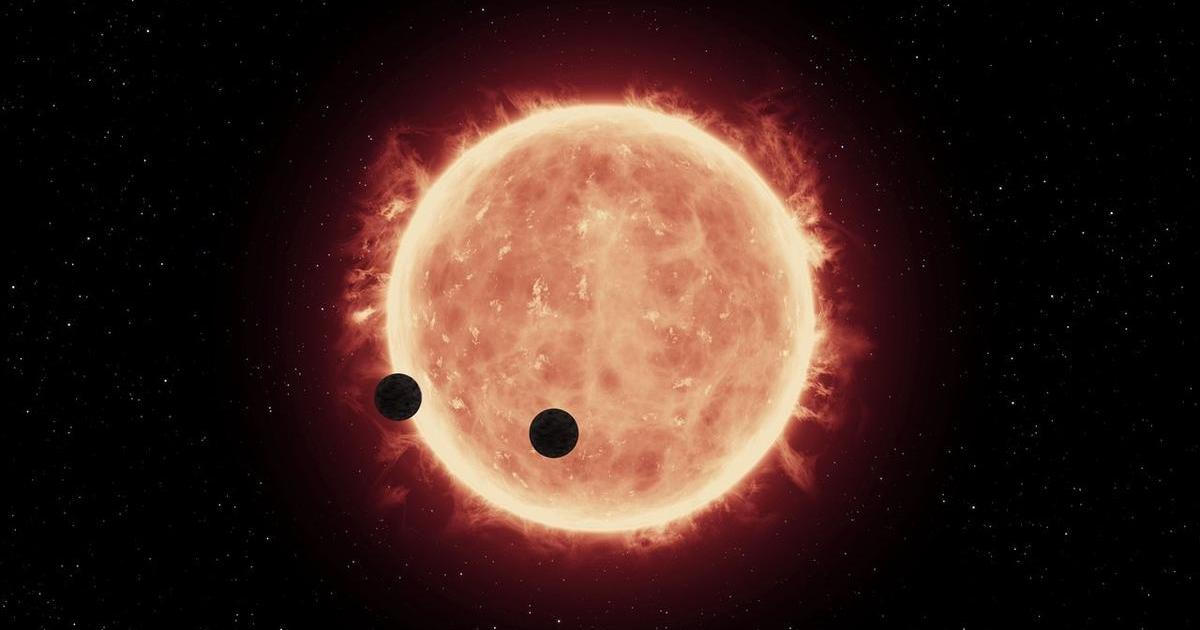
Astronomers have confirmed the observation of Sun-like stars consuming their own orbiting planets, a phenomenon often described by researchers as stellar cannibalism. Recent data from the Massachusetts Institute of Technology (MIT) and international collaborators indicate that as stars age and evolve into red giants, they expand significantly, inevitably engulfing nearby planetary bodies that reside within their reach. This process provides a rare, direct look at the final stages of planetary systems, including potential insights into the long-term future of our own solar system.
The study, published in the journal Nature, focuses on the event ZTF SLRN-2020, where researchers observed a star located approximately 12,000 light-years away within the Milky Way galaxy. According to the MIT Department of Physics, the star expanded as it exhausted its nuclear fuel, encroaching upon a gas giant planet roughly the size of Jupiter. The resulting interaction was not an instantaneous explosion but a gradual “swallowing” that released a specific, low-energy infrared outburst, distinguishing it from the more violent stellar mergers typically observed in deep space.
The Mechanics of Stellar Consumption
When a star reaches the end of its main-sequence life—the period during which it fuses hydrogen into helium—it undergoes a transition into a red giant phase. During this expansion, the star’s radius can increase by a factor of hundreds or even thousands. Any planet caught in the path of this expanding stellar atmosphere experiences increased atmospheric drag, causing its orbit to decay. The planet eventually spirals inward, depositing its mass into the star’s outer layers.
As noted by the National Aeronautics and Space Administration (NASA), this process is likely a common occurrence in the life cycle of planetary systems. While stars like our Sun are expected to expand into red giants in approximately 5 billion years, the specific observation of a planet being consumed provides empirical evidence for the theoretical models of planetary migration and destruction that scientists have debated for decades.
Distinguishing Cannibalism from Stellar Mergers
A critical challenge for researchers is differentiating between the consumption of a planet and the merger of two stars. According to findings detailed by the journal Nature, the ZTF SLRN-2020 event was characterized by a distinct lack of heavy elements that would typically be present if two stars had collided. Instead, the energy signature was remarkably low, consistent with the mass of a gas giant rather than a stellar companion.
This discovery allows astronomers to categorize these events more accurately. By analyzing the light curves and infrared emissions, the research team identified that the total energy released was about 1,000 times smaller than any stellar merger previously recorded. This “missing” energy is a key identifier for planetary consumption, confirming that the star was not merging with another star, but rather incorporating a significantly smaller, planetary-mass object.
Implications for the Solar System
The question of whether Earth will suffer a similar fate remains a subject of ongoing research. Current solar evolution models suggest that as the Sun approaches its red giant phase, it will likely expand to engulf Mercury, Venus, and possibly Earth. However, the exact timeline and the final radius of the Sun remain variables that scientists continue to refine through solar observation and computational modeling.
According to the European Space Agency (ESA), the Sun is currently in a stable state and will not begin its transition to a red giant for several billion years. The study of distant “cannibalistic” stars serves as a natural laboratory, helping physicists predict the atmospheric changes and orbital mechanics that will dictate the eventual configuration of the inner solar system.
Future Research and Observations
The identification of ZTF SLRN-2020 was made possible by the Zwicky Transient Facility (ZTF) at the Palomar Observatory, which scans the night sky for transient events. The scientific community expects that future surveys, including those conducted by the Vera C. Rubin Observatory, will uncover more instances of planetary engulfment, providing a larger dataset to understand how frequently stars consume their orbiting worlds.
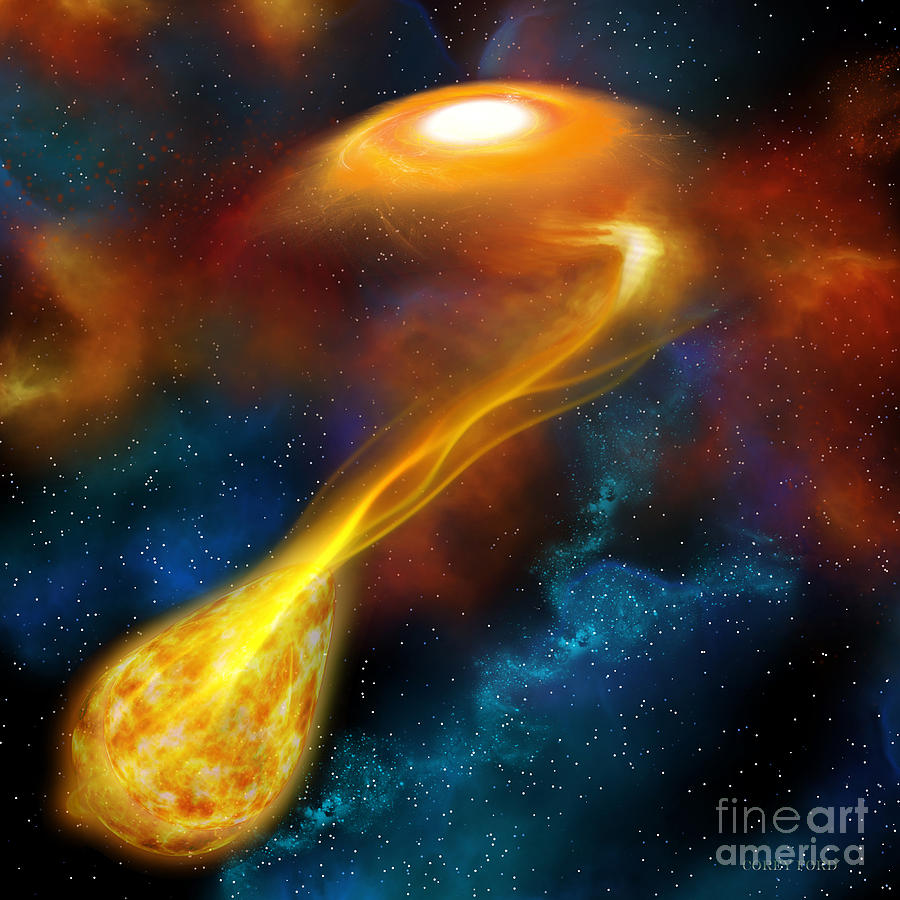
As of mid-2024, astronomers are focused on identifying the chemical signatures that remain in a star’s atmosphere after it has consumed a planet. By analyzing the metallic content of aging stars, researchers hope to determine if a star has “eaten” a rocky planet, which would leave behind distinct chemical traces (such as increased levels of lithium or heavy metals) that differ from the star’s original composition.
Ongoing monitoring of stars in the Milky Way continues to provide data for these models. Readers interested in the latest updates regarding stellar evolution and exoplanetary research can follow official announcements from the International Astronomical Union (IAU), which coordinates global efforts to categorize and analyze such celestial phenomena. We invite our readers to share their thoughts on these findings in the comments section below.
Related reading