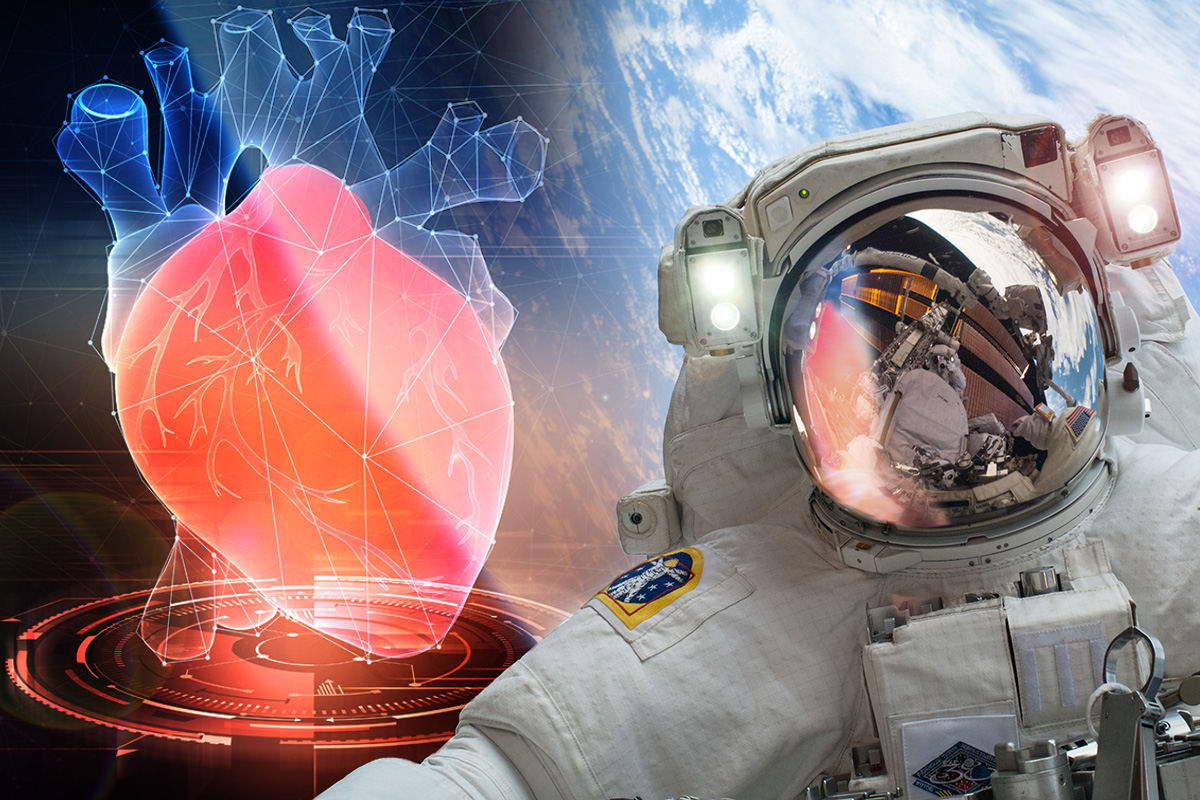
As humanity stands on the precipice of becoming a multi-planetary species, the ambition to reach Mars and establish lunar bases is no longer the sole province of science fiction. However, while aerospace engineering has solved many of the challenges of propulsion and life support, a more intimate obstacle remains: the human heart. The transition from the steady pull of Earth’s gravity to the weightlessness of orbit triggers a cascade of physiological shifts that challenge our fundamental understanding of cardiovascular health.
This emerging frontier, known as space cardiology, is now a critical pillar of astronaut health. For decades, we have monitored the effects of short-term missions, but deep space travel introduces variables—such as prolonged microgravity and high-energy cosmic radiation—that could permanently alter the structure and function of the heart. As we move beyond Low Earth Orbit (LEO), the medical community must determine if the human cardiovascular system can withstand the rigors of a multi-year journey to the Red Planet and back.
The stakes are high. A cardiovascular event in deep space, millions of miles from the nearest emergency room, would be catastrophic. Understanding how the heart remodels itself in the void is not just about protecting astronauts; it is providing a unique laboratory to study heart failure, hypertension and aging on Earth. By observing the heart under extreme conditions, researchers are uncovering biological mechanisms that remain hidden in terrestrial clinical settings.
The Fluid Shift: When Gravity Vanishes
The most immediate challenge the heart faces upon entering microgravity is the redistribution of bodily fluids. On Earth, gravity pulls blood and interstitial fluids toward the lower extremities. In space, this downward force disappears, causing a significant “cephalad fluid shift”—a migration of fluids from the legs toward the chest and head. This phenomenon is often colloquially referred to by astronauts as “puffy face, chicken legs” syndrome.
From a cardiological perspective, this shift is far from superficial. The sudden increase in central blood volume is perceived by the body as a state of fluid overload. In response, the body attempts to compensate by reducing overall plasma volume to lower the pressure. This leads to a decrease in total blood volume, which can result in “space anemia,” as the body suppresses the production of red blood cells to maintain a balanced concentration of hemoglobin in a smaller volume of plasma.
This redistribution also places an unusual strain on the heart’s geometry. Research conducted on the NASA Human Research Program indicates that the heart does not merely change its workload; it changes its shape. In microgravity, the heart tends to become more spherical. While this remodeling is often reversible upon return to Earth, the long-term implications of a spherical heart during a three-year Mars mission remain a primary concern for space cardiologists.
Cardiac Atrophy and the Cost of Weightlessness
The heart is a muscle, and like any muscle, it follows the principle of “use it or lose it.” On Earth, the heart must constantly work against gravity to pump blood upward from the legs to the brain. In the weightless environment of the International Space Station (ISS), this gravitational resistance vanishes. The heart no longer needs to pump as hard to maintain systemic circulation, leading to a decrease in myocardial workload.
Over time, this lack of resistance can lead to cardiac atrophy—a reduction in the mass of the left ventricle, the heart’s primary pumping chamber. Studies have shown that astronauts can experience a measurable decline in left ventricular mass during long-duration missions. This atrophy is not merely a loss of size but can involve changes in the stiffness of the heart muscle and a decrease in stroke volume, meaning the heart pumps less blood with each beat.

The danger of this atrophy becomes most apparent during reentry. When an astronaut returns to Earth’s gravity, a heart that has “downsized” for space may struggle to meet the sudden demand of pumping blood against 1g of force. This often manifests as orthostatic intolerance, where astronauts experience dizziness or fainting upon landing because the heart cannot sufficiently propel blood to the brain. To combat this, NASA and other agencies employ rigorous countermeasures, including high-intensity interval training and the use of the Advanced Resistive Exercise Device (ARED) to simulate gravitational loads.
The Invisible Threat: Deep Space Radiation
While microgravity affects the mechanics of the heart, deep space introduces a more insidious threat: ionizing radiation. Within the protective bubble of Earth’s magnetic field (the magnetosphere), astronauts on the ISS are relatively shielded from the harshest cosmic rays. However, missions to Mars will expose crews to Galactic Cosmic Rays (GCRs) and Solar Particle Events (SPEs) for extended periods.

Evidence suggests that high-energy radiation can damage the endothelial lining of the blood vessels, the thin layer of cells that regulates vascular tone and prevents clotting. This damage can accelerate the process of atherosclerosis—the buildup of plaque in the arteries—potentially leading to premature cardiovascular disease. Radiation can also trigger oxidative stress within the myocardium, potentially increasing the risk of arrhythmias or chronic heart failure over a lifetime.
The European Space Agency (ESA) and other international partners are currently investigating biological countermeasures, such as antioxidant therapies and advanced shielding materials, to mitigate these risks. The goal is to ensure that the cardiovascular system of a 40-year-old astronaut does not biologically age to that of a 60-year-old by the time they reach their destination.
The Future of Diagnostics: AI and Remote Monitoring
In a terrestrial hospital, a patient suspected of having a cardiac event has access to 12-lead ECGs, echocardiograms, and cardiac MRIs. In deep space, such luxury is non-existent. The distance between Earth and Mars creates a communication lag of up to 20 minutes each way, making real-time tele-cardiology impossible. The crew must be self-sufficient.
This necessity is driving a revolution in medical innovation. Space cardiology is currently pivoting toward AI-driven diagnostics and wearable biosensors. Future missions will likely rely on “smart” clothing capable of continuous, medical-grade ECG monitoring and AI algorithms that can detect subtle patterns of arrhythmia or myocardial ischemia without needing a physician’s immediate input. These tools will provide a baseline of “digital twins”—virtual models of each astronaut’s heart—that can be used to predict how an individual will react to specific stressors.
the development of portable, ultra-sound-based imaging is critical. Miniaturized echocardiography allows crew members to visualize heart function in real-time, providing essential data on ventricular volume and ejection fraction. These innovations, born from the needs of space travel, are already finding their way back to Earth, improving rural healthcare and emergency medicine where access to large-scale imaging is limited.
Key Takeaways for Cardiovascular Health in Space
- Fluid Redistribution: Microgravity causes blood to shift toward the head, leading to a decrease in total plasma volume and changes in heart shape.
- Myocardial Atrophy: The lack of gravitational resistance reduces the heart’s workload, potentially leading to a loss of muscle mass in the left ventricle.
- Radiation Risks: Exposure to galactic cosmic rays may damage blood vessel linings and accelerate cardiovascular aging.
- Recovery Challenges: Return to Earth often triggers orthostatic intolerance due to the heart’s adaptation to weightlessness.
- Technological Leap: Deep space missions are accelerating the use of AI diagnostics and wearable cardiac monitors.
What Happens Next?
The immediate future of space cardiology is tied to the Artemis missions, which aim to return humans to the lunar surface. The Moon will serve as a critical “proving ground” for the cardiovascular countermeasures and monitoring systems intended for Mars. Researchers will be closely watching how the heart responds to the Moon’s partial gravity (approximately one-sixth of Earth’s), providing the missing link between the total weightlessness of the ISS and the full gravity of Earth.

As we refine these protocols, the ultimate goal is a comprehensive “Cardiovascular Flight Manual” that dictates exercise regimens, nutritional interventions, and pharmacological supports tailored to the individual genetic profile of each astronaut.
Do you believe the biological risks of deep space are the primary barrier to Mars, or is the challenge purely technical? Share your thoughts in the comments below and subscribe to World Today Journal for more updates on the intersection of medicine and exploration.
Related reading