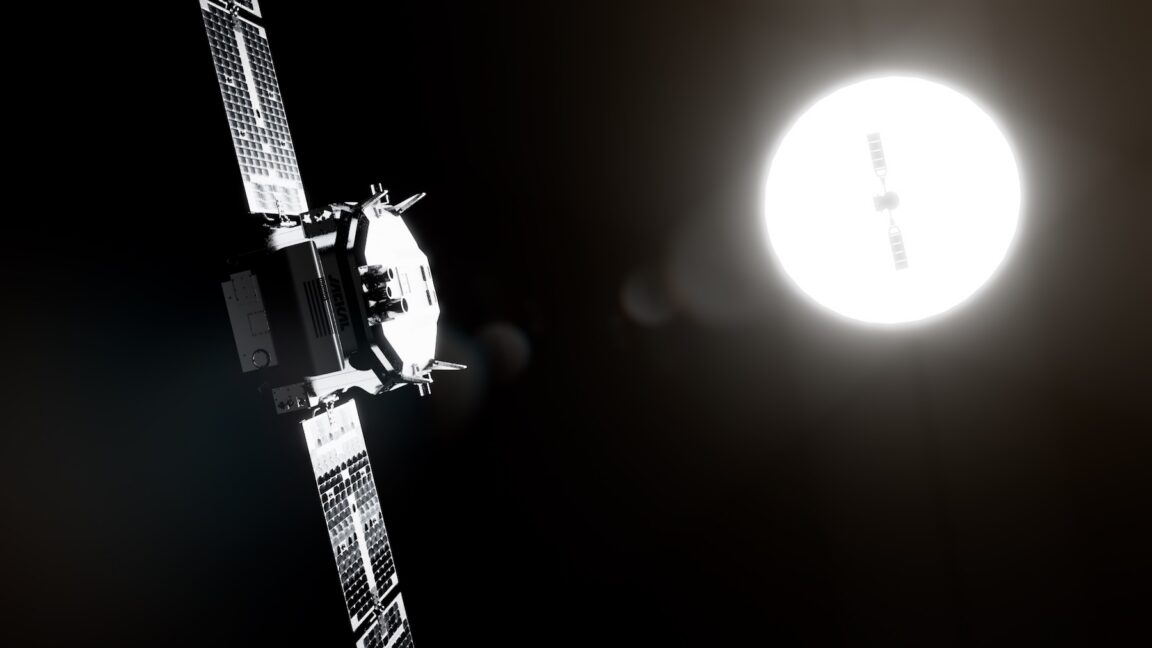
The idea of dogfighting in space, a staple of science fiction for decades, is rapidly moving closer to reality. Whereas the cinematic portrayals of swirling spacecraft engaging in acrobatic combat bear little resemblance to what military strategists envision, the foundational perform is underway. A new wave of companies, like True Anomaly, are focused on building the infrastructure – the spacecraft, sensors, and software – necessary for what’s being termed “space superiority.” This isn’t about recreating Star Wars; it’s about establishing control and resilience in an increasingly contested orbital environment, and understanding how warfare evolves when unbound by gravity and atmosphere.
The development of space warfare capabilities is driven by a recognition that space-based assets are critical to modern life and military operations. Satellites provide essential services like communication, navigation, and intelligence gathering. Protecting these assets, and potentially denying those services to adversaries, is becoming a central focus for national security. The U.S. Space Force, established in December 2019, formalized the nation’s commitment to space as a warfighting domain. This shift in focus is prompting a surge in investment and innovation, with private companies playing an increasingly crucial role.
From Air Superiority to Space Superiority: Lessons from the Past
The path to space warfare is being informed by the history of aerial combat. As True Anomaly’s team emphasizes, the evolution of air power provides a valuable blueprint. The company draws parallels between the development of fighter aircraft during World War II and the current efforts to build capabilities for space superiority. Specifically, they point to the P-51 Mustang as a pivotal example. The P-51, initially designed for short-range missions, was transformed by the addition of the Rolls-Royce Merlin engine, dramatically extending its range and enabling it to escort bombers deep into enemy territory. This shift in capability fundamentally altered the balance of power in the air, allowing the Allies to achieve air superiority.
As noted in a 2025 article, the P-51 Mustang’s impact wasn’t simply about speed or firepower; it represented a broader demonstration of American industrial strength and evolving air strategy. World War Wings details how the P-51’s endurance allowed U.S. Pilots to protect bomber formations, a capability previously unattainable. Japanese pilots, accustomed to shorter-range engagements, suddenly faced an enemy that could pursue them across vast distances. True Anomaly believes a similar dynamic will play out in space, where the ability to project power and maintain a persistent presence will be crucial.
The analogy extends to the concept of purpose-built platforms. Just as a guided bomb unit (GBU) or the B-2 Spirit bomber have no commercial applications, many of the systems being developed for space superiority will be exclusively military in nature. The mission dictates the design, and the demands of warfare often preclude dual-employ applications. This is a departure from the early days of space exploration, which were largely driven by scientific and commercial interests.
True Anomaly: Building a Full-Stack Space Superiority Solution
True Anomaly, founded in 2022, is positioning itself as a “full-stack mission solution provider” for space superiority missions. In other words the company isn’t simply building spacecraft buses – the foundational structure of a satellite – but is also designing and building the payloads, software, and operational infrastructure needed to execute complex missions. They aim to provide a complete end-to-end solution, encompassing everything from spacecraft design and manufacturing to on-orbit operations and tactics development.
According to the company, they are developing a wide range of sensors, including optical sensors, active sensors, lidars, and radars. These sensors will be used for a variety of applications, including intelligence gathering, missile warning, and, crucially, offensive and defensive space warfare capabilities. True Anomaly intends to leverage existing supply chains where possible, but for many missions, they plan to develop custom payloads tailored to specific requirements. This vertical integration allows them to control the entire value chain and ensure that their systems are optimized for the demands of space warfare.
The company’s approach reflects a broader trend in the space industry, where companies are increasingly seeking to offer complete solutions rather than simply providing individual components. This shift is driven by the require for greater agility and responsiveness in a rapidly evolving threat landscape. The traditional procurement process, which often involves lengthy development cycles and complex integration challenges, is ill-suited to the fast-paced world of space warfare.
The Challenges of Space Warfare: A Different Kind of Battlefield
While the lessons of aerial combat are valuable, space warfare presents unique challenges. The vastness of space, the speed of orbital mechanics, and the lack of atmosphere all necessitate a different approach to tactics and strategy. Dogfighting, as depicted in science fiction, is unlikely to occur in the traditional sense. Instead, space warfare is likely to involve a combination of kinetic and non-kinetic attacks, targeting satellites and ground-based infrastructure.
Kinetic attacks, such as anti-satellite (ASAT) weapons, involve physically destroying or disabling a satellite. These attacks generate debris, which can pose a long-term threat to all space-faring nations. Non-kinetic attacks, such as jamming, cyberattacks, and directed energy weapons, aim to disrupt or degrade a satellite’s functionality without causing physical damage. These attacks are more subtle and difficult to attribute, making them an attractive option for adversaries.
The development of effective defenses against these attacks is a major priority. This includes building more resilient satellites, developing advanced sensors to detect and track threats, and establishing robust command and control systems. It also requires a fundamental rethinking of space doctrine and the development of new tactics and strategies. As True Anomaly’s Rogers points out, the operational concepts will drive the performance envelope for warfare in space.
The First Munition and the Evolution of Warfare
The historical context of warfare provides further insight into the current state of space warfare development. The first munition dropped from an airplane occurred in 1911, before the outbreak of World War I, marking the beginning of aerial bombardment. The National Security Journal highlights this parallel, noting that the space domain is currently at a similar inflection point, learning how to utilize new technologies for offensive and defensive purposes. The early days of aerial warfare were characterized by experimentation and improvisation, and a similar process is unfolding in space today.
The initial focus was on reconnaissance and communication, but as technology advanced, the potential for offensive operations became apparent. The same pattern is now emerging in space, with the initial emphasis on intelligence gathering and missile warning gradually giving way to a broader consideration of offensive and defensive capabilities. This evolution is driven by the recognition that space is no longer a sanctuary, but a contested domain.
Looking Ahead: The Future of Space Superiority
The development of space warfare capabilities is still in its early stages, but the pace of innovation is accelerating. Companies like True Anomaly are playing a key role in this process, pushing the boundaries of what’s possible and challenging conventional wisdom. The coming years will likely see a significant increase in investment in space security, as nations and private companies alike recognize the importance of protecting their assets in orbit.
The challenge will be to strike a balance between developing effective defenses and avoiding an arms race in space. The creation of international norms and agreements to govern the use of force in space is essential to prevent escalation and maintain stability. However, achieving consensus on these issues will be difficult, given the competing interests of different nations. The future of space superiority will depend not only on technological innovation but also on diplomatic efforts to establish a framework for responsible behavior in space.
True Anomaly anticipates announcing further details about its early payloads later this year, providing a more concrete glimpse into the capabilities it is developing. This announcement will be a significant milestone in the evolution of space warfare, signaling a shift from conceptual planning to tangible implementation. The company’s progress, and that of its competitors, will be closely watched by policymakers and military strategists around the world.
Key Takeaways:
- Space is becoming a contested domain, requiring the development of dedicated warfare capabilities.
- The lessons of aerial combat, particularly the impact of the P-51 Mustang, are informing the development of space superiority strategies.
- Companies like True Anomaly are building “full-stack” solutions, encompassing spacecraft, sensors, software, and operational infrastructure.
- Space warfare will likely involve a combination of kinetic and non-kinetic attacks, requiring a multifaceted defense strategy.
Stay tuned for further updates on the evolving landscape of space security and the role of companies like True Anomaly as they continue to shape the future of warfare in orbit. Share your thoughts and perspectives on this critical topic in the comments below.
Keep reading