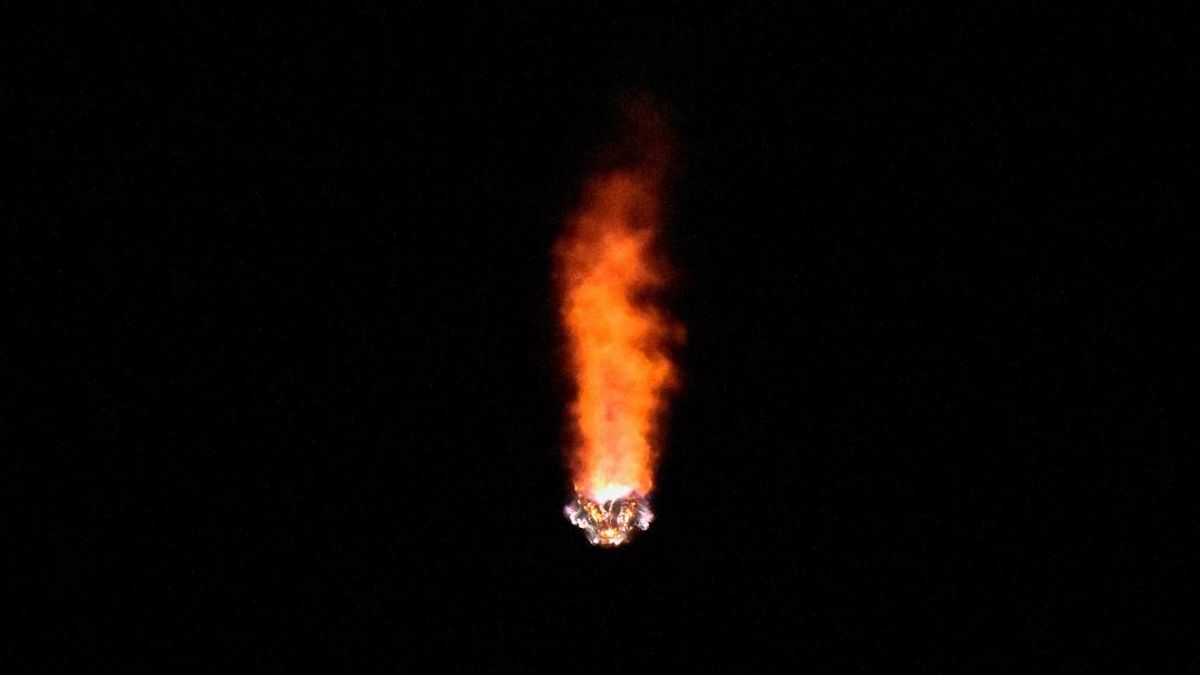
A discarded Falcon 9 rocket stage is currently on a trajectory that will result in a collision with the moon, according to orbital tracking data provided by independent researchers and confirmed by astronomical monitoring networks. The object, identified as a second-stage booster from a 2015 mission, is expected to impact the lunar surface on August 5, 2026. This celestial event occurs approximately one week before a solar eclipse, drawing attention from both the scientific community and space debris tracking experts who monitor the long-term impact of human activity in deep space.
The rocket segment, which has been drifting through cavelike orbits since its launch mission, was initially identified by observers using ground-based telescopes. As reported by NASA’s Orbital Debris Program Office, the accumulation of inert hardware in high-Earth orbit and beyond remains a subject of ongoing study regarding the long-term sustainability of space exploration. While the moon lacks an atmosphere to burn up incoming debris, the impact of a spent rocket stage is considered a low-risk event, though it provides a unique opportunity for lunar geologists to study the resulting impact crater.
The Origins of the Falcon 9 Lunar Impactor
The object identified as the future lunar impactor is a piece of hardware from the SpaceX Falcon 9 launch vehicle, specifically the second stage used during the DSCOVR (Deep Space Climate Observatory) mission. Launched in February 2015, the rocket successfully deployed the satellite toward the L1 Lagrange point before the second stage ran out of fuel. Because the booster did not have enough energy to return to Earth’s atmosphere, it entered a chaotic, high-altitude orbit that eventually brought it into a trajectory intersecting with the moon.

Astronomers have been tracking the object’s path for years, utilizing data from the Project Pluto database, which specializes in monitoring near-Earth objects. The trajectory analysis indicates that the gravitational influence of the Earth and the moon has effectively “captured” the debris, steering it toward a permanent resting place on the lunar surface. Unlike satellites in low-Earth orbit that eventually re-enter the atmosphere, this booster will remain on the moon, serving as a permanent, albeit unintentional, addition to the lunar landscape.
Scientific Implications of Lunar Impacts
The impact of man-made objects on the moon is not unprecedented. During the Apollo era, NASA intentionally crashed spent stages of the Saturn V rocket into the lunar surface to calibrate seismometers left behind by astronauts. These controlled impacts allowed scientists to study the moon’s internal structure by measuring “moonquakes” generated by the force of the collision. However, the upcoming 2026 event is an uncontrolled impact, meaning the exact location of the collision may be difficult to predict until the final days of the object’s approach.
According to the European Space Agency (ESA), the primary concern regarding space debris is the increasing density of objects in Earth’s orbit, where collisions can create thousands of smaller, dangerous fragments. Deep space impacts, such as this one on the moon, are generally viewed by the scientific community as having negligible impact on the lunar environment. Instead, they provide researchers with data regarding the orbital mechanics of “long-lived” debris that exits the Earth-moon system’s immediate vicinity.
Timing and Observation Constraints
The collision is projected for August 5, 2026, a date that precedes a solar eclipse by approximately seven days. While the proximity of these two events has sparked interest in various media reports, there is no physical connection between the rocket’s impact and the solar eclipse. The eclipse is a result of the moon passing between the Earth and the sun, a purely orbital phenomenon, whereas the rocket impact is a localized event on the lunar surface.
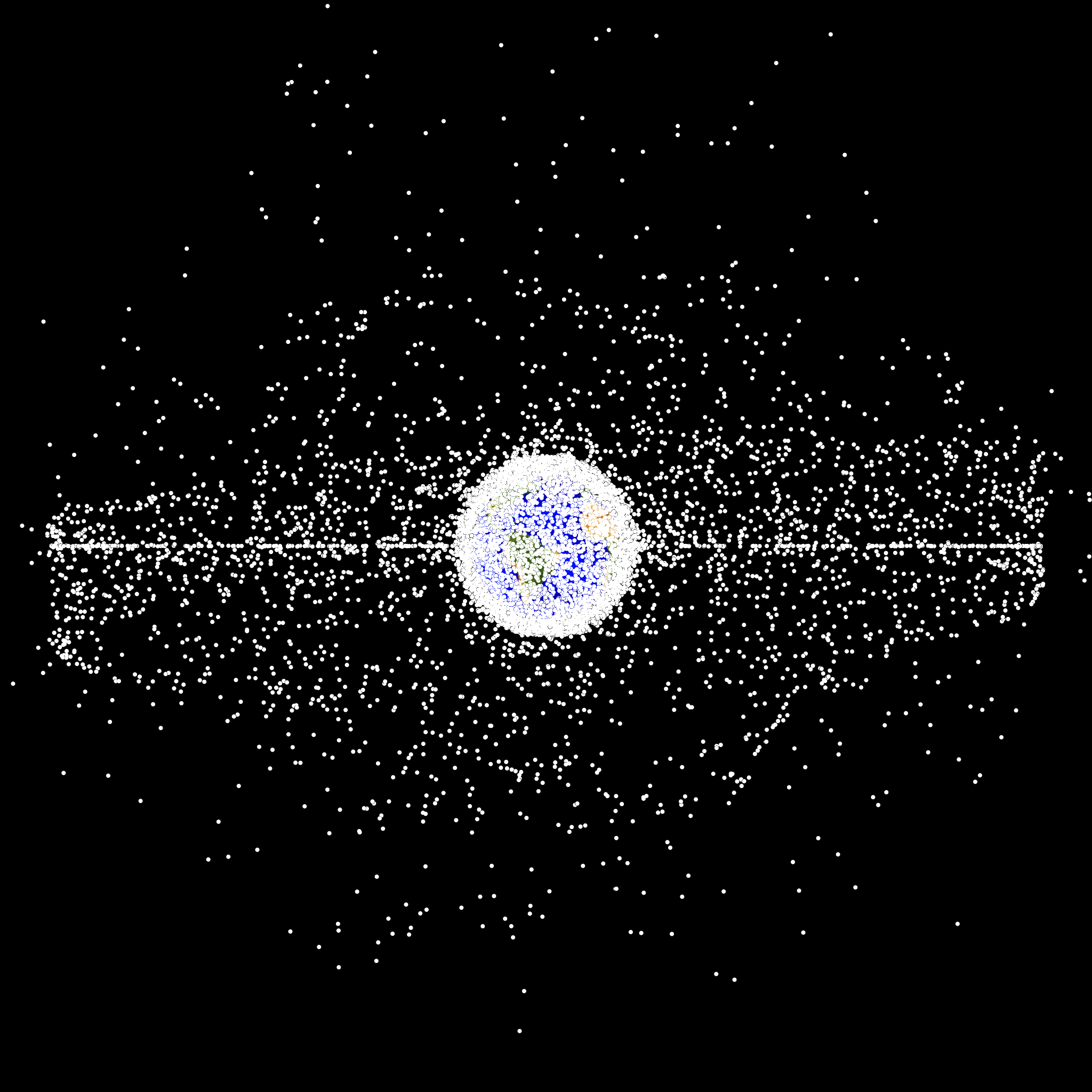
For those interested in the progress of the debris, updates are periodically provided by independent astronomical monitoring groups. Because the object is relatively small and its surface is reflective, it can only be seen through specialized professional-grade telescopes. As the date of the impact nears, scientists expect to refine their models of the exact cratering location, which may eventually be visible to future lunar orbiters equipped with high-resolution cameras. For regular updates on space debris and orbital tracking, observers can consult the Space-Track.org portal, which provides verified data on objects currently orbiting the Earth and beyond.
As of this report, there have been no official statements from SpaceX regarding the specific trajectory of the 2015-era booster, as the company generally focuses its operational tracking on active missions and current launch hardware. Readers are encouraged to monitor the World Today Journal for further updates as professional observatories publish their final impact projections in the months leading up to August 2026. Feel free to share your thoughts or questions about space debris management in the comments section below.