
There is no verified scientific data, official NASA schedule, or SpaceX mission briefing indicating that a SpaceX rocket is predicted to collide with the moon on August 5, 2026. Current mission profiles for the SpaceX Starship Human Landing System (HLS) focus on controlled, precision landings intended to support NASA’s Artemis III mission, which is currently targeted for late 2026.
Reports suggesting an accidental or unplanned impact on that specific date appear to lack corroboration from primary space agencies or aerospace monitoring organizations. Instead, the year 2026 remains a critical window for the Artemis program, which aims to return humans to the lunar surface using the Starship spacecraft developed by SpaceX.
The Reality of the 2026 SpaceX Lunar Mission Timeline
While specific dates like August 5, 2026, have not been cited in official mission manifests, the broader timeline for lunar exploration is firmly centered on the 2026 calendar year. NASA’s Artemis III mission, the first scheduled crewed lunar landing in over five decades, is the primary driver for SpaceX’s current development of the Starship HLS. According to NASA’s Artemis program updates, the agency is working toward a late 2026 launch window, though mission timelines in aerospace are subject to frequent adjustments based on technical milestones and safety reviews.
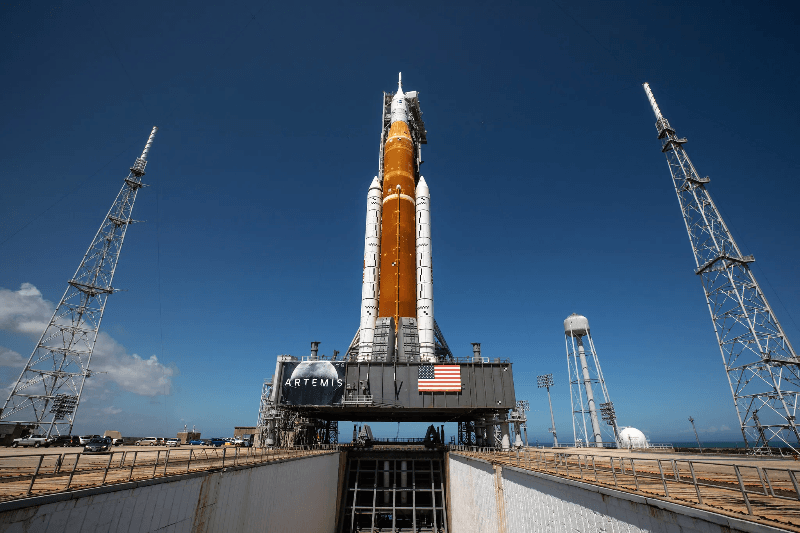
The SpaceX Starship HLS is not designed to “hit” the moon in a collision, but rather to perform a highly complex lunar orbital insertion followed by a descent to the lunar south pole. This process requires precise orbital mechanics to ensure the spacecraft enters a stable orbit before initiating its landing sequence. Any deviation from these calculations would be managed by automated flight control systems and ground-based telemetry to prevent unplanned impacts.
The distinction between a collision and a landing is central to understanding the current state of spaceflight. In the context of lunar exploration, “impact” is a term typically reserved for intentional kinetic probes or accidental failures. For the Starship HLS, the goal is a “soft landing,” a maneuver that requires the controlled deceleration of the vehicle using its Raptor engines to touch down gently on the lunar regolith.
How Starship HLS Will Reach the Lunar Surface
To achieve a successful lunar landing in 2026, SpaceX must complete several high-stakes developmental phases. The Starship HLS is a modified version of the Starship launch vehicle, specifically optimized for deep-space transit and lunar descent. Unlike the Apollo Lunar Module, which was a dedicated, single-use craft, Starship is designed to be a much larger, more robust system capable of transporting significant payloads and crew members.
The mission architecture involves several key stages:
- Earth Departure: A Super Heavy booster launches the Starship into Low Earth Orbit (LEO).
- Orbital Refueling: Because the Moon is far beyond the reach of a single launch with current fuel capacities, SpaceX must demonstrate the ability to transfer cryogenic propellant between Starships in orbit. This is a critical technology that NASA is closely monitoring.
- Trans-Lunar Injection (TLI): The refueled Starship performs a burn to break free of Earth’s gravity and head toward the Moon.
- Lunar Orbit Insertion: The spacecraft enters the Moon’s gravitational influence and settles into a stable orbit.
- Descent and Landing: The HLS variant separates from the orbiting ship and descends to the lunar surface.
The success of these stages is dependent on ongoing flight tests of the Starship launch system. SpaceX continues to conduct integrated flight tests (IFT) to refine the aerodynamics, heat shield integrity, and engine reliability of the vehicle. Each test provides data that informs the final configuration used for the Artemis missions.
Comparison of Lunar Landing Eras: Apollo vs. Artemis
To understand the scale of the 2026 mission, it is helpful to compare the current Artemis objectives with the historical Apollo program. The Artemis program represents a shift from “exploration for the sake of presence” to “exploration for the sake of sustainability.”
| Feature | Apollo Program (1960s-70s) | Artemis Program (Current/2026) |
|---|---|---|
| Primary Goal | Human presence on the Moon | Sustainable lunar habitation and Mars preparation |
| Landing Site | Lunar Equator | Lunar South Pole (water ice prospecting) |
| Landing Vehicle | Apollo Lunar Module (Single-use) | SpaceX Starship HLS (Reusable architecture) |
| Mission Duration | Short-term stays (days) | Long-term stays (weeks/months) |
Challenges and Potential for Mission Delays
The reason mission dates like August 2026 are often subject to speculation is that lunar flight is notoriously difficult. Several technical hurdles must be cleared before NASA can certify the SpaceX Starship for human passengers. One of the most significant challenges is the aforementioned orbital refueling. SpaceX mission updates indicate that the company is actively working on propellant transfer technologies, but this has never been performed at scale in Earth orbit, let alone in preparation for a lunar mission.

Other contributing factors to timeline shifts include:
- Heat Shield Reliability: Starship must withstand the extreme temperatures of both Earth reentry and lunar descent.
- Life Support Systems: The HLS must provide a pressurized, stable environment for astronauts during the multi-day transit to the Moon.
- Regulatory Approvals: The Federal Aviation Administration (FAA) must license every major launch, a process that ensures public safety but can impact launch windows.
- Lunar Environment: The lunar south pole is characterized by rugged terrain and permanent shadows, making landing site selection and navigation exceptionally difficult.
While these challenges are significant, they are not insurmountable. The aerospace industry operates on a “test, fail, learn, repeat” cycle, which is why the current Starship testing phase is so vital. The goal is to resolve these issues during uncrewed tests long before the Artemis III astronauts ever board the vehicle.
As of the latest official communications, the next major checkpoint for the program will be the continued series of Starship integrated flight tests and the subsequent NASA reviews of the HLS propellant transfer capabilities. Stakeholders and space enthusiasts should monitor official NASA and SpaceX press releases for confirmed launch windows and mission milestones.
What are your thoughts on the upcoming Artemis missions? Do you believe the 2026 timeline is realistic? Share your comments below and share this article to keep your network informed with verified space news.