
SpaceX Starship V3: A Milestone in Rocket Development or Another Step Toward the Stars?
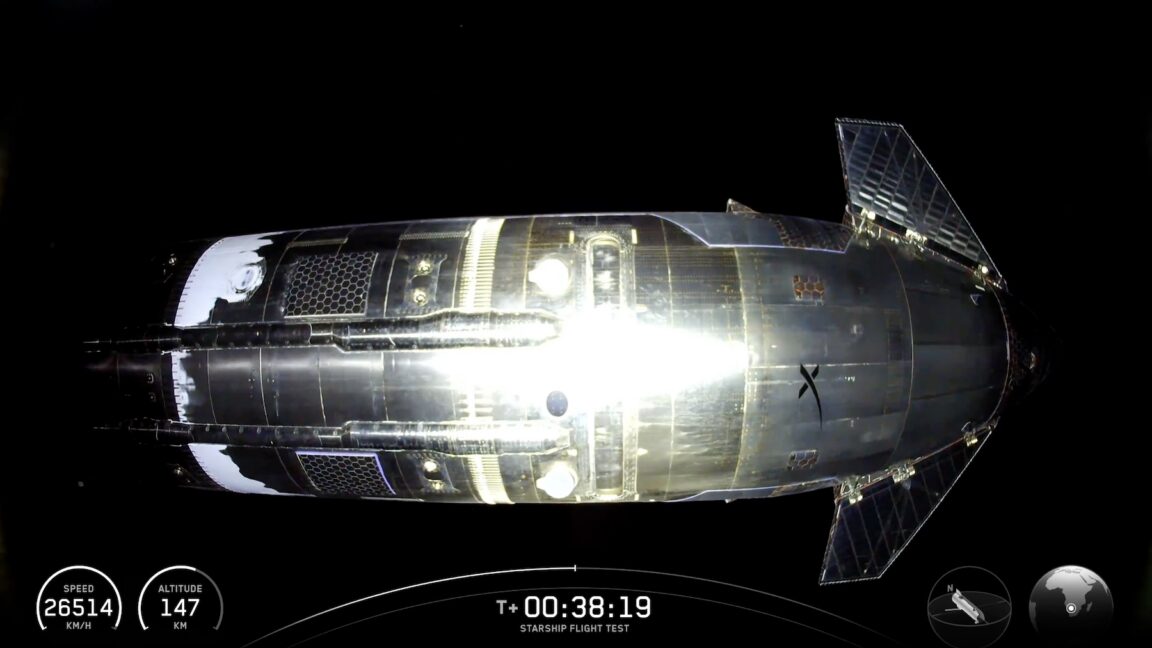
SpaceX’s latest iteration of its Starship rocket, the V3 model, completed its inaugural test flight on Friday, May 24, 2026, marking a significant advancement in the company’s quest to develop a fully reusable heavy-lift launch vehicle. Unlike its predecessors—Starship V1 and V2, which both disintegrated during their maiden flights in 2023 and 2025—the V3 variant demonstrated improved stability, successfully clearing the launch tower, executing a controlled ascent, and splashing down in the Indian Ocean. While the flight was not without challenges, the relative success of this test has reignited discussions about the future of space travel, lunar missions, and even interplanetary colonization.
The 408-foot-tall (124-meter) rocket, powered by 33 methane-fueled Raptor engines, lifted off from SpaceX’s Starbase facility in Boca Chica, Texas, at approximately 5:30 p.m. CDT (6:30 p.m. EDT; 22:30 UTC). This marked the first time a Starship prototype had achieved even partial success in a full-duration flight test, setting it apart from earlier attempts that ended in rapid disintegration. The rocket’s trajectory followed an eastward path over the Gulf of Mexico, with the Super Heavy booster and Starship upper stage separating as planned before the upper stage continued its journey toward the Indian Ocean.
According to SpaceX’s internal timelines and statements shared with regulators, the flight test was designed to validate critical systems, including engine performance, stage separation, and re-entry dynamics. While the company has not yet released a full post-flight analysis, preliminary data suggests that the V3’s stainless steel construction and upgraded avionics contributed to its improved performance. This success comes at a pivotal moment for SpaceX, as the company prepares for its upcoming initial public offering (IPO), which could inject billions into further development of Starship—a cornerstone of Elon Musk’s long-term vision for Mars colonization and a robust satellite constellation network.
The Starship program has long been a high-stakes endeavor for SpaceX, with each test flight serving as both a technical milestone and a public relations opportunity. The V3’s relative success may also influence regulatory decisions, particularly from the Federal Aviation Administration (FAA), which has been closely monitoring SpaceX’s progress at Starbase. The FAA’s Office of Commercial Space Transportation has not yet issued a formal statement, but industry analysts suggest that this flight could accelerate approvals for future Starship missions, including those intended for NASA’s Artemis program.
Why This Flight Matters: A Closer Look at Starship V3’s Design and Goals
Starship V3 represents the third major iteration of SpaceX’s fully reusable rocket system, each version incorporating lessons learned from previous failures. The V3’s improvements include:
- Enhanced Raptor Engine Reliability: The 33-engine configuration of the Super Heavy booster has undergone extensive ground testing, with SpaceX reporting a 95% success rate in static fire tests over the past six months (SpaceX Updates).
- Reinforced Stainless Steel Construction: The V3’s stainless steel body has been optimized for thermal resistance, addressing heat-related failures observed in V1 and V2.
- Improved Avionics and Software: SpaceX’s in-house flight software has been updated to handle real-time adjustments during ascent and re-entry, a critical factor in the V3’s controlled descent.
- Targeted Landing Systems: While the V3 did not attempt a powered landing, its splashdown in the Indian Ocean demonstrated progress in controlling the rocket’s descent trajectory.
For context, Starship V1 and V2 both experienced catastrophic failures during their inaugural flights in April 2023 and November 2025, respectively. The V1 flight ended when a Raptor engine malfunction triggered a rapid unscheduled disassembly (RUD) just 87 seconds after liftoff. The V2 flight fared slightly better, reaching an altitude of approximately 30 kilometers before structural failures led to its breakup. The V3’s ability to complete a full flight profile—albeit with some unplanned deviations—signals a shift in the program’s trajectory.
SpaceX has emphasized that Starship is not just a rocket but a complete spacecraft designed for a variety of missions, including:
- Resupplying the International Space Station (ISS) and future orbital habitats.
- Supporting NASA’s Artemis program, with Starship serving as the lunar lander for astronaut missions to the Moon.
- Enabling commercial satellite deployments, including SpaceX’s Starlink constellation.
- Eventually facilitating crewed missions to Mars, a goal that has driven much of SpaceX’s innovation in reusable rocket technology.
Stakeholders and the Broader Impact
The success—or perceived success—of Starship V3’s flight has far-reaching implications for multiple stakeholders:
For SpaceX and Elon Musk
SpaceX’s progress with Starship is closely tied to the company’s financial health and public perception. The upcoming IPO, which could value SpaceX at over $100 billion, hinges in part on demonstrating tangible advancements in its core technologies. While the V3 flight is a step forward, it is not yet a complete success—SpaceX has not achieved a full, controlled landing, and the company has yet to address concerns about rapid, unscheduled disassembly risks. Analysts suggest that the IPO’s success may depend on SpaceX’s ability to sustain this momentum in subsequent test flights.
For NASA and the Artemis Program
NASA has selected SpaceX’s Starship as the sole provider of the Human Landing System (HLS) for the Artemis III mission, which aims to return astronauts to the Moon’s surface by 2026. However, the program has faced delays and cost overruns, with NASA’s Office of Inspector General warning in a recent report that the Artemis timeline is at risk due to Starship’s unresolved technical challenges (NASA OIG Report). The V3 flight test, while promising, has not yet addressed the critical question of whether Starship can safely land astronauts on the lunar surface—a requirement for NASA’s contract.

For the FAA and Regulatory Oversight
The FAA’s oversight of SpaceX’s Starbase facility has become a contentious issue, with environmental groups and local residents raising concerns about the impact of frequent test flights on the surrounding ecosystem. The V3 flight test occurred under an experimental launch license, and the FAA is expected to review SpaceX’s compliance with safety and environmental regulations in the coming weeks. Any violations or near-misses could delay future flights and complicate SpaceX’s IPO process.
For the Global Space Industry
Starship’s development has spurred competition among other aerospace companies, including Blue Origin, which is developing its own lunar lander for NASA, and China’s Long March 9 rocket program. The V3 flight test has reignited discussions about the future of heavy-lift launch vehicles, with industry experts suggesting that Starship’s success could accelerate the retirement of older, less efficient rockets like the Delta IV Heavy.
Key Takeaways: What This Flight Means for the Future of Space Travel
1. Progress, Not Perfection: The V3 flight was a significant improvement over previous attempts but did not achieve all of SpaceX’s objectives, particularly a controlled landing. The company has not yet provided a full post-flight analysis, leaving some questions unanswered.
2. Regulatory and Financial Implications: The flight could influence the FAA’s approval process for future Starship missions and may play a role in SpaceX’s upcoming IPO, which could raise billions for further development.
3. NASA’s Artemis Program Remains at Risk: While the V3 flight is a step forward, NASA’s Inspector General has warned that Starship’s technical challenges could delay the Artemis III mission, which aims to land astronauts on the Moon in 2026.

4. Competition in the Space Race: Starship’s progress has intensified competition among aerospace companies, with Blue Origin and China’s space program accelerating their own lunar and heavy-lift projects.
5. Public and Investor Confidence: The relative success of the V3 flight may boost public and investor confidence in SpaceX, but the company must continue to demonstrate consistent progress in subsequent tests.
6. Environmental and Safety Concerns: The FAA and local communities will closely monitor SpaceX’s compliance with safety and environmental regulations, particularly as the company prepares for more frequent test flights.
What Happens Next: The Road Ahead for Starship
SpaceX has not yet announced a timeline for the next Starship test flight, but industry insiders suggest that the company is targeting another launch within the next 60–90 days. Key milestones to watch for include:
- A successful powered landing of the Super Heavy booster, which would mark a major breakthrough in reusable rocket technology.
- Further refinements to the Starship upper stage’s heat shield and re-entry systems, critical for lunar and interplanetary missions.
- Regulatory approvals from the FAA and other international space agencies, particularly for missions involving astronauts.
- Progress on SpaceX’s Starlink satellite deployments, which rely on Starship for rapid constellation expansion.
In the meantime, SpaceX continues to refine its Starship manufacturing process, with multiple production lines operating at its Starbase facility. The company has also begun construction of additional launch pads in Texas and Florida, signaling its long-term commitment to the program.
What do you think about SpaceX’s Starship progress? Will the V3 flight change the trajectory of space exploration, or are there still too many hurdles to overcome? Share your thoughts in the comments below, and don’t forget to follow World Today Journal for the latest updates on this developing story.