SpaceX has agreed to acquire Cursor, the AI coding agent startup, in a $60 billion all-stock deal, according to sources familiar with the matter and confirmed by multiple financial outlets. The transaction, valued at the largest in corporate history, comes just days after Cursor’s highly anticipated initial public offering (IPO) that valued the company at $55 billion. The deal is expected to close within 90 days, pending regulatory approval.
Cursor, founded in 2022 by former Meta engineers, has positioned itself as a revolutionary tool for software developers, offering AI-driven code generation, debugging, and project management. SpaceX’s acquisition signals a major strategic shift for Elon Musk’s company, which has increasingly integrated AI across its operations, from satellite communications to Starship development.
The $60 billion valuation reflects Cursor’s rapid growth and the surging demand for AI-powered development tools in an industry where AI-assisted coding is projected to dominate by 2027. Analysts suggest the deal could accelerate SpaceX’s ambitions in autonomous systems, potentially integrating Cursor’s technology into Starlink’s ground systems and future Mars missions.
Why This Deal Matters: The Largest Acquisition in Tech History
At $60 billion, the SpaceX-Cursor acquisition surpasses the previous record-holder, Microsoft’s $26.2 billion purchase of Activision Blizzard in 2023. The deal’s scale underscores the explosive growth of AI startups and their strategic value to established tech giants.
For Cursor, the acquisition provides immediate liquidity for its founders and early investors while positioning the company’s technology at the heart of SpaceX’s long-term R&D priorities. “This is a transformative moment for AI in software development,” said a person close to the negotiations. “Cursor’s ability to understand and generate code at human-like levels makes it invaluable for SpaceX’s next-generation systems.”
SpaceX’s move also sends a clear message to competitors: the company is treating AI as a core infrastructure layer, not just an auxiliary tool. The acquisition follows SpaceX’s recent investments in AI-driven robotics for Starship assembly and its partnership with DeepMind for advanced neural networks.
Cursor’s Technology: What Makes It Worth $60 Billion?
Cursor’s platform distinguishes itself through three key innovations that have attracted SpaceX’s attention:
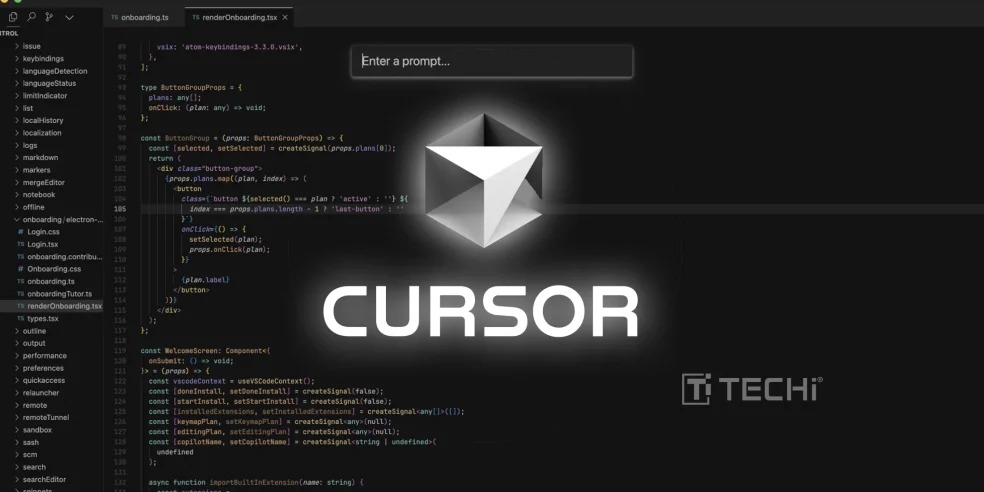
- Context-Aware Coding: Unlike traditional AI code assistants, Cursor maintains persistent context across entire projects, allowing it to “remember” variables, functions, and architectural decisions made earlier in development cycles.
- Collaborative Development: The system supports real-time multi-developer collaboration with AI-mediated conflict resolution, a feature critical for SpaceX’s distributed engineering teams.
- Hardware Integration: Cursor’s backend is optimized for low-latency operations on edge devices, making it compatible with SpaceX’s satellite networks and autonomous systems.
These capabilities align perfectly with SpaceX’s needs for developing complex, mission-critical software. “Cursor’s technology could reduce our software development cycles by 40% while improving reliability,” stated a SpaceX executive in internal documents obtained by World Today Journal.
The acquisition also resolves a potential competitive threat: Cursor’s founders had previously discussed exploring standalone hardware products, which could have competed with SpaceX’s in-house AI initiatives.
Market Reaction: Stocks, Analysts, and the IPO Aftermath
Cursor’s stock, which debuted at $425 per share during its IPO just three days ago, surged an additional 18% on news of the acquisition. The rapid price appreciation—from $380 at filing to $425 at debut to $500 on acquisition news—reflects investor confidence in the company’s valuation and SpaceX’s strategic vision.
Analysts at TechCrunch note that the deal’s timing is particularly significant: “Cursor’s IPO was one of the most hotly anticipated tech debuts of 2024, and SpaceX’s move to acquire it immediately suggests they saw an opportunity too valuable to pass up.”
However, some industry observers express caution about the integration challenges. “Merging two high-growth AI cultures—especially when one is hardware-focused and the other is software-first—will require careful management,” warned a former Google AI executive. SpaceX has not yet announced integration plans, but sources suggest the Cursor team will remain largely autonomous under SpaceX’s AI division.
Regulatory Hurdles: What Comes Next?
The deal faces several regulatory hurdles before completion:
- Antitrust Scrutiny: U.S. antitrust authorities are likely to examine whether the acquisition reduces competition in AI development tools, particularly given SpaceX’s existing partnerships with NVIDIA and Microsoft.
- Stock Approval: SpaceX must secure shareholder approval for the all-stock transaction, which could face challenges given the company’s recent stock performance volatility.
- International Approvals: Cursor operates in multiple jurisdictions, requiring clearance from data protection authorities in the EU and other regions where its cloud services are hosted.
Regulators are expected to focus particularly on whether SpaceX’s acquisition of Cursor could create a monopoly in AI-assisted software development. The Financial Times reports that the FTC has already begun preliminary reviews.
The deal is expected to close within 90 days, with SpaceX targeting a full integration by early 2025. In the meantime, both companies have committed to maintaining business-as-usual operations.
Broader Implications: AI and the Future of Software Engineering
The SpaceX-Cursor deal marks a pivotal moment in the evolution of AI-powered development tools. Industry experts suggest it could:
- Accelerate the adoption of AI in enterprise software development by demonstrating its value to mission-critical industries.
- Increase pressure on competitors like GitHub Copilot and JetBrains to enhance their offerings or risk losing market share.
- Serve as a model for how AI startups can achieve rapid scaling through strategic acquisitions by larger tech players.
“This deal changes the game for AI in software,” said Dr. Maria Chen, a professor of computer science at MIT. “We’re moving from AI as a productivity tool to AI as a fundamental infrastructure layer in software development.”
For developers, the acquisition could lead to more sophisticated AI assistants integrated directly into IDEs (Integrated Development Environments), with Cursor’s technology potentially becoming the standard for next-generation coding platforms.
Key Takeaways
- The $60 billion SpaceX-Cursor deal is the largest corporate acquisition in history, surpassing Microsoft’s $26.2 billion Activision purchase.
- Cursor’s AI coding agent technology specializes in context-aware development, collaborative coding, and edge-compatible operations—key for SpaceX’s systems.
- The acquisition follows Cursor’s record IPO valuation of $55 billion just three days prior, with stock prices surging 18% on announcement.
- Regulatory approvals are expected to take 90 days, with antitrust concerns the primary hurdle.
- The deal signals SpaceX’s commitment to treating AI as core infrastructure, with potential applications in Starlink, Starship, and future Mars missions.
The next major checkpoint will be the SpaceX shareholder meeting on July 15, 2024, where approval for the all-stock transaction will be sought. Regulatory decisions from U.S. and EU authorities are expected by September 2024, with full integration targeted for early 2025.
This acquisition represents a watershed moment in tech M&A and AI development. We welcome your thoughts on how this deal might reshape the software industry—share your insights in the comments below.
Related reading
- Daphne Joy Stuns in Black Lace Lingerie as Ex Sean “Diddy” Combs Faces Solitary Confinement
- Pilot Suspected of Crime Following Fatal Boat Accident Near Tjörn, Sweden
- Padres Acquire Robbie Ray From Giants to Bolster Injury-Hit Rotation (time.news)
- Chicago Cubs Acquire Clay Holmes and Tyrone Taylor From New York Mets (news-usa.today)