
SpaceX is currently valued at approximately $210 billion, according to recent funding rounds and secondary market transactions, a figure that has triggered intense scrutiny from financial analysts regarding the sustainability of its private market valuation. While some observers draw parallels to the high-growth, high-volatility trajectory of Elon Musk’s Tesla, the private nature of SpaceX creates a fundamentally different economic profile than the publicly traded tech giants it is often compared to.
The debate centers on whether the aerospace company’s valuation reflects its massive potential in satellite internet and deep-space exploration or if it mirrors the “valuation premium” seen in other Musk-led enterprises. Unlike Microsoft or Amazon, which maintain market capitalizations in the trillions of dollars, SpaceX remains a private entity, meaning its “stock price” is determined by private equity deals and secondary market sales rather than daily public exchange trading.
The Mechanics of SpaceX’s Private Valuation
Because SpaceX does not trade on a public exchange like the New York Stock Exchange, its valuation is not subject to the same daily fluctuations seen in Tesla’s share price. Instead, the company’s worth is established during specific capital-raising events or when employees and early investors sell shares in controlled secondary markets. According to reports from financial news outlets including Bloomberg and Reuters, recent secondary share sales have consistently placed the company’s valuation in the $200 billion to $210 billion range.
This private structure allows SpaceX to focus on long-term capital-intensive projects, such as the development of the Starship launch system, without the immediate pressure of quarterly earnings reports. However, this also creates a gap between perceived value and liquid market reality. Analysts note that while a public company’s valuation is transparent and immediate, SpaceX’s value relies heavily on the confidence of sophisticated venture capital firms and private equity stakeholders who have access to internal financial data.
The lack of public liquidity means that a “crash” in the style of Tesla—where retail investor sentiment can drive rapid price swings—is structurally impossible for SpaceX in the traditional sense. However, a significant downward revision in valuation during a new funding round could still impact the company’s ability to raise capital and affect the net worth of its internal stakeholders.
The Starlink Factor: Driving Future Growth
A significant portion of the current SpaceX valuation is attributed to Starlink, the company’s satellite internet constellation. As SpaceX continues to deploy thousands of satellites into low Earth orbit, the revenue potential from global broadband services has become a primary driver for investor interest. Financial analysts suggest that the Starlink segment could eventually justify a spin-off or an Initial Public Offering (IPO), which would provide a clear benchmark for the company’s total value.
The scalability of the Starlink business model offers a recurring revenue stream that differs from the transactional nature of launch services. While SpaceX’s launch division maintains a dominant position in the global aerospace market, the high-margin potential of satellite internet services provides the “tech-style” growth multiples that investors crave. This dual-engine model—combining heavy industrial aerospace with high-growth telecommunications—is what sets SpaceX apart from traditional defense and space contractors.
However, the Starlink project faces significant capital expenditures and regulatory hurdles. The continuous need for satellite replenishment and the competition from other low-Earth orbit (LEO) internet providers, such as Amazon’s Project Kuiper, introduce risks to the projected revenue growth. The ability of Starlink to achieve widespread global adoption while managing the costs of frequent launches will be the ultimate test of the company’s current valuation.
The Tesla Comparison: Valuation vs. Fundamentals
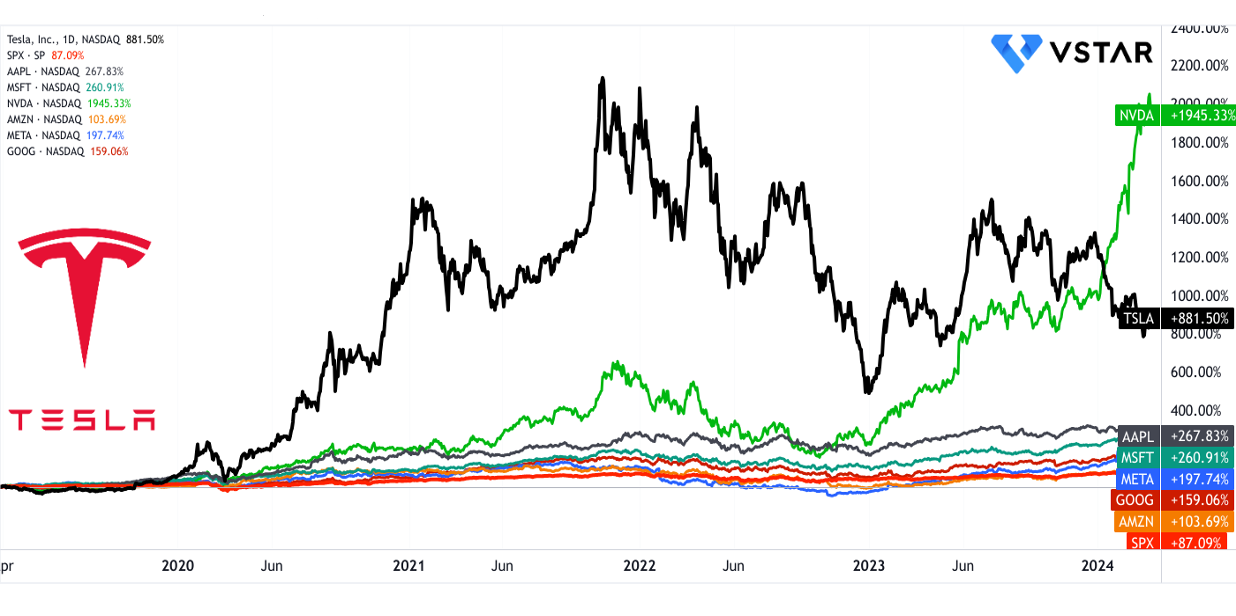
The comparison between SpaceX and Tesla often focuses on the “Musk Premium”—the idea that investors are willing to pay a higher multiple for companies led by Elon Musk due to his track record of disruption. Tesla has frequently seen its market capitalization fluctuate based on Musk’s public statements, regulatory challenges, and shifts in the electric vehicle (EV) market. Critics of SpaceX’s valuation argue that a similar phenomenon could occur if the company were to go public, with much of its value tied to the perceived success of future, unproven technologies.
To understand the distinction, it is necessary to compare the fundamental drivers of both companies:
- Tesla: Valued primarily on its leadership in the EV market, autonomous driving software, and energy storage. Its valuation is highly sensitive to consumer demand, interest rates, and global manufacturing capacity.
- SpaceX: Valued on its dominance in launch services, the expansion of the Starlink network, and the developmental progress of the Starship program. Its valuation is driven by government contracts (such as NASA), private satellite deployments, and long-term space infrastructure goals.
While Tesla’s volatility is driven by public sentiment and retail trading, SpaceX’s valuation risk is tied to technical milestones and the successful execution of its massive engineering projects. A failure in the Starship development program or a significant delay in Starlink’s global rollout would have a more direct impact on SpaceX’s valuation than any shift in public opinion.
SpaceX vs. Global Tech Giants: A Scale Analysis
There has been ongoing discussion regarding how SpaceX’s valuation compares to the world’s largest corporations. It is important to clarify the scale of these entities to avoid misconceptions. As of mid-2024, the world’s most valuable companies, including Microsoft, Apple, and Nvidia, hold market capitalizations exceeding $3 trillion. SpaceX, at approximately $210 billion, operates at a different order of magnitude.

The following table illustrates the current scale of the aerospace leader compared to the broader technology sector:
| Entity | Estimated Market Value | Market Type | Primary Driver |
|---|---|---|---|
| Microsoft | ~$3.1 Trillion | Public | Cloud Computing & AI |
| Amazon | ~$1.9 Trillion | Public | E-commerce & AWS |
| SpaceX | ~$210 Billion | Private | Launch & Starlink |
| Boeing | ~$115 Billion | Public | Aerospace & Defense |
The gap between SpaceX and the trillion-dollar tech giants highlights the unique position of the company. While it is not currently a competitor to Microsoft in terms of total market cap, it is arguably the most valuable private company in the aerospace sector, significantly outpacing traditional industry leaders like Boeing in terms of recent valuation growth and technological disruption.
Key Takeaways for Investors
- Private Market Stability: SpaceX’s private status shields it from the daily volatility seen in Tesla’s stock, but it limits liquidity for most investors.
- Starlink as a Value Driver: The future valuation of SpaceX is increasingly tied to the success and potential IPO of the Starlink satellite internet division.
- Technical Execution Risk: The company’s high valuation is contingent on the successful development of Starship and the continued expansion of its launch cadence.
- The Musk Premium: Much of the valuation is built on the expectation of future technological breakthroughs, a factor that introduces significant risk if milestones are missed.
As SpaceX continues its rapid development cycle, the next major checkpoint for the company will be the upcoming flight tests of the Starship rocket. The success or failure of these missions will provide critical data that could influence the next round of private funding and, by extension, the company’s total valuation. Investors and industry analysts will also be closely monitoring any official statements regarding the potential timing of a Starlink IPO, which remains the most anticipated event in the private space economy.
What are your thoughts on the long-term viability of SpaceX’s current valuation? Do you believe a Starlink IPO is imminent? Share your insights in the comments below and share this article with your network.