
Diplomatic relations between Israel and Spain have reached a critical breaking point following a series of provocative incidents and deep-seated political disagreements. The tension escalated further after an effigy of Israeli Prime Minister Benjamin Netanyahu was detonated during a traditional festival in southern Spain, an act the Israeli government has condemned as a dangerous incitement of antisemitism.
The fallout from the festival incident has triggered a swift and severe response from Jerusalem. The Israeli government summoned Spain’s chargé d’affaires to lodge a formal protest, signaling that the symbolic act of blowing up the doll is being viewed not merely as a local cultural expression, but as a targeted attack on the leadership of the state and a reflection of growing hostility within Spain.
This latest clash is not an isolated event but the culmination of a rapid deterioration in bilateral ties. The relationship between the two nations has plummeted since 2024, when Spain officially recognized Palestine as a state, a move that sparked immediate outrage from the Israeli administration. The current atmosphere is characterized by a total breakdown in high-level communication, with both countries having recalled their respective ambassadors.
The volatility of the situation has now extended beyond symbolic protests and diplomatic summons, manifesting in the systematic removal of Spain from critical international security and humanitarian frameworks. As Israel moves to isolate Spanish influence in the region, the geopolitical rift between the Mediterranean allies continues to widen, impacting coordinated efforts for peace and aid in the Gaza Strip.
Israel Excludes Spain from Gaza Truce Monitoring Body
In a move that underscores the severity of the diplomatic rift, the Israeli government has officially decided to exclude Spain from the Civil-Military Cooperation Center (CMCC). This U.S.-led body, located in Kiryat Gat in southern Israel, is tasked with monitoring the implementation of ceasefires and coordinating the delivery of humanitarian aid into the Gaza Strip. Until now, the CMCC has operated as a collaborative platform involving military officials and diplomats from the United States, France, the United Kingdom, Spain and the United Arab Emirates.
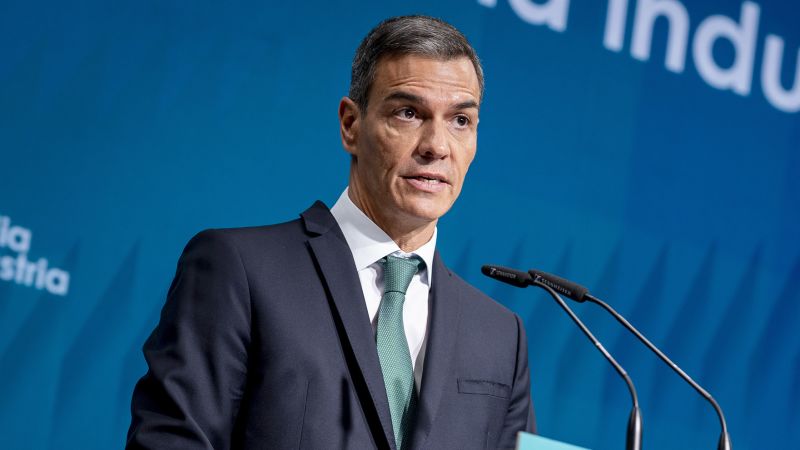
The decision to remove the Spanish delegation is an unprecedented step in the context of international cooperation. Israeli Foreign Minister Gideon Sa’ar stated that the Spanish government, led by Prime Minister Pedro Sánchez, exhibits a “extreme anti-Israel bias,” rendering their participation in the CMCC impossible. Sa’ar’s comments suggest that Israel no longer views Spain as a neutral or capable mediator in the peace process.
Prime Minister Benjamin Netanyahu reinforced this stance in a video statement, explicitly ordering the removal of the Spanish representatives. Netanyahu asserted that those who “attack Israel” instead of opposing “terror regimes” cannot be partners in designing the future of the region. This political calculation reflects a strategy of excluding critics from the operational structures of conflict resolution, a move that some international politics experts argue may undermine the legitimacy of the monitoring process by pushing dissenting voices outside the institutional framework.
The Catalyst: Recognition of Palestine and the Gaza Conflict
To understand the current hostility, one must glance back to 2024, the year that served as the primary turning point for the two nations. Spain’s formal recognition of Palestine as a sovereign state was viewed by Israel as a reward for terrorism and a unilateral move that bypassed the necessary direct negotiations between the parties involved. Since that decision, the relationship has been in a state of freefall.
Beyond the recognition of statehood, Spain has remained one of the most vocal critics of Israel’s military operations during the war in Gaza. The Spanish government has consistently condemned the scale of civilian casualties and the humanitarian crisis in the enclave. Spain has maintained a critical stance toward Israel’s responses to regional escalations, including opposition to certain military actions during conflicts involving Iran.
The accumulation of these grievances created a volatile environment where a cultural event—the detonation of an effigy—could serve as the spark for further diplomatic retaliation. For Israel, the “Netanyahu doll” incident is the physical manifestation of a trend of “anti-Israel sentiment” fostered by the Spanish government. For Spain, the reaction from Israel is seen as an overreach that penalizes legitimate political criticism and cultural expression.
Summary of Diplomatic Escalation
| Event/Action | Context/Impact |
|---|---|
| 2024: Recognition of Palestine | Spain officially recognizes Palestine as a state, leading to a sharp cooling of relations. |
| Ambassador Recalls | Both nations recall their ambassadors, severing primary diplomatic channels. |
| Netanyahu Effigy Incident | An effigy of the PM is blown up at a festival in southern Spain; Israel condemns it as antisemitic. |
| CMCC Exclusion | Israel removes Spain from the U.S.-led Gaza truce monitoring and humanitarian body. |
What This Means for Regional Stability
The exclusion of Spain from the CMCC is more than a bilateral spat; it threatens the multilateral nature of humanitarian coordination in Gaza. When a member of the European Union is removed from a monitoring body due to political bias, it sets a precedent that could lead to the further fragmentation of international efforts to ensure aid reaches civilians.
The impact is felt most acutely in the coordination of “humanitarian corridors” and the verification of truce terms. With Spain’s removal, the diversity of perspectives within the CMCC is reduced, potentially making the body more susceptible to the political will of the host nation, Israel, rather than serving as an independent international watchdog.
Who is Affected?
- Diplomatic Corps: The recall of ambassadors and the summoning of the chargé d’affaires depart extremely few channels for crisis management between Madrid and Jerusalem.
- Humanitarian Agencies: The CMCC’s role in coordinating aid means that any instability or exclusion of partners could theoretically complicate the logistical flow of supplies into Gaza.
- The Spanish Public: The clash between traditional cultural practices (like the burning/blowing up of effigies in festivals) and international diplomatic sensitivities highlights a growing tension between domestic expression and foreign policy.
The next critical checkpoint in this unfolding crisis will be whether the Spanish government issues a formal diplomatic response to its exclusion from the CMCC or if the European Union intervenes to mediate the dispute. As of now, the diplomatic channels remain largely frozen.
World Today Journal encourages readers to share their perspectives on the balance between political criticism and diplomatic cooperation in the comments below.
Keep reading