International condemnation Mounts as US Takes Direct Control of Venezuela Following Maduro’s Capture
Washington D.C. – A wave of international criticism is building against the United States following a dramatic military operation that resulted in the capture of venezuelan President Nicolás Maduro and his wife, Cilia Flores. The operation, executed by US Delta Force on Saturday, saw Maduro apprehended in a raid on his Caracas compound and subsequently transferred to a New York prison to face charges including drug trafficking, narcoterrorism, conspiracy to import narcotics, and illegal possession of weaponry.
president Donald Trump has defended the intervention as “brilliant,” announcing the US will “run Venezuela” during a transition period he described as “safe, proper and judicious,” though details remain scarce. This unilateral action, though, has sparked widespread concern and accusations of violating international law, especially regarding sovereignty and the prohibition of the use of force as enshrined in the United Nations Charter.
Joint Statement Condemns US Intervention
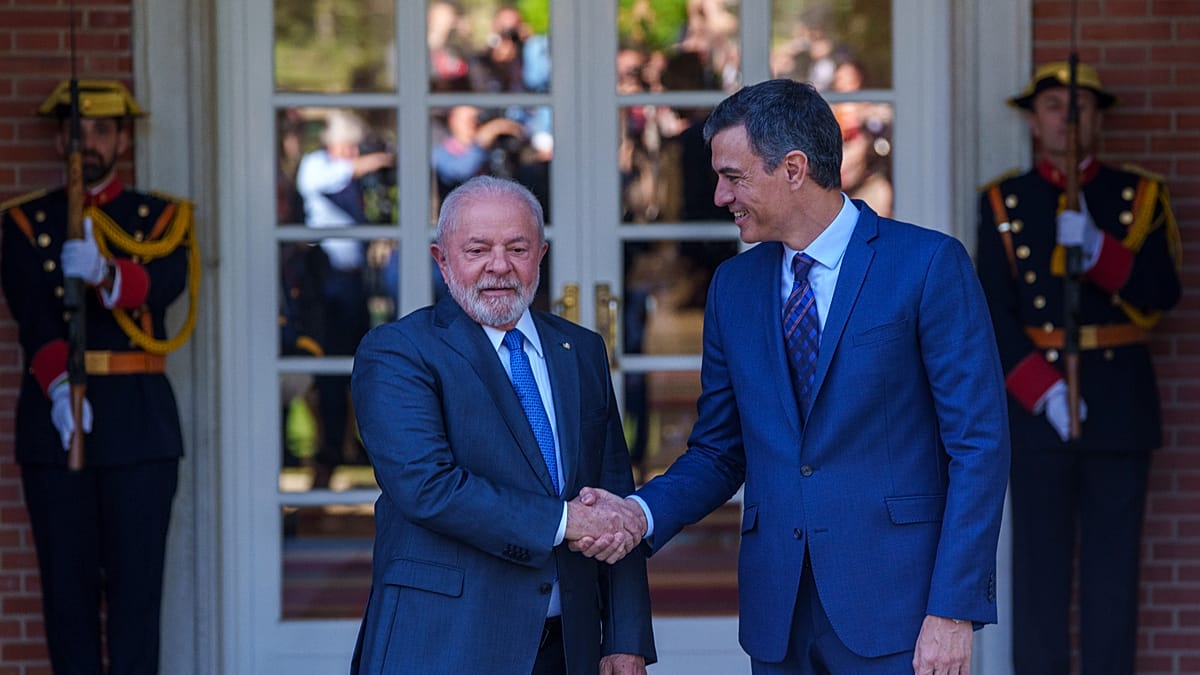
A coalition of six nations – Spain, brazil, Mexico, Argentina, Chile, and Colombia – issued a strongly worded joint statement condemning the US operation. led by Spanish Prime Minister Pedro Sánchez and brazilian President Luiz Inácio Lula da silva,the statement explicitly cited violations of “basic principles of international law” and warned of a “dangerous precedent for peace,regional security and pose[ing] a risk to the civil population.” The signatories emphasized the need for a resolution driven by dialog and the will of the Venezuelan people, free from external interference and in full compliance with international legal frameworks.
“We reiterate that the situation in Venezuela must be resolved exclusively through dialogue and in accordance with the will of the Venezuelan people, without interference and adhering to international law,” the statement read.
concerns Over Resource Exploitation Fuel Regional Anxiety
Beyond the legal concerns, the intervention has ignited fears of exploitation of Venezuela’s vast natural resources, particularly its substantial oil reserves – the largest proven reserves globally. The joint statement specifically expressed concern over “any attempt to control, through government or administrative means, as well as the external appropriation of the natural and strategic resources (of Venezuela), which are incompatible with international law and pose a threat to the economic, political and social stability of the region.”
President Trump’s remarks on Saturday, outlining plans to “rebuild the oil infrastructure” at the expense of oil companies, have only amplified these anxieties. He indicated these companies would be “reimbursed” through future oil revenues, raising questions about the terms of access and potential long-term control. Chevron, a US energy major already operating in Venezuela under a special license, is poised to play a significant role in any reconstruction efforts.
European Response: A Divided Front
The European Union’s response has been more nuanced,calling for restraint and adherence to the UN Charter while stopping short of outright condemnation. German Chancellor Friedrich Merz acknowledged the “complex” legal assessment of the intervention, prioritizing a democratic transition. french President Emmanuel Macron, while welcoming Maduro’s removal as the end of a “dictatorship,” focused on the potential role of exiled opposition leader Edmundo González in the transition process.
However, Spain, with its strong ancient and economic ties to Latin America, has firmly aligned with the regional consensus, stating it cannot recognize an intervention that violates international law, just as it did not recognize the Maduro regime. This stance reflects a growing concern within Europe about the precedent set by the US action.
Background: A Contested Election and Political Crisis
The US intervention follows a period of escalating political turmoil in Venezuela. The July 2024 presidential election, widely condemned by international observers as fraudulent, saw Maduro retain power amidst allegations of widespread electoral manipulation. Opposition figures, including leading candidate María Corina Machado, were barred from running and subsequently forced into hiding. Edmundo González, Maduro’s opponent in the disputed election, was compelled to seek exile. Machado was awarded the Nobel Peace Prize in 2025 for her unwavering commitment to democratic principles in the face of authoritarianism.
The EU did not recognize the results of the july 2024 election,further isolating the Maduro regime internationally.
Analysis: A High-Stakes Gamble with Regional Implications
The US decision to directly administer Venezuela represents a significant escalation of its involvement in the country’s internal affairs. While framed as a necessary step to remove a corrupt and authoritarian leader, the intervention risks destabilizing the region, undermining international law, and fueling anti-American sentiment.
The long-term success of this operation hinges on a swift and genuinely democratic transition, one that respects the sovereignty of Venezuela and addresses the legitimate concerns of its people. Though, the current lack of clarity regarding the timeline, the nature of the interim administration, and the future of Venezuela’s resources raises serious doubts about the US’s commitment to a truly equitable and sustainable outcome.
**This is a developing