
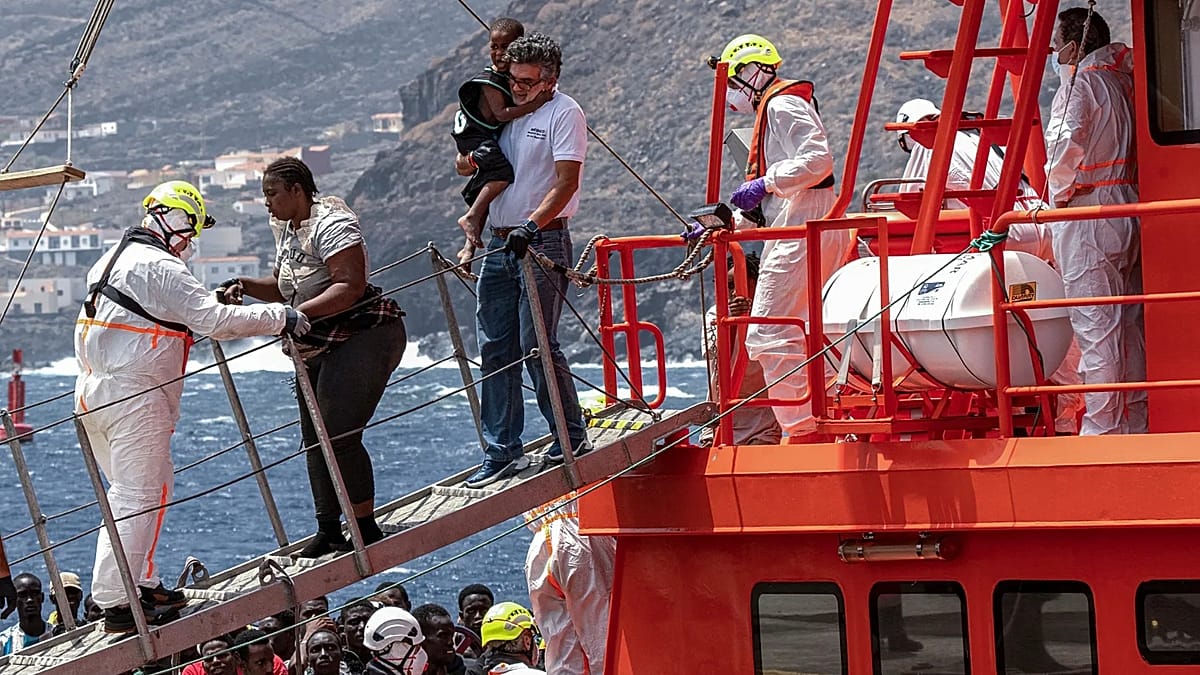
Rising Risks at Sea: Spain Records Over 3,000 Migrant Deaths in 2025
The journey to Spain remains tragically perilous for migrants, with over 3,000 lives lost at sea throughout 2025, according to the NGO Caminando Fronteras. This figure underscores a continuing crisis, even as overall arrival numbers have decreased. Here’s a detailed look at the routes, the risks, adn the factors contributing to these devastating losses.
A notable Increase in Fatalities
Caminando Fronteras‘ “Right to Life Monitoring 2025” report reveals a stark reality. A total of 3,090 people died attempting to reach Spain in 2025. This represents a substantial increase in deaths, notably along the route from Algeria to the Balearic Islands.
The victims include:
* 192 women
* 437 minors
These numbers highlight the vulnerability of all those undertaking these dangerous journeys. For context, the institution documented over 10,000 deaths on the same routes in 2024.
Shifting Migration Patterns & Arrival Numbers
While the death toll remains alarmingly high, data from Spain’s Interior Ministry indicates a decrease in overall irregular arrivals. As of December 15th, 2025:
* Total irregular arrivals to Spain fell by 40.4% compared to 2024.
* Arrivals to the canary Islands specifically decreased by 59.9%.
However, a drop in arrivals doesn’t equate to a drop in danger. The routes themselves are evolving, and new threats are emerging.
The Deadliest Routes to Spain
The report identifies two primary routes contributing to the high number of fatalities:
- Algeria to the Balearic Islands: This route, particularly towards Ibiza and Formentera, saw the most boat traffic in 2025, with 121 reported tragedies.
- West Africa to the Canary Islands: Despite the decrease in arrivals, this remains the most dangerous route due to the sheer volume of crossings.It accounted for 1,906 deaths, compared to 1,037 on the Mediterranean route.
You’ll find that the Canary Islands route is particularly treacherous due to the distance and the types of vessels used.
Emerging Threats: The Guinea Route
Caminando Fronteras warns of a newly emerging route originating from Guinea in West Africa. This route is considered more dangerous, especially for women and children. The organization believes this shift is due to increased border controls elsewhere.
Moreover, ther’s been a concerning rise in attempts to swim across the Strait of Gibraltar. 139 people died attempting this crossing, and a significant 24% of those victims were children and adolescents.
Why Are Deaths Decreasing (Statistically)?
Helena Maleno, coordinator of the research, explains that the apparent decrease in deaths is, in part, a statistical anomaly. Smaller boats sinking off the Algerian coast contribute to lower overall numbers compared to the larger cayucos used for the Canary Islands route. This doesn’t diminish the tragedy,but it highlights the complexities of interpreting the data.
Systemic Issues Contributing to the Crisis
Caminando Fronteras emphasizes that these deaths are not simply unavoidable tragedies. They are, in part, a outcome of:
* Insufficient rescue mechanisms: A lack of proactive search and rescue operations leaves migrants vulnerable.
* Outsourcing border control: Relying on third countries to manage migration increases vulnerability and reduces protection for those making the journey.
These policies create a system where desperation and danger are amplified.
What Does This Mean for You?
Understanding the realities of these migration routes is crucial. It’s a humanitarian crisis demanding attention and a shift in policy.If you are interested in learning more or supporting organizations working to assist migrants, consider these resources:
* Caminando Fronteras: https://caminandofronteras.org/
* UNHCR (The UN Refugee Agency): https://www.unhcr.org/
This situation requires a comprehensive approach that priorit

![Tech Deals: Limited-Time Offers & Discounts | [Year]](https://i0.wp.com/knowtechie.com/wp-content/uploads/2025/12/samsung-holiday-sale-1000x600.jpg?resize=150%2C150&ssl=1 "Tech Deals: Limited-Time Offers & Discounts | [Year]")



