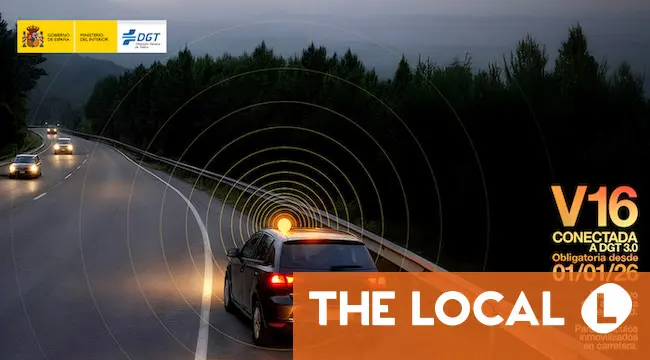
Sofia, Bulgaria – A new road safety measure in Spain is facing scrutiny from the European Commission, raising questions about its legality and potential conflict with EU regulations. The mandate, requiring all drivers to purchase a V-16 emergency beacon, has sparked controversy and consumer frustration, and now Brussels is intervening. The core of the dispute lies in the device’s geolocation capabilities and its connection to Spain’s DGT 3.0 platform, which the EU believes may infringe upon the principle of free movement of goods within the European Union.
At the start of 2026, Spain’s General Directorate of Traffic (DGT) made the V-16 beacon compulsory for all vehicles, intended as a replacement for traditional warning triangles. The DGT initially announced a period without fines for those who hadn’t yet acquired the device, a move intended to ease the transition for the country’s 28 million drivers. Still, the implementation has been fraught with issues, including concerns about the device’s effectiveness and the lack of clear guidance on which models are officially approved. The beacons, costing around €50 each, are designed to emit a high-intensity 360º light intermittently for 30 minutes and include geolocation connectivity.
EU Concerns Over Free Movement and Data Privacy
The European Commission’s concerns center on the requirement that the V-16 beacon incorporates a geolocation system and connects to the DGT 3.0 platform. According to reports, Brussels argues that this stipulation could violate EU regulations regarding the free movement of goods. Directive (EU) 2015/1535, which mandates that EU countries inform the Commission of any draft technical regulations before their adoption, was reportedly not followed by the Spanish government. Stéphane Séjourné, the European Commission’s executive vice-president, stated that “the Spanish Royal Decrees have not been notified according to the procedure of Directive (EU) 2015/1535.” This lack of notification has triggered a three-month status quo period, during which Spain is expected to refrain from fully implementing the regulation while the Commission assesses its compatibility with EU law.
The issue isn’t simply about the cost of the device for Spanish drivers, but about the broader implications for the single market. If the EU rules against the Spanish mandate, it could set a precedent for other member states considering similar measures. The principle of free movement of goods is a cornerstone of the EU, and any restrictions must be justified and proportionate. The geolocation requirement, in particular, raises questions about data privacy and the potential for tracking drivers’ movements.
Effectiveness and Criticism of the V-16 Beacon
Beyond the legal challenges, the V-16 beacon has faced criticism regarding its practical effectiveness. Spain’s Civil Guard Police, in late 2025, voiced concerns that the beacons are not sufficiently visible during daylight hours and may be ineffective on winding roads, where oncoming drivers may not receive adequate warning of a breakdown. The Local Spain reported on these criticisms, highlighting the police’s preference for the pre-warning provided by traditional warning triangles.
Further complicating matters, reports have surfaced questioning the original intent of the V-16 beacon’s creators. According to articles in the Spanish press, the inventors of the device initially envisioned it as an aid for drivers with physical disabilities, not as a compulsory requirement for all motorists. Eleconomista.es detailed these claims, adding another layer of controversy to the debate.
Consumer Concerns and Lack of Information
Spanish consumer watchdog Facua has been a vocal critic of the government’s handling of the V-16 rollout. The organization argues that the DGT failed to adequately inform drivers about which beacons were officially recognized, leading many to purchase non-compliant models online. This lack of clarity has resulted in wasted money for consumers and further fueled dissatisfaction with the mandate. The DGT’s 3.0 platform, intended to enhance road safety through real-time location data, has also raised privacy concerns among some drivers.
Interior Minister Defends the Measure
Despite the growing criticism, Spain’s Interior Minister Fernando Grande-Marlaska has defended the V-16 beacon, citing statistics that approximately 25 people die each year in Spain as a result of being struck by vehicles while placing down warning triangles. This argument underscores the government’s intention to improve road safety, but it has not quelled the concerns about the legality and practicality of the mandate. Marlaska is scheduled to appear before the Spanish Congress on Wednesday, February 25th, to provide an update on the implementation of the V-16 beacon and address the ongoing controversy.
What Does This Mean for Drivers?
The outcome of the European Commission’s review could have significant implications for drivers in Spain. If Brussels rules against the mandate, the Spanish government may be forced to amend the regulations, potentially removing the geolocation requirement or even scrapping the V-16 beacon altogether. This would affect both the millions of drivers who have already purchased the device and the manufacturers who have adapted their production lines to meet the new demand. The financial implications could be substantial, with potential claims for reimbursement from drivers who purchased non-compliant beacons.
The situation highlights the complexities of implementing new road safety measures within the framework of the European Union. While member states have the autonomy to regulate their own traffic laws, they must do so in a manner that respects EU regulations and the principles of the single market. The V-16 beacon case serves as a cautionary tale about the importance of thorough consultation and adherence to EU procedures when introducing new technical regulations.
The European Commission’s investigation is ongoing, and a decision is expected in the coming months. The outcome will not only determine the fate of the V-16 beacon in Spain but could also influence future road safety initiatives across the European Union. Drivers in Spain are advised to stay informed about the latest developments and to consult official sources for accurate information about the regulations.
Key Takeaways:
- The European Commission is questioning the legality of Spain’s mandatory V-16 emergency beacon.
- The core issue is the device’s geolocation requirement and its connection to the DGT 3.0 platform, which may violate EU free movement of goods principles.
- The mandate has faced criticism regarding its effectiveness, consumer confusion, and the original intent of the device’s creators.
- Spain’s Interior Minister is defending the measure, citing road safety concerns.
- A decision from the European Commission is expected in the coming months, which could significantly impact drivers in Spain.
The Spanish Congress hearing on February 25th is a crucial next step in this unfolding situation. We will continue to monitor developments and provide updates as they become available. Share your thoughts on this issue in the comments below.
Keep reading