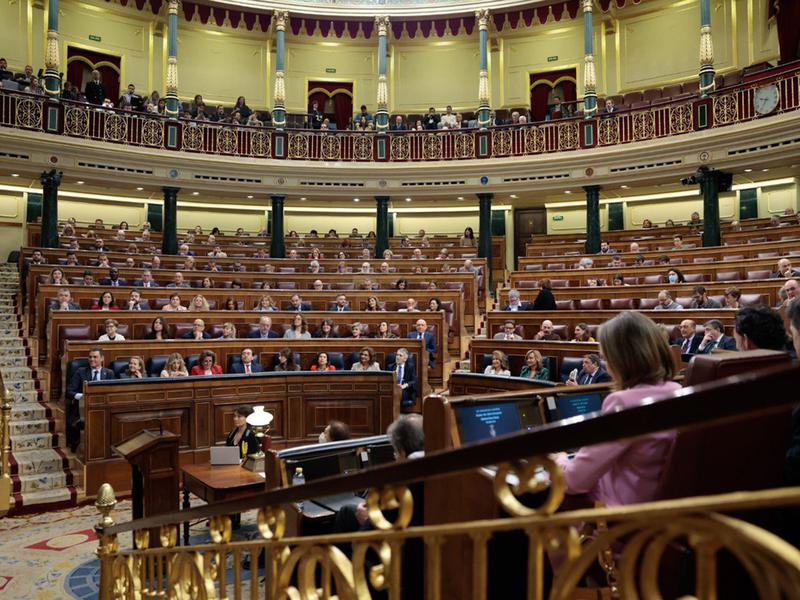
The political landscape in Spain is currently dominated by an intense debate surrounding the viability of a motion of no confidence against the administration of Prime Minister Pedro Sánchez. As the leader of the opposition, Alberto Núñez Feijóo, navigates the complexities of the Spanish parliamentary system, the Partido Popular (PP) finds itself at a critical juncture: whether to force a legislative showdown that appears mathematically difficult to win, or to maintain a strategy of political attrition aimed at weakening the government over time.
For the leadership of the Partido Popular, the decision is not merely tactical but existential. While the party has faced increasing pressure from various quarters to take decisive action, the reality of the parliamentary arithmetic remains the primary obstacle. According to the official records of the Congress of Deputies, a successful motion of no confidence requires an absolute majority of 176 votes. Currently, the PP, led by Feijóo, must secure the support of other parliamentary groups to surpass this threshold, a task that has proven elusive since the 2023 general elections.
The Arithmetic of Parliamentary Strategy
The core of the current debate centers on the feasibility of securing enough support to unseat the government. In the 2023 investiture process, Alberto Núñez Feijóo secured 172 votes, falling short of the required majority. Since that time, the political alliances that sustain the current government—often referred to as the “investiture block”—have remained largely intact despite ongoing political friction. The PP’s internal deliberations reflect a recognition that a failed motion could potentially provide a temporary political boost to the incumbent government rather than the desired change.
The institutional mechanism for a motion of no confidence is defined in the Spanish Constitution, which stipulates that any such motion must include a candidate for the presidency and be signed by at least one-tenth of the members of the Congress of Deputies. As detailed in Article 113 of the Spanish Constitution, the motion cannot be voted upon until five days have passed since its registration, during which time alternative motions may be submitted. This cooling-off period is designed to prevent impulsive parliamentary maneuvers.
Political Attrition and Public Opinion
Rather than seeking an immediate confrontation, the PP has increasingly focused on a strategy of long-term pressure. This approach assumes that the accumulation of political challenges and public controversies surrounding the government will naturally erode its support base. By maintaining a stance of critical opposition, the party seeks to position itself as the natural alternative for voters in future electoral cycles. This “wait and see” approach is tempered by the risk of appearing inactive or hesitant to its own base, which is eager for a more aggressive posture against the current cabinet.
The challenge for Feijóo is to balance the demands of his party’s supporters with the pragmatic limitations of the current legislature. As noted in political analysis of the Spanish parliamentary system, the reliance on minority coalitions and the necessity of negotiating with regional parties—such as the PNV or Junts—means that any legislative move requires careful coordination. The PP’s leadership has publicly indicated that they remain vigilant, reserving the right to use the motion of no confidence as an instrument if the political conditions change significantly.
Next Steps in the Legislative Calendar
The political situation remains fluid as the government continues to manage its legislative agenda and navigate the complexities of its parliamentary support. For observers of Spanish politics, the next significant indicator of the government’s stability will be the upcoming budgetary negotiations and the ability of the administration to pass key legislation in the coming months. These legislative milestones will likely dictate whether the calls for a motion of no confidence gain further momentum or subside.

We will continue to monitor the parliamentary sessions in Madrid for any shifts in strategy from both the government and the opposition. For those interested in following the official legislative proceedings, the Congress of Deputies website provides access to agendas, voting records and official transcripts of all plenary sessions. Readers are encouraged to share their insights in the comments section below as we track these developments.
Keep reading