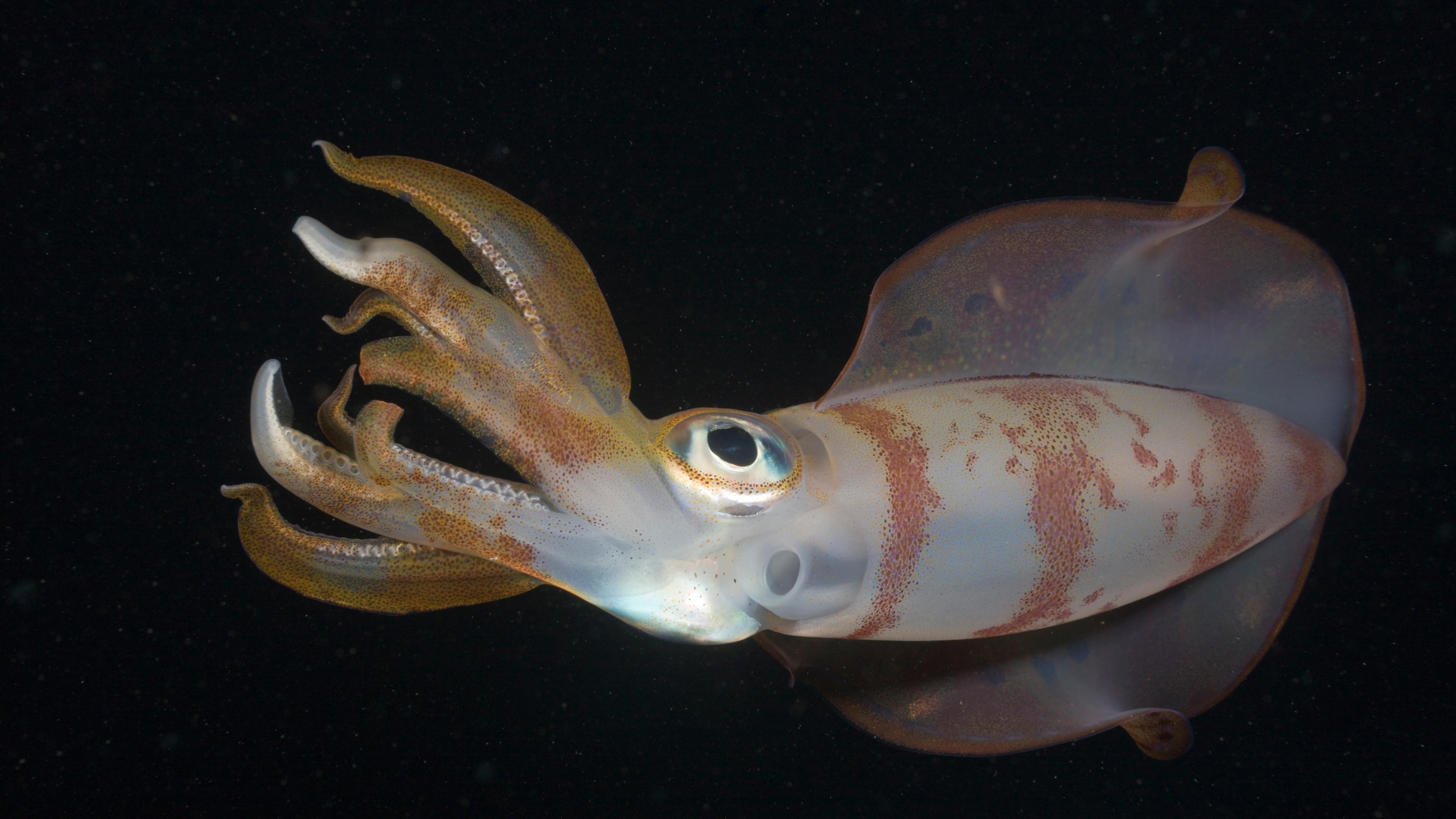
New research indicates that rising levels of oceanic carbon dioxide may be significantly reducing the brain volume of bigfin reef squid, a development that could threaten the cognitive abilities of these highly intelligent marine invertebrates. A study presented at the Society for Environmental Biology conference in Florence, Italy, in July 2024 found that squid exposed to carbon dioxide levels projected for the year 2100 experienced a 49% reduction in brain volume compared to those in current ocean conditions.
Squid are widely recognized as some of the most intelligent invertebrates in the world, capable of complex behaviors such as maze navigation, cooperative hunting, and sophisticated communication via color change. However, their neurological health may be directly linked to the changing chemistry of the world’s oceans. According to the National Oceanic and Atmospheric Administration (NOAA), the ocean absorbs approximately 30% of anthropogenic carbon dioxide emissions, which has caused ocean acidity to rise by 30% since the beginning of the industrial era. Projections from NOAA suggest that ocean acidification will increase by an additional 100% to 150% by the end of the 21st century.
Experimental Evidence of Neurological Impact
To investigate the impact of these environmental shifts, researchers conducted a controlled experiment rearing newly hatched bigfin reef squid in two distinct environments. One group was kept in water reflecting current carbon dioxide levels, while the other was placed in tanks simulating the elevated CO2 levels predicted for the year 2100. After 90 days, the subjects were examined using magnetic resonance imaging (MRI). The findings revealed a 49% reduction in overall brain volume for the squid in the high-CO2 environment. The damage was most severe in the optic lobes and the optic tract, which showed volume reductions of 52% and 62% respectively.
The research team, which included Garett Allen, an assistant professor of biological sciences at Acadia University, and Yung-Che Tseng, an assistant research fellow at Academia Sinica’s Institute of Cellular and Organismic Biology, noted that the exact mechanism remains under investigation. While the researchers initially hypothesized that the brain development was restricted by a lack of energy, they have also proposed that the brain tissue may be suffering from direct damage, such as oxidative stress or atrophy. This research builds upon previous findings published in Communications Biology, which documented a 65% reduction in hunting behavior in adult squid after seven days of exposure to increased carbon dioxide, and a 42% decrease in hunting frequency among newly hatched squid exposed to similar conditions for 90 days.
Consequences for Marine Ecosystems and Behavior
The significant shrinkage of the optic regions of the brain poses a particular threat to the survival of squid, as these areas are essential for processing visual stimuli. Because squid rely heavily on visual communication, such as complex color-changing displays for mating rituals and social interaction, any impairment to these brain regions could disrupt their ability to function within their environment. Allen noted that while the experimental subjects did not survive to allow for behavioral observation, the data suggests that reduced brain volume likely influences decision-making, potentially making the animals more hesitant in their predatory behaviors.
This potential for behavioral change is a concern for marine biologists, as the intelligence of these creatures is central to their role in the ocean ecosystem. The impact of ocean acidification has already been well-documented in other marine life, including corals, oysters, and various species of free-swimming snails and slugs. As carbon dioxide levels continue to rise, the potential for widespread neurological impacts across entire populations of cephalopods remains a critical area of study for the scientific community. The loss of cognitive capacity in such sentient, complex creatures represents a significant ecological risk driven by human-induced environmental change.
Future research is expected to focus on whether these neurobiological effects are consistent across different squid species and whether any compensatory mechanisms might exist in wild populations. As scientists continue to monitor the long-term effects of ocean acidification, the academic community awaits further peer-reviewed publications following the initial presentations at the Society for Environmental Biology. Readers interested in the ongoing monitoring of ocean chemistry and its biological impacts can find current data and environmental reports through the official portals of the National Oceanic and Atmospheric Administration.