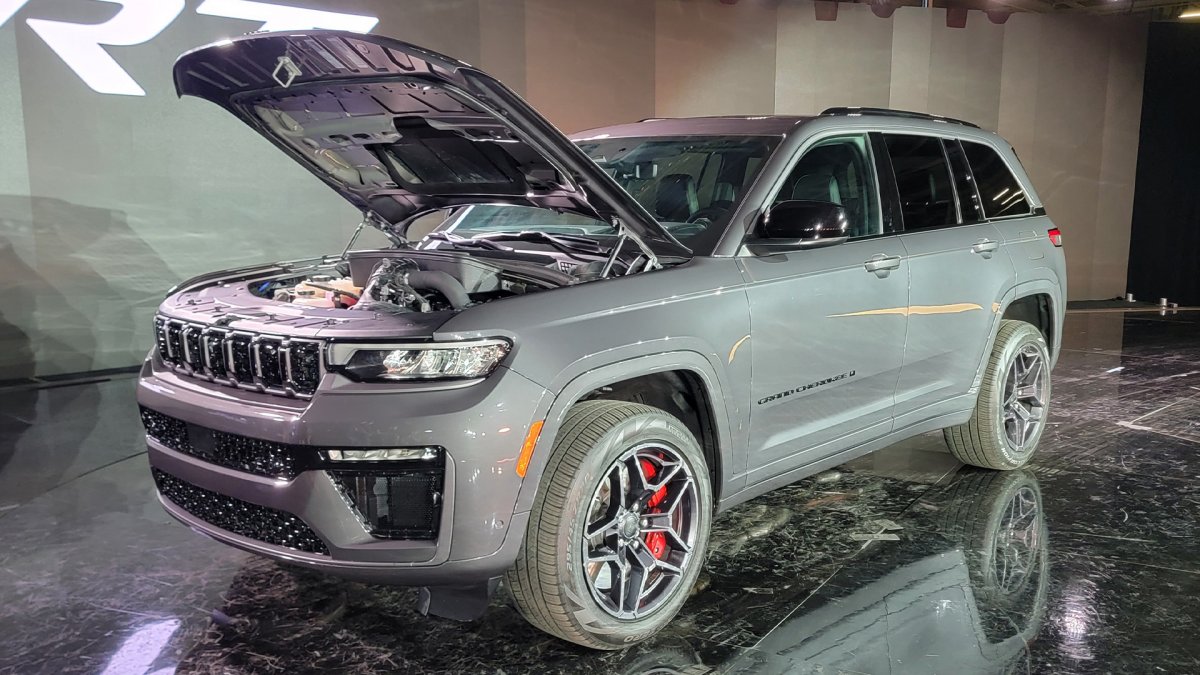
The SRT Performance Division has introduced a new hardware concept called eBoost Air, designed to eliminate turbocharger lag in turbocharged engines. According to Roadandtrack, Stellantis revealed the project to address one of the primary drawbacks of forced induction. While turbochargers help engineers increase efficiency and power without chasing displacement, larger turbos require more time to spool up their compressor wheels. The eBoost Air system tackles this power delay by utilizing an independently mounted electric compressor in the intake pathway.
SRT Reveals eBoost Air Concept to Tackle Turbo Lag
The system operates upstream of the conventional, exhaust-driven turbochargers. When a driver requests torque and the mechanical turbos are still below their operating speed, the e-compressor begins pumping air down the intake pathway to feed the turbos more quickly. Once the exhaust gas flow catches up and the turbos reach operating speed, the eBoost Air system diverts airflow back to the standard pathway and disengages. The setup requires a 48-volt electrical system to function, and unlike some other electrified induction setups, it does not recuperate spent energy.
Application on the Hurricane Inline-Six Engine
SRT developed the eBoost Air around a prototype version of the 3.0-liter twin-turbocharged Hurricane inline-six engine. The high-output variant of the Hurricane engine produces 540 horsepower and 510 lb-ft of torque according to The Drive, while the SIXPACK H.O. version makes 550 hp and 531 lb-ft of torque as noted by Carscoops. SRT engineers integrated the technology and a third air intake for the electric compressor into a Jeep Grand Cherokee prototype, managing to stand the project up in seven weeks.
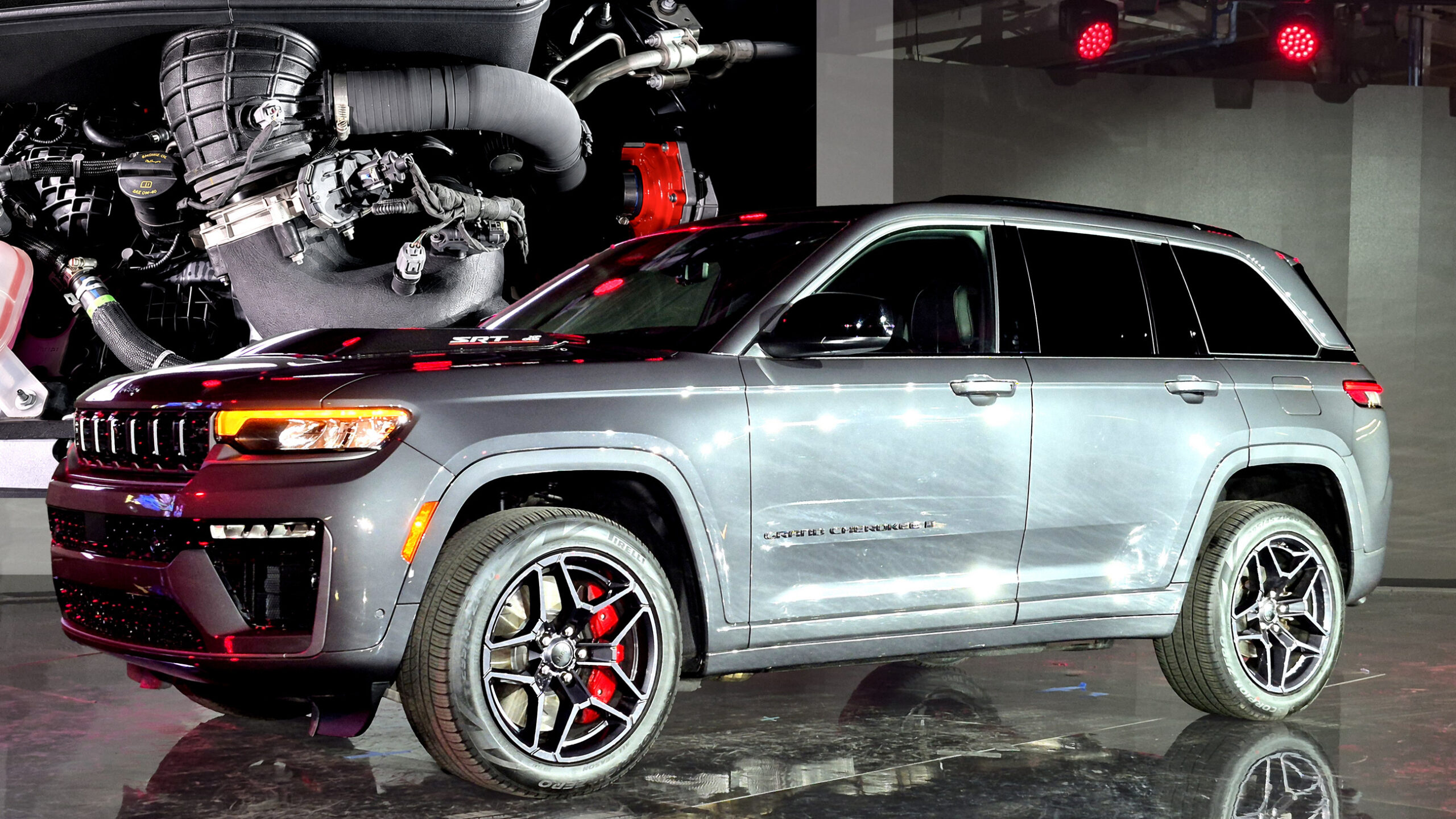
The primary goal of the hardware is to make the engine drive more like a supercharged V-8. By forcing air into the system from idle, the e-compressor fills the dead space before the larger turbos get fully up to speed, providing a broader and more linear powerband without sacrificing high-rpm performance.
Current Status and Production Outlook
For the time being, the eBoost Air remains a rapid-development proof of concept. Stellantis has not yet confirmed production plans, horsepower or torque gains, system voltage details, electric-motor output, durability information, or test data for the setup. Furthermore, fitting the hardware into the engine bay required substantial effort, as the six-cylinder Hurricane has not yet appeared in a production version of the midsize Jeep SUV.

Company leadership has expressed enthusiasm for the tangible benefits of the hardware. Enthusiasts aren’t interested in technology for the sake of technology. But when technology improves performance with no downside, they’re all in,
said Tim Kuniskis, head of American brands and marketing, North America. eBoost Air delivers exactly that kind of tangible benefit. It’s a smart, simple idea that attacks turbo lag head-on and reflects what SRT does best—moving fast, challenging assumptions, and chasing more performance.
Despite the positive performance goals, integrating the technology into future production vehicles will require additional engineering work. The system introduces new demands for energy, cooling, and under-hood packaging, which add cost and complexity that Stellantis must address before implementation.
Related reading