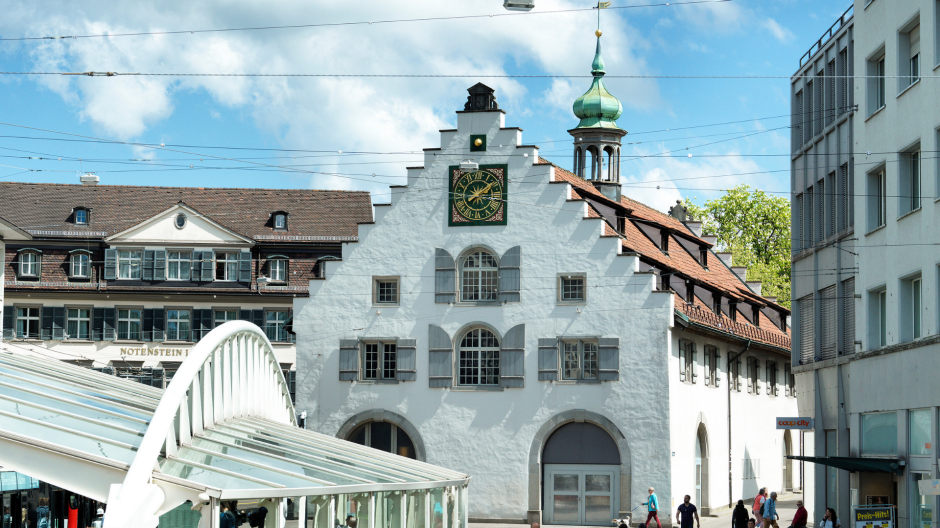
In a move set to redefine the administrative and economic landscape of eastern Switzerland, the St. Gallen City Parliament has officially approved a landmark proposal to restructure the city’s municipal utilities. Following a decisive session on May 26, 2026, lawmakers greenlit the transformation of St.Galler Stadtwerke (sgsw) into an independent public-law entity, marking the end of its era as a direct administrative arm of the city government.
The decision, which follows a formal recommendation from the St. Gallen City Council (Stadtrat), represents a strategic pivot toward greater operational autonomy for the provider of essential services, including electricity, water, gas, and waste management. By transitioning to an independent öffentlich-rechtliches Unternehmen (public-law company), the city aims to insulate the day-to-day management of these critical resources from the direct fluctuations of local political cycles, while maintaining strict public ownership and oversight.
For investors, policy analysts, and the citizens of St. Gallen, the St. Gallen City Utilities restructuring is more than a mere administrative shuffle; it is a fundamental reorganization designed to meet the volatility of the modern energy market and the accelerating demands of the Swiss energy transition. This shift toward a more corporatized model allows the utility to operate with the agility of a private firm while remaining anchored in the public interest.
The Evolution of St.Galler Stadtwerke: From Department to Entity
For decades, the St.Galler Stadtwerke operated under a traditional municipal model, where its functions were closely integrated with the city’s administrative hierarchy. While this ensured high levels of democratic accountability, it often resulted in slower decision-making processes and a governance structure that struggled to keep pace with the rapid digitalization and decarbonization of the utility sector.
The new structure, adopted by the parliament yesterday, establishes sgsw as a standalone legal entity. Under this public-law framework, the organization will possess its own legal personality, allowing it to enter into contracts, manage its own assets, and take on financial responsibilities independently of the central city budget. This “corporatization” does not mean privatization; rather, it creates a buffer that allows professional management to execute long-term technical and economic strategies without the immediate constraints of municipal departmental bureaucracy.
This transition is part of a broader trend across European municipalities, where essential services are being reorganized into specialized entities to better manage complex infrastructure. By establishing a clear boundary between political direction—set by the city—and operational execution—handled by the utility—St. Gallen is positioning its essential services to be more resilient and responsive to market shifts.
The Economic Logic of Public-Law Corporatization
From a financial and economic perspective, the restructuring of sgsw addresses several structural inefficiencies inherent in direct municipal administration. As an independent public-law company, sgsw will gain several key advantages that are critical for maintaining long-term fiscal health and service reliability:
- Enhanced Financial Agility: The ability to manage capital expenditures (CAPEX) and operational expenditures (OPEX) with greater autonomy allows the utility to respond more rapidly to infrastructure needs, such as grid upgrades or the integration of renewable energy sources.
- Professionalized Management: The new legal status enables the utility to recruit specialized talent from the private sector, ensuring that its leadership possesses the technical and commercial expertise required to navigate complex energy markets.
- Risk Isolation: By operating as a separate entity, the financial risks associated with large-scale utility projects are partially decoupled from the city’s general fund, providing a layer of protection for the municipal budget.
- Market Competitiveness: In an era where energy providers must compete on efficiency and innovation, the ability to make quick, data-driven decisions is a significant competitive advantage.
This reorganization also clarifies the relationship between the city as an owner and the utility as an operator. The city will continue to hold the majority of the shares or controlling interest, ensuring that the utility’s objectives remain aligned with the public fine, including affordable pricing and environmental stewardship. However, the “hands-off” approach to daily operations is expected to drive significant gains in organizational efficiency.
Addressing the ‘Energiewende’: Why Agility Matters for Utilities
Perhaps the most urgent driver behind the St. Gallen City Utilities restructuring is the Energiewende—the Swiss energy transition. As the nation moves toward a more decentralized, renewable-heavy energy system, the role of municipal utilities is undergoing a radical transformation. They are no longer just providers of stable, centralized power; they are becoming managers of complex, bidirectional smart grids.
The shift toward solar, wind, and various forms of biomass requires utility providers to manage highly variable energy inputs and fluctuating demand patterns. This requires significant investment in digital infrastructure, real-time data analytics, and highly specialized technical expertise. A traditional municipal department, often bound by rigid procurement rules and political consensus-seeking, is frequently ill-equipped to manage the rapid technological cycles inherent in the green energy revolution.
By establishing sgsw as an independent entity, St. Gallen is providing its utility with the institutional “breathing room” necessary to lead this transition. The new structure facilitates the long-term planning required for large-scale decarbonization projects, such as expanding district heating networks or integrating large-scale battery storage into the local grid. In short, the reorganization is a strategic investment in the city’s future energy security and environmental commitments.
Governance and Accountability: Maintaining Public Oversight
A common concern during any move toward corporatization is the potential loss of democratic oversight. Critics often worry that as entities become more “independent,” they may become less responsive to the needs and voices of the citizens they serve. The St. Gallen City Parliament has addressed this through the specific choice of a public-law entity model.

Unlike a private corporation, which is primarily accountable to its shareholders, a public-law company like the restructured sgsw remains fundamentally accountable to the public. The governance model includes several mechanisms to ensure this:

- Political Oversight: The city council will retain the authority to set high-level strategic goals and approve major capital investments, ensuring the utility’s direction remains consistent with municipal policy.
- Transparent Reporting: As a public entity, sgsw will be subject to rigorous auditing and transparency requirements, providing the public and the parliament with clear insights into its financial health and operational performance.
- Public Interest Mandate: The legal framework of the organization will explicitly include the mandate to provide reliable, affordable, and sustainable services, preventing the prioritization of profit over the public good.
This “middle way” between a government department and a private company is designed to capture the best of both worlds: the efficiency and expertise of the private sector, combined with the accountability and social responsibility of the public sector.
Summary of the Transformation
To provide a clear overview of the changes approved by the parliament, the following table compares the previous administrative model with the new independent structure.
| Feature | Previous Model (Municipal Department) | New Model (Public-Law Entity) |
|---|---|---|
| Legal Status | Direct part of the city administration | Independent legal personality |
| Decision-Making | Integrated into municipal political processes | Autonomous operational management |
| Financial Management | Part of the general city budget | Independent balance sheet and capital management |
| Primary Goal | Administrative service delivery | Efficient, market-responsive service provision |
| Governance Focus | Political alignment and direct control | Operational excellence and strategic agility |
The Road Ahead: Implementation and Integration
With the parliamentary decision now finalized, the focus shifts to the practical implementation of the reorganization. The transition period will involve several complex phases, including the legal transfer of assets, the establishment of a new board of directors, and the restructuring of human resources to align with the new corporate culture.
The city administration and the leadership of sgsw are expected to work closely over the coming months to ensure a seamless transition that minimizes any disruption to essential services. The ultimate success of this restructuring will be measured by sgsw’s ability to maintain service reliability, manage costs effectively, and lead St. Gallen through the complexities of the global energy transition.
Next Scheduled Update: The official implementation roadmap and the first appointment of the new board of directors are expected to be presented to the city administration in the coming fiscal quarter.
What are your thoughts on the corporatization of municipal services? Do you believe this move will lead to better efficiency or less accountability? Share your insights in the comments below and share this article with your network.
Related reading
- 아그리뱅크 금리, 5천만 동 예금 시 6백만 동 수령
- Brad Pitt and Angelina Jolie’s Custody Agreement Ends as Youngest Children Turn 18
- What Is a Rate Case? How Utilities Win Permission to Charge More (daybreakwire.com)
- Riga’s municipal enterprises will not impose penalties and will limit debt collection until June 30 (archyworldys.com)