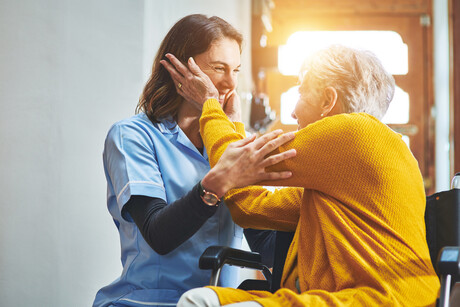
The often-overlooked details of care environments – the lighting, the décor and even the staff uniforms – profoundly impact the emotional and social wellbeing of residents in aged care facilities. While clinical excellence remains paramount, a growing body of evidence suggests that thoughtfully designed uniforms can contribute to a sense of calm, familiarity, and dignity for those receiving care, particularly for individuals living with dementia. The impact extends beyond the residents, influencing staff confidence and efficiency as well. Understanding how these seemingly small details can enhance the care experience is becoming increasingly crucial as global populations age and the demand for high-quality aged care rises.
For many older adults, particularly those transitioning into residential care, a loss of independence and control is a significant emotional challenge. Creating an environment that feels safe, predictable, and respectful is therefore essential. Staff uniforms, as a consistent visual element, play a role in establishing this sense of security. Beyond the visual aspect, the comfort and practicality of uniforms likewise impact staff performance and their ability to provide compassionate care. This connection between staff wellbeing and resident wellbeing is a key consideration for care providers seeking to optimize the overall care experience. The focus is shifting towards person-centered care, recognizing the importance of individual needs and preferences, and extending that consideration to the often-unnoticed details like uniform design.
The Importance of Visual Cues and Recognition
Residents in aged care settings, especially those with cognitive impairment, rely heavily on visual cues to understand their surroundings and the people within them. Changes in perception, memory, and sensory processing can make unfamiliar stimuli confusing or anxiety-inducing. Consistent staff uniforms help residents recognize caregivers more easily, fostering trust and reducing distress during daily interactions. This is particularly important in environments where staff turnover can be relatively high, as consistent uniforms provide a stable visual reference point. A 2020 study published in the journal *Gerontology & Geriatric Psychiatry* highlighted the correlation between consistent visual stimuli and reduced agitation in dementia patients, though further research is needed to specifically isolate the impact of uniforms. Gerontology & Geriatric Psychiatry Study
uniforms can clarify roles within a care setting. Subtle variations in color or pattern can differentiate departments – such as care teams, hospitality, maintenance, or wellbeing staff – allowing residents to more easily understand who is responsible for specific tasks. This visual clarity supports independence and reduces uncertainty, reinforcing routine and promoting a sense of control. For example, a care team might wear navy blue, while hospitality staff wear a lighter shade of teal. This simple distinction can empower residents to ask for assistance from the appropriate person, fostering a greater sense of self-sufficiency.
Extending Comfort and Clarity to In-Home Care
The principles of uniform design also apply to in-home care settings. For older adults receiving care at home, a recognizable uniform helps them quickly identify their caregiver upon arrival, providing reassurance and reducing anxiety. This is especially important for individuals who may be vulnerable or have concerns about strangers entering their homes. For families, a uniform offers confidence that the person providing care is a professional and vetted member of the care team. The presence of a uniform can also deter potential scams or unauthorized individuals from attempting to gain access to the home.
The Role of Color, Comfort, and Fabric
Color psychology plays a significant role in creating a calming and approachable atmosphere in aged care. Softer, warmer tones are generally associated with feelings of comfort and reassurance, while harsh contrasts or overly clinical colors can feel confronting. For individuals with dementia, strong patterns, dark colors, or high-contrast designs can be particularly disorienting. Gentle variations in color or pattern, consistently applied across uniform ranges, can support recognition without overwhelming the senses. Research from the Alzheimer’s Association suggests that minimizing visual clutter and maximizing clarity can significantly improve the quality of life for individuals living with dementia. Alzheimer’s Association
Comfort is equally paramount. Soft, breathable uniform fabrics make a noticeable difference during close contact activities such as personal care or mobility support. Residents often respond to the relaxed and present demeanor of staff, which is influenced by how comfortable staff feel in their uniforms. A well-fitting, adaptable uniform allows for ease of movement, supporting confident and unrushed care. For both residents and in-home clients, this translates into smoother, more reassuring experiences. The choice of fabric also impacts hygiene; antimicrobial treatments can help keep staff feeling fresh throughout long shifts, contributing to a more positive care environment.
Supporting Staff Wellbeing Through Uniform Design
Staff wellbeing and resident wellbeing are inextricably linked. Uniforms that prioritize comfort, temperature regulation, and mobility can help reduce fatigue during long shifts. Feeling comfortable and professional in their attire boosts staff confidence and pride, positively influencing their emotional engagement with residents. Clear visual identification of roles through uniform design also supports staff by reducing repeated questions or uncertainty, allowing them to focus on providing care and connection.
This is particularly relevant in dementia care and in-home care, where emotional cues, tone, and body language are crucial for effective communication. Uniforms that support calm movement, visual clarity, and physical comfort help caregivers remain emotionally available during challenging moments. Investing in high-quality uniforms can be seen as an investment in the care team, demonstrating a commitment to their wellbeing and, to the quality of care provided.
Incremental Changes, Significant Impact
Enhancing the care environment through uniform design doesn’t necessarily require a complete overhaul. Small, thoughtful changes can have a meaningful impact. These include refining color palettes, introducing subtle pattern variations to differentiate departments, choosing softer fabric blends for high-contact roles, incorporating antimicrobial fabric treatments, or offering adaptive uniform options that support diverse body types and cultural needs. Adaptive uniforms, for example, might include features like Velcro closures or adjustable waistbands to accommodate individuals with limited mobility or dexterity. These incremental changes are practical, achievable, and closely aligned with person-centered care principles.
Edwards Garment, a leading provider of workwear, offers a range of uniform options specifically designed for the assisted living industry, including styles for administration, security, food service, and nursing staff. Edwards Garment Assisted Living Uniforms Companies like Resident Essentials also specialize in providing adaptive clothing for elderly men and women, addressing the specific needs of residents in long-term care facilities. Resident Essentials Adaptive Clothing
Recentering the Human Experience in Aged Care
At its heart, aged care is about people. Emotional and social wellbeing are shaped by countless small moments each day, whether in a residential setting or within someone’s own home. Staff uniforms are part of that environment, even if they are not always consciously noticed. By viewing uniforms as an integral part of the overall care experience, rather than simply a functional requirement, providers can support a calmer, more connected, and more human approach to care. Often, it is the smallest details that make the biggest difference.
Looking ahead, the integration of smart textiles and wearable technology into care uniforms presents exciting possibilities. These technologies could potentially monitor vital signs, detect falls, or even provide gentle sensory stimulation to individuals with dementia. However, it is crucial to prioritize privacy and ethical considerations when implementing such innovations. The focus should always remain on enhancing the human experience and promoting the dignity and wellbeing of those receiving care.
Key Takeaways
- Consistent staff uniforms promote recognition and reduce anxiety for residents, particularly those living with dementia.
- Thoughtful color choices and comfortable fabrics contribute to a calming and approachable care environment.
- Uniform design can clarify roles within a care setting, empowering residents and improving efficiency.
- Investing in staff comfort through uniform design supports staff wellbeing and enhances the quality of care.
- Small, incremental changes to uniform design can have a significant impact on the overall care experience.
As the aged care sector continues to evolve, prioritizing the human experience – and recognizing the subtle but powerful impact of details like staff uniforms – will be essential for creating environments that truly support the wellbeing of both residents and caregivers. Further research into the specific effects of uniform design on emotional and cognitive function is warranted to inform best practices and optimize the care experience. Share your thoughts and experiences in the comments below.
Keep reading