Starbucks is continuing its aggressive operational overhaul, announcing the layoff of 300 U.S. Corporate employees and the closure of several regional offices. The move, confirmed Friday, is the latest step in a broader strategic turnaround aimed at reducing organizational complexity and slashing overhead costs to revitalize the global coffee giant’s performance.
The restructuring focuses exclusively on corporate support functions, including marketing, human resources, and supply chain management. According to company statements, no coffeehouse employees—the baristas and store managers who form the frontline of the brand—are affected by these specific cuts. Similarly, international corporate staff remain unaffected for the time being, although the company indicated it is currently reviewing its corporate structure outside the United States.
From an economic perspective, this shift represents a calculated effort to lean out the “middle” of the organization. By removing layers of corporate bureaucracy, the company aims to accelerate decision-making and pivot more resources toward the customer-facing experience. For a brand of Starbucks’ scale, these adjustments are often necessary to combat stagnating growth and adapt to changing consumer behaviors in a competitive retail landscape.
The financial impact of this reorganization is significant. Starbucks expects these moves to result in approximately $400 million in restructuring charges, a figure that includes $120 million earmarked specifically for employee separation benefits. While these charges will create a short-term hit to the balance sheet, the long-term goal is to improve operating margins by eliminating underutilized assets and redundant roles.
Streamlining the Corporate Footprint
As part of the efficiency drive, Starbucks is closing underused regional offices in several major U.S. Hubs, including Atlanta, Dallas, and Chicago. The closure of these satellites suggests a shift toward a more centralized or hybrid corporate model, reducing the costs associated with maintaining expensive real estate in multiple high-cost urban centers.
However, the company is not simply retreating. In a strategic move to relocate talent and potentially tap into new labor markets, Starbucks recently announced the opening of a new corporate office in Nashville, Tennessee. This facility is projected to employ up to 2,000 people within the next five years, signaling a redistribution of corporate power away from traditional hubs and toward regions that may offer better operational scalability.
This “shuffle” of corporate assets—closing old offices while investing in new ones—is a classic corporate turnaround tactic. It allows leadership to reset the company culture and physically reorganize teams to better align with new strategic priorities.
The Brian Niccol Turnaround Strategy
These cuts are being orchestrated under the leadership of Chairman and CEO Brian Niccol, who took the helm in 2024. Niccol has inherited a company struggling with operational friction and a need for renewed innovation. His approach has been characterized by a “back-to-basics” philosophy: simplifying the menu, reducing store complexity, and empowering baristas.
The current layoffs are not an isolated event. In the previous year, the company executed a much larger reduction, laying off 2,000 corporate employees and closing hundreds of stores across the U.S., Canada, and Europe. Niccol has stated that a simplified structure is essential for the company to innovate more quickly, removing the bottlenecks that often plague massive global corporations.
By stripping away corporate layers, Niccol is attempting to bridge the gap between the executive suite and the store floor. The logic is simple: the fewer approvals required to implement a change in the store, the faster the company can respond to customer feedback and competitive pressures.
Reinvesting in the Store Experience
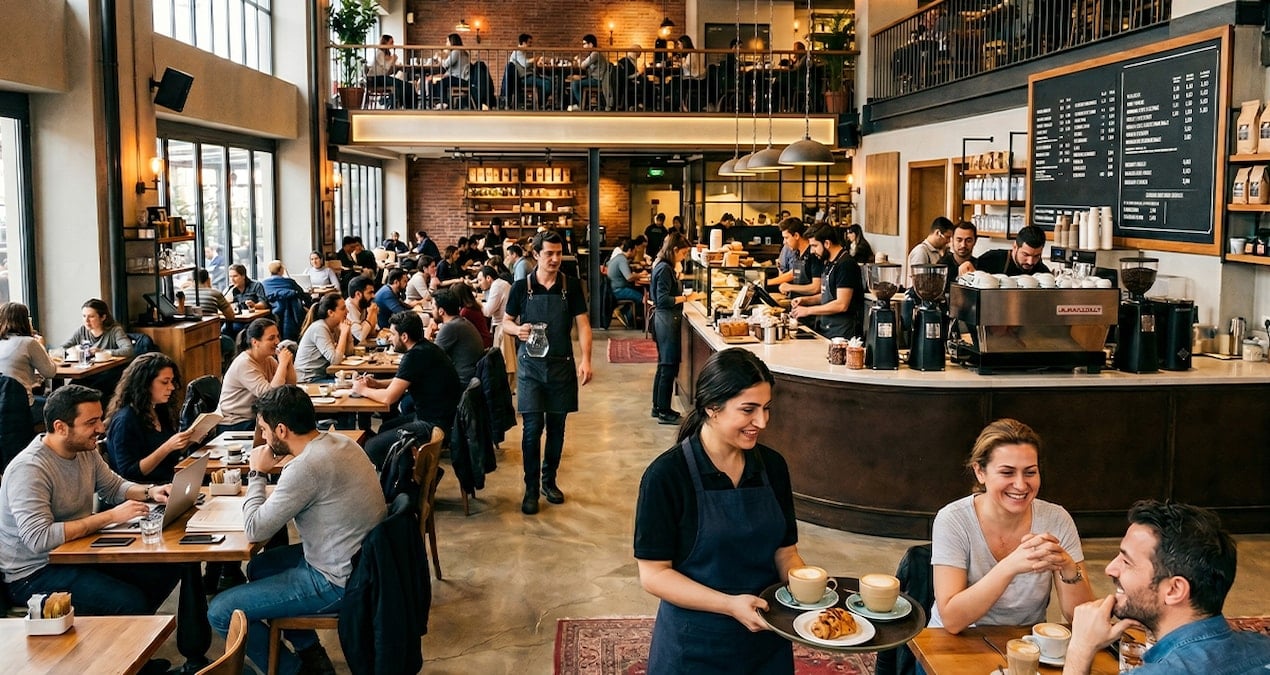
While the corporate side of the business is shrinking, Starbucks is aggressively reinvesting in its physical retail presence. The company plans to redesign 1,000 U.S. Stores this year, with the goal of creating a “cozier, more comfortable feel” to encourage longer visits and higher customer loyalty.
the company is increasing its investment in human capital at the store level. By hiring more baristas, Starbucks intends to ensure faster service during peak hours, addressing one of the primary pain points for modern coffee consumers: the wait time for complex, handcrafted beverages.
This dual-track strategy—cutting corporate “fat” while adding store-level “muscle”—is designed to shift the company’s value proposition back toward the experience of the “third place” (the space between home and work) while maintaining the efficiency of a high-volume retail machine.
Measuring Success: The “Turn in the Turnaround”
Early indicators suggest that these aggressive measures are yielding results. In the January-March period, Starbucks reported that U.S. Same-store sales jumped 7%. For retail analysts, same-store sales (or comparable-store sales) are the most critical metric for gauging organic growth, as they exclude the impact of new store openings.

CEO Brian Niccol described this specific quarter as “the turn in our turnaround,” suggesting that the company has moved past the steepest part of its decline and is now entering a phase of sustainable growth. The 7% increase indicates that the combination of store investments and corporate streamlining is beginning to resonate with the American consumer.
From a financial analysis standpoint, the company is essentially trading short-term restructuring costs for long-term operational agility. The $400 million charge is a one-time expense, whereas the benefits of a leaner corporate structure and higher store efficiency will manifest as recurring improvements in the quarterly earnings reports.
Key Strategic Shifts at a Glance
- Corporate Reduction: 300 U.S. Roles cut in HR, Marketing, and Supply Chain.
- Real Estate Pivot: Closing offices in Atlanta, Dallas, and Chicago; expanding in Nashville.
- Store Investment: 1,000 U.S. Locations to be redesigned for comfort.
- Operational Focus: Hiring more baristas to reduce wait times and improve service speed.
- Financial Goal: Reducing complexity to drive innovation and improve same-store sales.
The next critical checkpoint for investors and employees will be the outcome of the ongoing review of Starbucks’ international corporate structure. While the current layoffs are concentrated in the U.S., the company’s admission that it is reviewing roles outside the United States suggests that further global streamlining may be on the horizon.
We will continue to monitor official filings and company updates regarding the international restructuring and the progress of the Nashville office expansion.
Do you think corporate streamlining is the key to reviving the retail experience, or does it risk losing institutional knowledge? Share your thoughts in the comments below.