The latest data from Ookla reveals that United States users account for nearly half of all global satellite-to-phone connections, highlighting the growing adoption of direct-to-device (D2D) satellite services in North America. This finding comes from an analysis of D2D connectivity trends between July 2025 and March 2026, during which global connections increased by 24.5%. The U.S. Share of these connections reached 45.9%, making it the largest single market for this emerging technology.
Starlink’s expansion into new international markets has been a key driver of this growth, with notable deployments in Chile, Ukraine, Peru, and the United Kingdom contributing to the overall surge. Despite this international expansion, the U.S. Continues to lead in absolute volume of D2D connections, reflecting its early-mover advantage in a market where penetration among mobile subscribers remains below 1.5% even in leading markets.
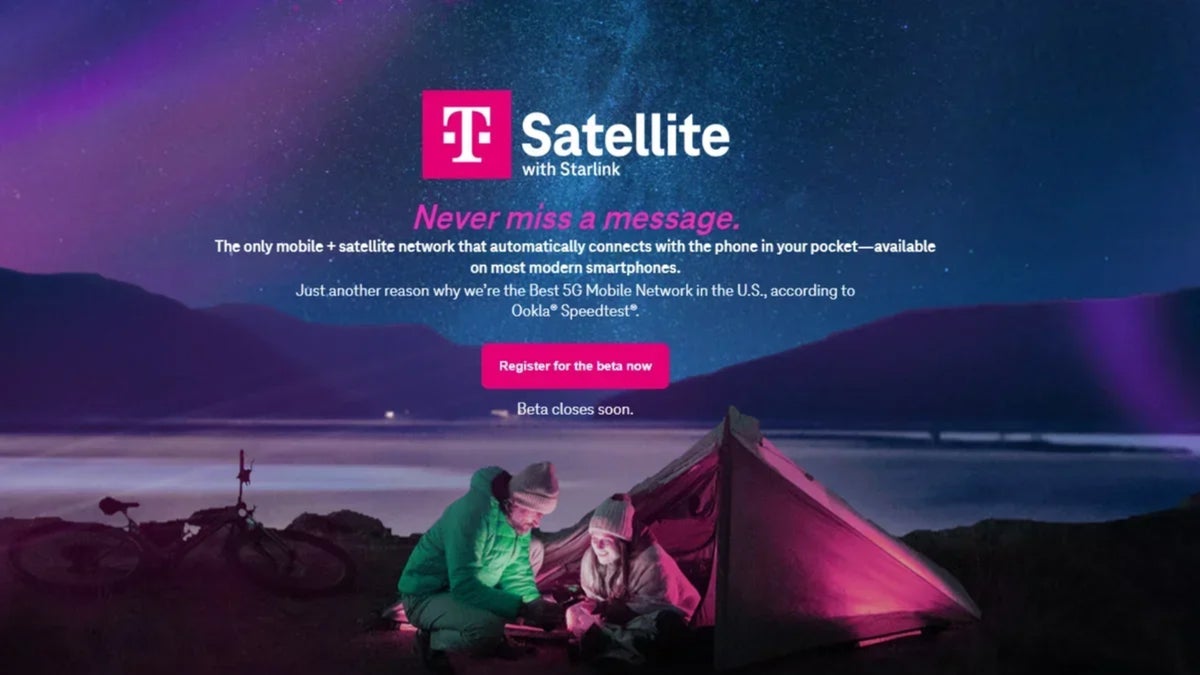
The technology enabling these connections, known as Direct-to-Device or D2D, allows standard smartphones to communicate directly with satellites in low Earth orbit without requiring specialized hardware. T-Mobile’s T-Satellite service, powered by Starlink’s satellite network, is one of the primary commercial offerings bringing this capability to consumers in the United States. The service is designed to provide connectivity in areas beyond the reach of traditional cellular towers, particularly in remote or underserved regions.
Though, recent trends suggest some fluctuation in domestic adoption. Ookla’s report notes that D2D connection growth in the U.S. And Canada was partially offset by declines during the same period, which analysts attribute in part to decisions by T-Mobile and Rogers to introduce surcharges for D2D services. Seasonal usage patterns may also have played a role in these regional variations.
Initial use cases for D2D satellite connectivity remain focused on non-terrestrial network (NTN) extensions for basic functions such as SMS messaging and geolocation in areas where cellular coverage is unavailable or unreliable. RootMetrics engineers conducted drive tests in northern New York state during the second half of 2025 to evaluate the reliability of T-Mobile’s Starlink-powered D2D connections in such coverage gaps, confirming that text message transmission was possible even when traditional cellular service was not available.
Looking ahead, next-generation D2D systems are exploring integration with 5G NR standards, utilizing acquired spectrum holdings such as those held by EchoStar. Companies like Skylo and Lynk Global also contribute to the overall D2D ecosystem, though Starlink continues to dominate traffic volume. AST SpaceMobile has separately announced plans to launch D2D services in partnership with Rakuten Mobile, targeting availability in the fourth quarter of 2026.
As the technology matures, industry experts emphasize that indoor coverage remains a significant challenge for satellite-to-phone services. The ability to maintain a reliable connection inside buildings will be a critical factor in determining the broader viability of D2D as a complement to terrestrial networks.
For users interested in tracking the availability and performance of satellite-to-phone services, official coverage maps from providers like T-Mobile offer detailed insights into areas where D2D connectivity is currently supported. These resources are regularly updated as satellite constellations expand and ground station infrastructure improves.
As of April 2026, the next major milestone in the D2D sector is the anticipated launch of AST SpaceMobile’s commercial service with Rakuten Mobile later this year. Industry analysts and regulators will be monitoring its performance closely, particularly regarding indoor usability and scalability.
What are your thoughts on satellite-to-phone technology? Have you tried using D2D services in areas with no cellular coverage? Share your experiences in the comments below and facilitate others understand how this technology is evolving. Don’t forget to share this article if you found it informative.
Worth a look