## Navigating US-UK Relations: Ukraine,Security,and the Trump Visit of 2025
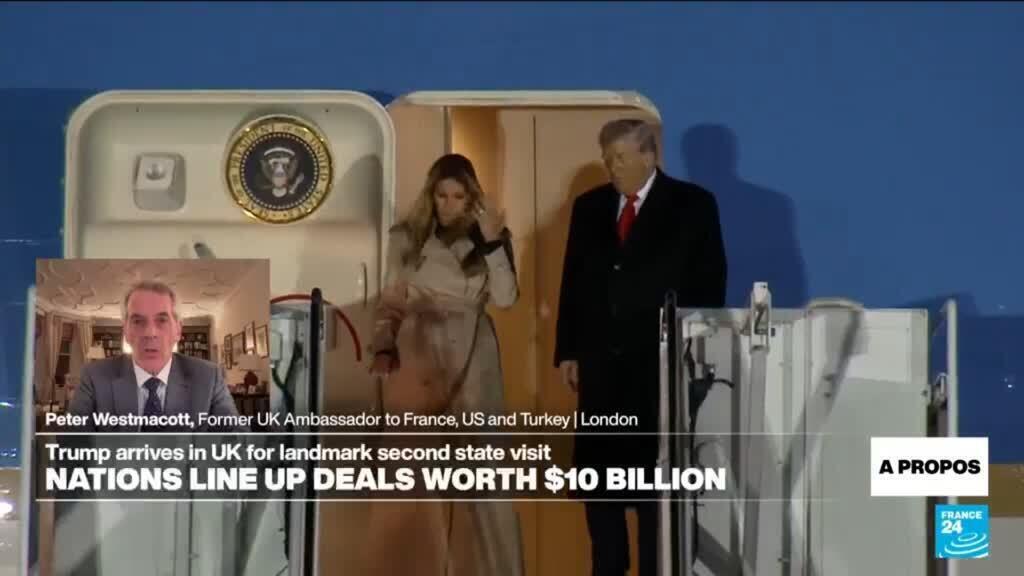
The arrival of former US President Donald Trump in London for a second state visit in September 2025 presents a complex diplomatic landscape for UK Prime Minister Keir Starmer. This visit, occurring amidst ongoing geopolitical tensions, particularly concerning the conflict in Ukraine, necessitates a delicate approach focused on reinforcing transatlantic security interests. Understanding the nuances of this interaction requires examining the historical context of the US-UK relationship, the evolving dynamics of the Russia-Ukraine war, and the potential impact of Trump’s foreign policy perspectives. The core of the discussion, as highlighted by Peter Westmacott, former British Ambassador to the US, France, and Turkey, and currently a Distinguished Fellow at the Atlantic council, centers on convincing Trump that bolstering Ukraine’s defence against Russian aggression directly contributes to the security of the United States.
### The Stakes for the UK: Persuading a Shifting US policy
Prime Minister Starmer’s primary objective during Trump’s visit is likely to be securing a reaffirmation of US commitment to supporting Ukraine.Recent polling data from YouGov (September 2025) indicates that 68% of Britons believe continued US aid to Ukraine is vital for European security.However, Trump’s past statements and actions have cast doubt on the extent of his willingness to maintain robust support, particularly financial aid, for Kyiv. He has repeatedly questioned the financial contributions of European allies and advocated for a more isolationist foreign policy.
“Keir Starmer will want to try to persuade Donald Trump to understand that standing up with Ukraine against Russian aggression […] is also about the security of the United States.”
this presents a notable challenge for Starmer. he must articulate a compelling case demonstrating how a secure Ukraine is not merely a matter of European stability, but a crucial component of broader US national security interests. This argument could focus on deterring further Russian expansionism, preventing a wider conflict in Europe, and upholding the international rules-based order – all factors that directly impact the US. A key element of this persuasion will involve highlighting the interconnectedness of global security threats and the potential for Russian actions to embolden other adversaries.
### Ukraine’s Security: A Transatlantic Imperative
The situation in Ukraine remains volatile. As of September 17, 2025, the conflict has entered a phase of protracted attrition, with both sides facing significant challenges. According to the Institute for the Study of war (September 2025 report), Russian forces continue to focus on consolidating control over occupied territories in eastern Ukraine, while Ukrainian counteroffensives have achieved limited gains.The ongoing provision of Western military aid, including advanced weaponry and training, is critical for Ukraine’s ability to defend its sovereignty and territorial integrity.
However, the level of support is facing increasing scrutiny, particularly in the US Congress.A recent Congressional Budget Office report (August 2025) estimates that total US aid to Ukraine as the start of the conflict has exceeded $100 billion. This has fueled debate among some lawmakers regarding the allocation of resources and the potential for domestic economic consequences. Starmer’s efforts to persuade Trump will therefore be influenced by this domestic political context within the US.
### Trump’s Foreign Policy: Predictability and Potential Disruptions
Donald Trump’s approach to foreign policy is characterized by a transactional mindset, a skepticism towards multilateral institutions, and a willingness to challenge established alliances. During his first term,he questioned the value of NATO,imposed tariffs on allies,and withdrew the US from several international agreements,including the Iran nuclear deal and the Paris agreement on climate change.His potential return to the presidency raises concerns about a possible shift away from traditional US foreign policy priorities. He has consistently advocated for reducing US involvement in international conflicts and prioritizing domestic concerns. This stance could lead to a reassessment of US commitments to Ukraine and a potential weakening of transatlantic cooperation. Understanding these potential disruptions is crucial for the UK as it navigates its relationship with a possibly recalibrated US administration.