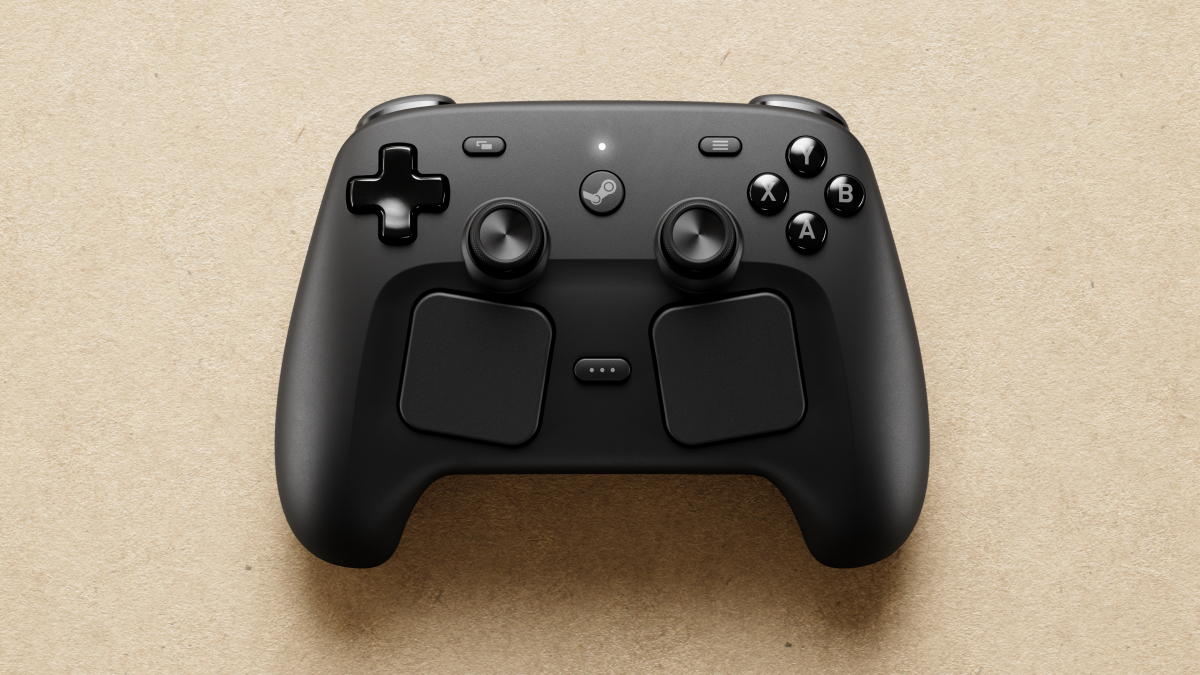
Valve’s upcoming Steam Controller has resurfaced in tech discussions after a leaked review revealed its pricing and key features, reigniting interest in the company’s attempt to redefine PC gaming input devices. The controller, which had been quietly delayed due to supply chain challenges, is now positioned as a premium alternative to mainstream gamepads, with a focus on versatility for both couch gaming and desktop productivity.
According to multiple verified reports from technology outlets, the Steam Controller will carry an MSRP of $99, placing it significantly above competitors like the Xbox Wireless Controller ($64) and PlayStation’s DualSense ($69). This pricing was confirmed in a leaked video review shared by a hardware enthusiast on social media, where the reviewer noted the device offers “substantially more functionality” despite its higher cost. The leak originated from an embargo-breaking upload that was later mirrored on platforms like Streamable, allowing wider access to the content before its removal from YouTube.
The controller’s standout feature, as highlighted in the leaked footage, is its dual trackpads—one on each side of the device—which enable precise cursor control and mouse-like input directly from the gamepad. Reviewers noted that the right trackpad defaults to cursor movement, while the left handles scrolling, though both can be reconfigured or even set to emulate trackball behavior with momentum retention after a finger flick. This design aims to bridge the gap between traditional controller use and keyboard-and-mouse-dependent genres such as strategy games, MOBAs, and first-person shooters, where precision input has historically favored desktop setups.
Beyond the trackpads, the Steam Controller incorporates TMR (tunnel magnetoresistance) sticks, a technology known for improved durability and resistance to drift compared to conventional potentiometer-based analog sticks. This choice addresses a common pain point among gamers who have experienced stick degradation over time in other premium controllers. The device also includes a traditional button layout with dual-stage triggers, a D-pad, and grip buttons, maintaining compatibility with a wide range of Steam titles and PC games.
Valve originally announced the Steam Controller in late 2025 alongside the Steam Machine and Steam Frame VR headset, with initial plans for an early 2026 launch. However, the company has since adjusted its timeline due to ongoing global semiconductor constraints, shifting the release window to the first half of 2026. Valve has emphasized that it will not subsidize the hardware, unlike console manufacturers such as Sony and Nintendo, meaning the full cost will be passed to consumers—a factor contributing to concerns about the Steam Machine’s accessibility amid rising memory prices.
The leaked review also touched on ergonomic impressions, with the tester noting that the trackpads felt intuitive within minutes of use, describing the transition as “natural” for basic navigation and desktop tasks. However, the reviewer cautioned that the trackpads may not yet replace a mouse in competitive scenarios requiring rapid, high-accuracy inputs, such as esports titles or real-time strategy games where clicks-per-second performance is critical.
Industry analysts suggest that if delivered as promised, the Steam Controller could appeal to a niche but growing segment of PC gamers who value flexibility—those who alternate between living-room gaming and desk-based play without wanting to switch peripherals. Its success may hinge on software support, particularly how well Steam’s input configuration system allows users to remap functions across games and applications.
As of now, Valve has not issued an official statement confirming the leaked details, nor has it announced a firm release date beyond the broader “first half of 2026” window. The company typically avoids commenting on unverified leaks, preferring to control its narrative through official channels closer to launch. Interested buyers are advised to monitor Valve’s official Steam blog and social media accounts for any updates.
For users invested in the Steam ecosystem, the controller represents a continuation of Valve’s long-standing effort to innovate beyond conventional gamepad design—a philosophy seen in earlier experiments like the Steam Link and the original Steam Controller prototype from 2015. Whether this iteration achieves broader adoption remains to be seen, but its focus on PC-native functionality and modular input options sets it apart from console-first alternatives.
Stay tuned to World Today Journal for further developments on the Steam Controller and other emerging technologies shaping the future of interactive entertainment.