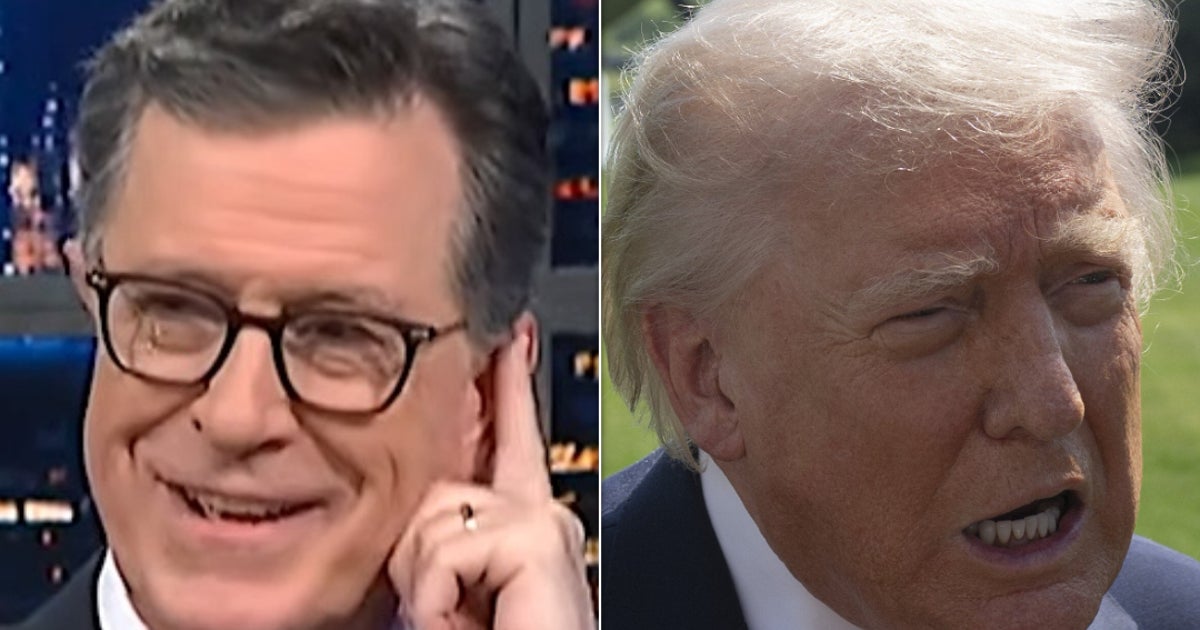
Stephen Colbert delivered a sharp critique of Donald Trump’s AI-generated image depicting the former president alongside Jesus Christ during a recent episode of The Late Show. The segment aired on CBS on April 15, 2026, following Trump’s post on Truth Social showing an AI-created photograph of himself in a close embrace with Jesus. Colbert used the moment to highlight what he described as a pattern of disrespect toward religious symbols by the former president.
The host opened his monologue by addressing the controversy directly, stating that Trump’s decision to share such an image demonstrated a fundamental misunderstanding of Christian theology, and reverence. Colbert emphasized that depicting political figures in sacred contexts risks trivializing deeply held beliefs for millions of Americans, particularly within evangelical and Catholic communities who have expressed outrage over similar incidents in the past.
Colbert’s remarks came amid heightened tensions between Trump and Pope Leo XIV, which escalated after the pontiff delivered an Easter message calling for global peace—a statement Trump dismissed on Truth Social by labeling the pope “weak” and a “loser.” The late-night host noted that while Trump’s supporters have often defended his actions as humorous or provocative, religious leaders and faithful observers widely condemned the AI Jesus post as blasphemous.
The backlash extended beyond late-night comedy, with prominent conservative voices also speaking out. Megan Basham, a well-known Protestant Christian writer and commentator, urged Trump to remove the image immediately and seek forgiveness from both the American public and God. Similarly, political commentator Cam Higby declared he would not defend what he described as an outright act of blasphemy, despite his history of supporting Trump.
Even among Trump’s base, the post caused division. Riley Gaines, the former collegiate swimmer turned conservative podcaster, questioned the motivation behind the share, writing that “a little humility would serve him well” before concluding that “God shall not be mocked.” Her comments reflected a growing unease among some ardent supporters who experience Trump’s actions alienate core values they hold dear.
Colbert framed the incident not as an isolated joke but as part of a broader trend in which Trump tests boundaries with religious imagery. He pointed out that this was not the first time the former president had been associated with AI-generated religious content, suggesting a repeated pattern that warrants serious reflection rather than dismissal as mere trolling.
The host concluded by urging viewers to consider the real-world impact of such posts, especially in a nation where faith plays a central role in public life. He warned that repeatedly blending political branding with sacred iconography erodes trust and deepens societal divides, urging accountability from public figures regardless of party affiliation.
As of April 17, 2026, neither Trump nor his representatives have issued a public apology for the AI Jesus image. The post remains a focal point in ongoing discussions about the intersection of politics, religion, and digital media ethics—particularly as generative AI tools become more accessible and capable of producing hyper-realistic but misleading imagery.
For ongoing coverage of developments involving public figures and religious sensitivity, readers are encouraged to follow official statements from faith-based organizations and verified news outlets covering media ethics and political discourse.