
Poulos, Sydney
2026-01-26 21:26:00
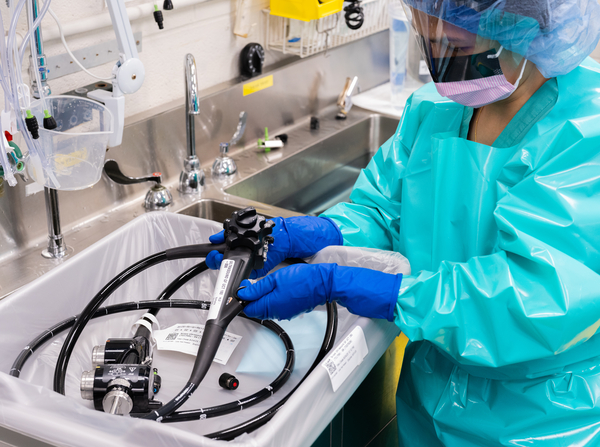
Sterile processing work happens out of sight, yet its influence is felt in every operating room, procedural suite, and patient outcome. While often viewed as a technical function, sterile processing sits upstream from nearly every clinical decision surgeons and care teams make.
Reliability in this environment does not simply support the surgical schedule—it protects patients, stabilizes operations, and preserves trust.
Today’s hospitals face increasing case volumes, tighter staffing, and heightened expectations for safety and efficiency. In this environment, the performance of sterile processing becomes a strategic determinant of clinical quality, not an ancillary workflow.
Understanding its true impact is essential for leaders planning for patient safety, operational stability, and long-term sustainability.
Why sterile processing is a clinical function and not just an operational one
The sterile processing cycle is precise: decontaminate, inspect, assemble, sterilize, and deliver. Yet the implications extend far beyond the scope of these steps. A missing instrument at incision time, a contaminated tray discovered during prep, or a documentation discrepancy during survey readiness can disrupt care at the exact moment reliability matters most.
Consider three common scenarios:
- A surgeon pauses seconds before incision because a critical instrument is absent, forcing the team to break focus, send a runner, reorder workflow, and risk delaying the entire schedule.
- A patient takes time off work, arranges childcare, fasts overnight, and arrives anxious for a long-awaited procedure—only to learn the case must be rescheduled because a tray is incomplete.
- A technician identifies an instrument with a microfracture during inspection—preventing a potential intraoperative failure that would have jeopardized patient safety.
Each scenario underscores the same reality: sterile processing is a direct determinant of clinical safety, efficiency, and patient experience.
Sterile processing influences hospitals on multiple levels.
Understanding these influences allows leaders to better evaluate performance and uncover risks that may go unnoticed.
- Clinical reliability – Instrument quality and documentation accuracy affect infection prevention, procedure success, and surgeon confidence. Variability increases the likelihood of surgical site infections, extended stays, or repeat procedures. Reliable SPD performance supports timely, safe care.
- Operational stability – Every delay affects the OR schedule, throughput, staff allocation, and resource planning. OR minutes are among a hospital’s most valuable assets. When instrument readiness falters, the operational and financial impact is immediate.
- Patient experience and trust – Cancellations and delays reshape a patient’s life—missed work, childcare costs, prolonged pain, and emotional stress. These disruptions also influence satisfaction scores and the hospital’s perceived reliability.
Together, these dimensions form the foundation of a hospital’s surgical ecosystem. When sterile processing is inconsistent, the entire system absorbs the instability.
Why the pressure is mounting
As surgical teams take on greater volume and complex instrumentation, the margin for variation in sterile processing continues to shrink. The daily realities of healthcare are increasing the complexity of sterile processing:
- More advanced surgical technologies require specialized handling.
- Staffing shortages make retention and training more challenging.
- Surveyors are applying closer scrutiny to documentation and competency.
- Patient expectations for reliability and transparency continue to rise.
- OR cost per minute is higher, intensifying the effect of disruptions.
Sterile processing must evolve at the same pace as the procedures it supports. Hospitals that treat the function as an operational afterthought risk exposing themselves to growing clinical and reputational risk.
What high-performing sterile processing programs do differently
Across the field, hospitals with strong sterile processing performance, share several characteristics:
- Competency is validated continuously. Initial training is only the beginning. Staff demonstrate device-specific proficiency throughout the year, supported by evolving clinical needs.
- Documentation is digital and traceable. Electronic logs, audit trails, and IFU-guided workflows reduce variability and strengthen survey readiness.
- Quality assurance is embedded into daily work. Data and incident trends inform targeted improvement and prevent recurrence.
- Communication with perioperative teams is structured. Interdisciplinary huddles and clear handoffs support alignment and early issue detection.
- Vendor activity is monitored and standardized. Credentialing and documented workflows reduce inconsistency in instrument handling and tray preparation.
How leaders can evaluate their current state
Executives and perioperative leaders can elevate sterile processing performance by asking the right questions:
Questions to assess reliability
- How often are cases delayed due to missing or incomplete instruments?
- What percentage of staff have validated competency for the sets they assemble?
- Are IFUs consistently followed and documented?
Questions to assess operational readiness
- How is instrument demand forecasted across peak surgical times?
- Do SPD and OR teams have consistent communication pathways?
- Are electronic systems used to flag recurring defects or trends?
Questions to assess risk
- What would a one-week review of tray defects reveal?
- How quickly are issues escalated and resolved?
- Does the hospital have clear visibility into vendor instrument handling?
These questions help identify gaps that could affect safety, efficiency, or accreditation readiness.
A forward look: how sterile processing is evolving
The field is entering a period of transformation driven by:
- Greater automation and digital tracking to reduce manual variability
- More rigorous competency expectations linked to increasingly complex devices
- Heightened regulatory focus on documentation accuracy and adherence to IFUs
- Closer integration between perioperative services and sterile processing
- Expanded analytics to monitor defect trends and predict workload
Hospitals that plan for these changes now will be better positioned to support safe, efficient surgical care in the years ahead.
Elevating sterile processing as a strategic priority
Sterile processing is often considered a behind-the-scenes function, but its real position is much closer to the center of patient care. When performance is reliable, surgical teams operate smoothly, schedules hold, and patients experience care as intended. When it is not, the consequences span clinical outcomes, operational efficiency, and patient well-being.
Hospitals ask a great deal of their surgical teams. Ensuring every instrument arrives clean, complete, and ready to use is one of the most meaningful ways to support them. When sterile processing is treated as a core part of the patient-care journey, the entire surgical ecosystem becomes stronger.





