
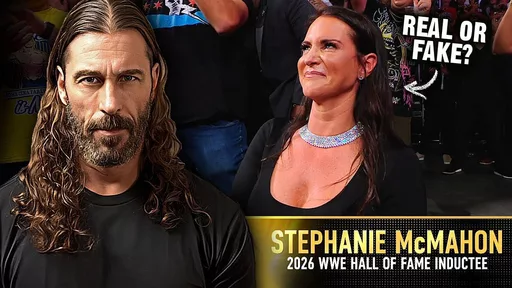
The Case Against Stephanie McMahon‘s Hall of Fame induction: Why a “hall of Shame” Might Be More Fitting
The debate surrounding WWE Hall of Fame inductions is always lively, but the potential inclusion of Stephanie McMahon has ignited particularly strong opinions. While her family legacy is undeniable,a growing chorus - including veteran wrestling personality Bill Richards - argues that her on-screen contributions don’t warrant celebration,and perhaps even deserve recognition in a “Hall of Shame” rather.
This isn’t about dismissing the McMahon family’s impact on wrestling.It’s about critically evaluating Stephanie mcmahon’s individual performance and its effect on WWE programming. As a long-time observer of the industry, it’s clear that her career trajectory, while marked by initial promise, ultimately fell short of Hall of Fame caliber.
Shane McMahon: A Clear Contrast
The comparison to her brother, Shane McMahon, is frequently drawn – and rightfully so. Richards powerfully articulates this point, highlighting Shane’s willingness to take physical risks, deliver compelling promos, and consistently create memorable moments, even during the volatile attitude Era. Shane earned his reputation through demonstrable in-ring work and captivating character development.
Stephanie’s career, however, feels…inconsistent.While she showed flashes of brilliance, particularly in her early antagonistic role, those moments were often overshadowed by repetitive storylines and a perceived lack of accountability within the narrative.
The Rise and Fall of “The Authority”
Many recall Stephanie’s initial return as a captivating heel. For roughly a year,she was genuinely compelling television. But the subsequent “Authority” storyline with Triple H quickly devolved into a monotonous cycle of opening-segment promos.The initial excitement quickly faded as fans grew weary of the predictable power dynamics and lack of genuine consequences.
As Richards points out, the novelty wore off rapidly. What began as a welcome return quickly became a drag on the show, “pulling teeth” for viewers who anticipated something more considerable. The constant dominance,without believable challenge,ultimately diminished the impact of the characters involved.
The Problem of Untouchability
A crucial element of compelling wrestling storytelling is balance. Heels need to be vulnerable, and faces need to overcome adversity. Early in her career, Stephanie benefited from Vince mcmahon’s willingness to allow her character to face repercussions. This created a dynamic where her actions had consequences, making her storylines more engaging.
However, as time went on, a perceived overprotectiveness crept in. Stephanie became an “untouchable” figure, routinely slapping wrestlers without ever facing any meaningful retaliation. This imbalance undermined the credibility of the storytelling and created a frustrating disconnect for fans.
The lack of comeuppance, as Richards notes, transformed her from a compelling antagonist into an oppressive, looming presence, ultimately making her character less effective. The comparison to Vince McMahon, who routinely embraced comedic humiliation to build heat, is stark. Vince allowed himself to be vulnerable, which made him a more captivating character.
A Shift in Outlook
The issue, it seems, wasn’t Stephanie’s inherent ability, but a shift in how her character was perceived and protected. Someone – whether Stephanie herself, Vince, or Triple H – began to prioritize invulnerability over compelling storytelling. This resulted in a character that felt increasingly disconnected from the audience and ultimately detrimental to the overall product.
Ultimately, while Stephanie McMahon’s contributions to WWE’s buisness side are significant, her on-screen work doesn’t consistently reach the standard typically associated with Hall of Fame induction. The argument for a “Hall of Shame” isn’t about personal animosity; it’s about upholding the integrity of the honor and recognizing those who truly elevated the art of professional wrestling.





