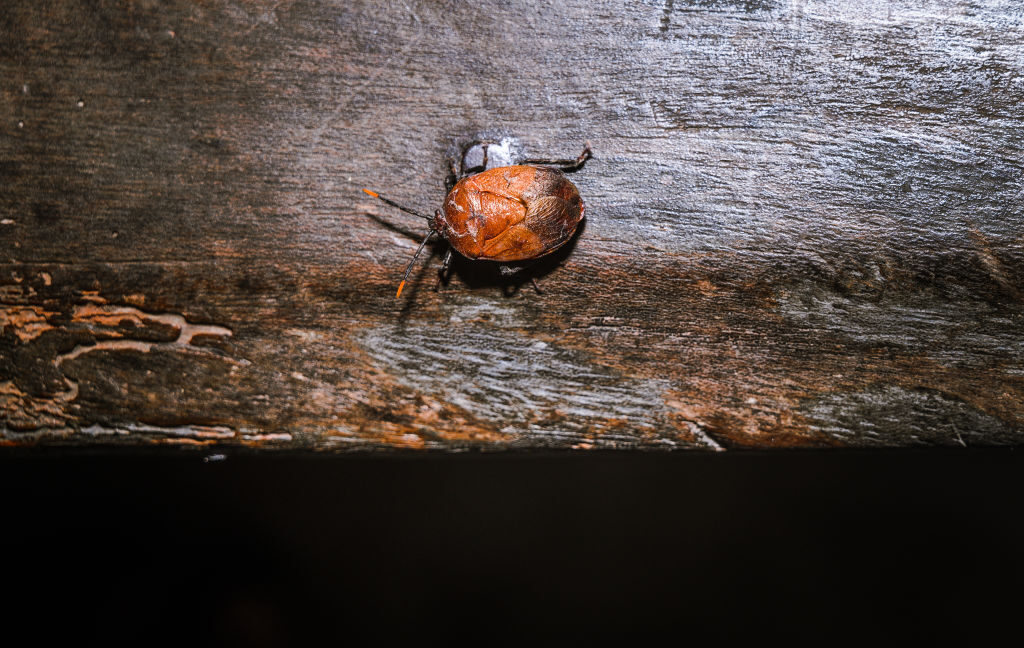
The Amazing Secret Hidden in Stinkbug Legs: It’s Not what You Think
Have you ever wondered how insects “hear” the world around them? For decades, scientists believed female stinkbugs of the Dinidoridae family possessed unique hearing organs on their hind legs.But what if everything we thought we knew was wrong? Prepare to be amazed,because a recent discovery reveals these structures aren’t for listening at all – they’re something far more extraordinary.
This isn’t just a minor correction; it’s a complete paradigm shift in our understanding of insect biology. Let’s dive into the fascinating story of how researchers uncovered this hidden world, and what it means for the future of entomological study.
A Long-Held Belief Challenged
Many insects utilize tympanal organs – essentially biological eardrums – to perceive sound. These are commonly found on legs,as seen in grasshoppers,mantises,and moths. For years, the Dinidoridae stinkbug was thought to follow this pattern, albeit wiht a twist: their “eardrums” were located on their hind legs instead of their front.
But a team of Japanese researchers recently questioned this assumption. They focused on Megymenum gracilicorne, a Dinidoridae stinkbug species native to Japan, and embarked on a detailed examination of these supposed tympanal organs. What they found was truly unexpected.
Portable Gardens: A Fungal Nursery on the Move
The “tympanal organs” weren’t organs at all. Instead, they are mobile fungal nurseries – a phenomenon never before observed in the insect world. Imagine carrying your own miniature garden around with you!
Dinidoridae stinkbugs are a relatively small family, exclusively found in Asia. while they’ve received some scientific attention, it hasn’t been nearly as extensive as their more common relatives like Pentatomidae. Previous research relied heavily on visual descriptions and classifications.
“Most research relied on taxonomic and morphological approaches,” explains Takema Fukatsu, an evolutionary biologist at the National Institute of Advanced Industrial Science and Technology in Tokyo. “Some taxonomists described an enlarged part on the hind legs of female Dinidoridae that looked like the tympanal organ found in crickets.” This visual similarity led to decades of misinterpretation.
Unraveling the Mystery: How the Truth Came to Light
Fukatsu’s team initially set out to understand the impact of this unusual hind leg placement on the stinkbugs’ hearing abilities. Though, their investigation quickly took an unexpected turn.
Early analysis revealed a critical absence: “We found no tympanal membrane and no sensory neurons,” Fukatsu stated. “The enlarged parts on the hind legs had nothing to do with hearing.”
Instead, the structures were riddled with thousands of tiny pores, each teeming with benign filamentous fungi. These pores connected to secretory cells, which appeared to be releasing nutrients – essentially providing sustenance for the fungal growth.
This discovery raises a multitude of questions. What is the purpose of this symbiotic relationship? how does the stinkbug benefit from carrying this fungal garden? And what implications does this have for our understanding of insect evolution and behavior?
Evergreen Insights: The Power of Symbiosis in the Natural World
The Dinidoridae stinkbug’s fungal nursery highlights the incredible power of symbiosis – the mutually beneficial relationship between different organisms – in shaping the natural world. Symbiotic relationships are far more common than we often realize,driving evolution and influencing ecosystems in profound ways.
Consider these examples:
* Mycorrhizal fungi and plant roots: Fungi help plants absorb nutrients, while plants provide fungi with sugars.
* Gut bacteria and humans: Bacteria aid in digestion and immune function, while humans provide a stable surroundings.
* Coral and algae: Algae provide coral with food through photosynthesis, while coral provides algae with protection.
The stinkbug discovery underscores the importance of challenging assumptions and embracing interdisciplinary research. By combining expertise in entomology, mycology, and evolutionary biology, scientists are uncovering hidden complexities in the natural world.
Frequently Asked Questions About stinkbug Fungal Nurseries
Q: What are tympanal organs,and why were scientists initially misled about the Dinidoridae stinkbug?
A: Tympanal organs are biological structures insects use to detect sound,functioning similarly to