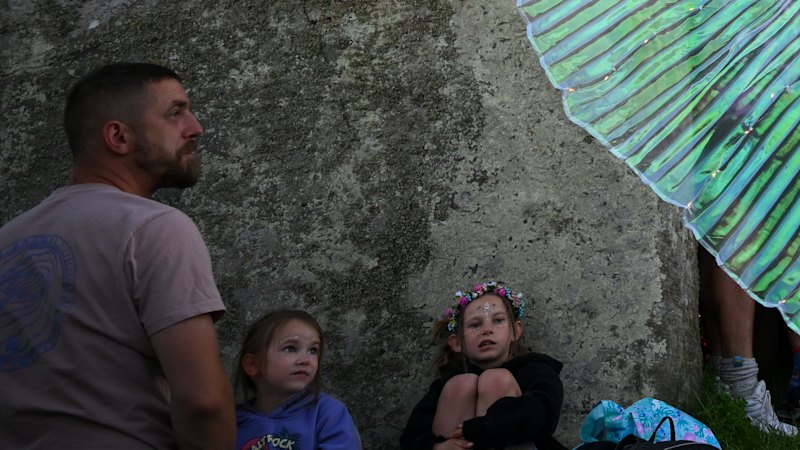
Thousands of revelers gathered at the Neolithic monument of Stonehenge on June 21 to mark the summer solstice, while ongoing archaeological investigations nearby suggest that ancient populations engaged in similar seasonal gatherings on the surrounding landscape thousands of years ago. As the sun rose over the Wiltshire horizon, observers continued a long-standing tradition at the UNESCO World Heritage site, which remains a focal point for understanding prehistoric ritual activity in Britain, according to English Heritage.
Recent excavations in the Stonehenge landscape have provided new evidence that the area served as a hub for communal activity long before and during the construction of the iconic stone circle. Archaeologists working with the Stonehenge Riverside Project and other research initiatives have identified evidence of large-scale feasting and seasonal occupation at nearby sites such as Durrington Walls, which dates back approximately 4,500 to 5,000 years, as noted by the National Trust. These findings indicate that the solstice was not merely a singular event at the monument itself, but part of a wider, complex social landscape.
Understanding the Neolithic Solstice Connection
The alignment of Stonehenge with the movements of the sun has been a subject of intense study for decades. During the summer solstice, the sun rises behind the Heel Stone in the northeast part of the horizon and its first rays shine into the heart of the stone circle. According to research published in the journal Antiquity, this architectural intentionality suggests that the site functioned as a sophisticated calendar or ritual space for Neolithic communities.
While the stones themselves are the most visible remnants of this activity, the surrounding landscape—including the Cursus and various barrows—provides context for how people interacted with the environment. The recent focus on nearby hillsides and settlements like Durrington Walls reveals that the people who built Stonehenge were part of a highly organized society capable of coordinating massive labor projects and seasonal migrations. These communities likely traveled from across Britain to participate in rituals, reinforcing social bonds through shared labor and consumption, as reported by University College London researchers.
Archaeological Discoveries in the Stonehenge Landscape
Excavations conducted over the last two decades have transformed the understanding of the area. Archaeologists have uncovered post holes, debris from feasting, and evidence of timber structures that predate or were contemporary with the stone monument. These discoveries demonstrate that the “mystery” of Stonehenge is not limited to the stones themselves, but extends to the entire ritual complex that spans the Salisbury Plain.
The Historic England archives highlight that the landscape is peppered with hidden features, including pits and ditches that align with astronomical events. By analyzing the soil and artifacts found in these locations, researchers have been able to reconstruct a timeline of human activity that suggests a continuity of ritual practice spanning millennia. This evidence challenges older theories that viewed Stonehenge as an isolated monument, instead framing it as the center of a dynamic, interconnected cultural zone.
Who Participates in Modern Solstice Gatherings?
Today, the summer solstice at Stonehenge attracts a diverse mix of tourists, modern Druids, pagans, and local residents. The event is managed by English Heritage, which coordinates access to the stones to ensure the preservation of the site while allowing for public celebration. According to official guidelines, the gathering is subject to strict safety protocols, including prohibited items and environmental protection measures, to manage the influx of thousands of visitors annually.
For many, the pilgrimage is an opportunity to reconnect with the ancestral past. The persistence of these gatherings, despite the passage of five millennia, underscores the enduring human desire to mark the passage of the seasons. While the specific rituals performed by Neolithic people remain a matter of academic interpretation, the act of gathering at the site has become a modern ritual in its own right.
Future Research and Site Preservation
Archaeologists continue to survey the landscape using non-invasive technologies, such as ground-penetrating radar and aerial surveys. These methods allow for the identification of subterranean features without disturbing the sensitive archaeological deposits. The Council for British Archaeology emphasizes that as new data emerges, the narrative of Stonehenge evolves, moving away from static interpretations toward a more nuanced understanding of prehistoric life.
The next major checkpoint for the site involves ongoing conservation efforts and the interpretation of new data from current research projects. Updates regarding site management and archaeological findings are regularly published by English Heritage. Readers interested in the latest developments are encouraged to follow the official reports from the Stonehenge and Avebury World Heritage Site management team. We invite our readers to share their thoughts on the significance of these ancient landscapes in the comment section below.
Worth a look