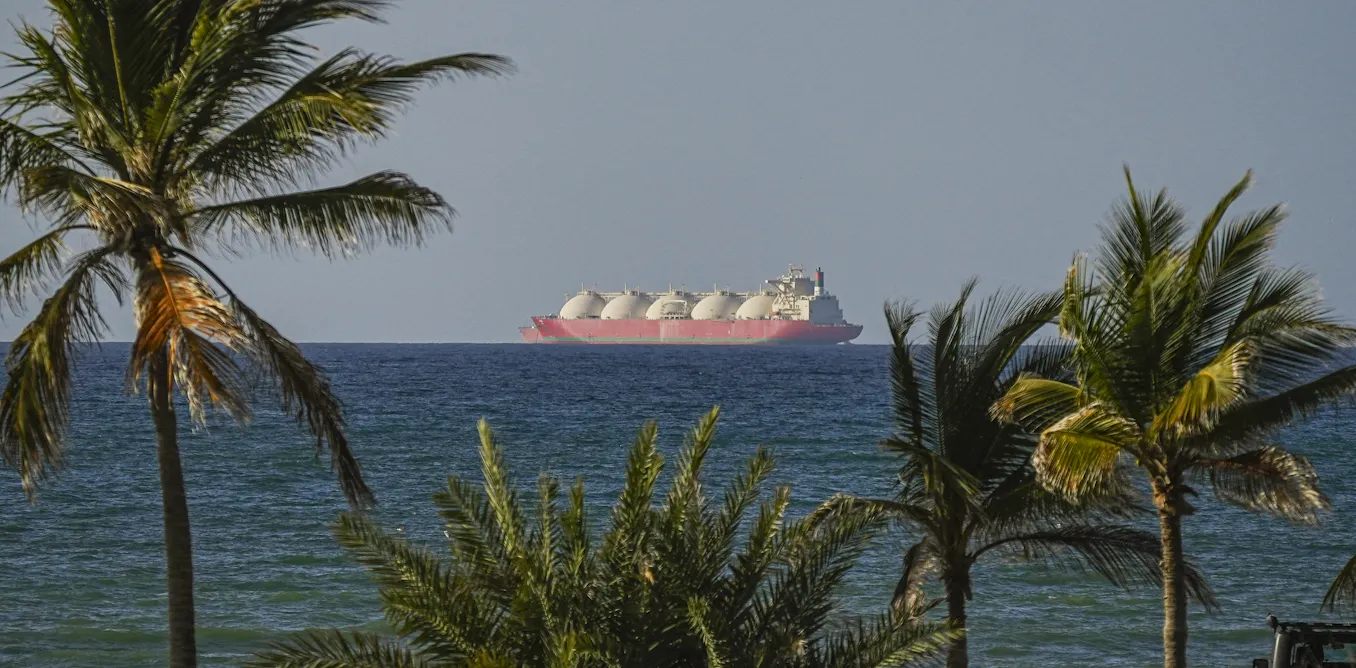
The Strait of Hormuz is more than just a geographic bottleneck; it is a volatile intersection of global energy security and conflicting interpretations of international law. As a primary choke point through which approximately 20% of the world’s oil passes, the narrow waterway is currently the center of a high-stakes legal and military standoff between the United States and Iran.
The current tension has escalated into active conflict, with U.S. President Donald Trump implementing a blockade of the passage. Even as the U.S. Views the strait exclusively as an international waterway, Tehran maintains that the waters are part of its territorial sea. This fundamental disagreement has led to a cycle of “lawfare,” where both nations utilize divergent legal frameworks to justify actions—ranging from Iran’s charging of tolls to the U.S. Blockade—that the other side deems illegal.
For global markets, the stakes are immense. Recent reports indicate that the U.S. Blockade has already resulted in ships being turned back, putting significant pressure on global trade. The ripple effects are extending beyond the immediate combatants, as the blockade puts major economies, including China and India, in the crosshairs of the escalating pressure on Iran.
The Legal Divide: UNCLOS and the Law of the Sea
At the heart of the dispute is the “law of the sea,” a complex network of international laws, customs, and agreements that dictate access and control over the world’s oceans. The primary instrument in this framework is the United Nations Convention on the Law of the Sea (UNCLOS). Completed in 1982 and entering into force in 1994, UNCLOS was designed to create a stable set of zones to prevent the exact kind of conflict currently unfolding in the Persian Gulf.
However, UNCLOS cannot serve as a definitive legal bridge between Washington and Tehran because neither country has ratified the treaty. While 171 countries and the European Union have ratified the convention, the United States has neither signed nor ratified it. Iran signed the treaty in 1982 but has yet to ratify it. This creates a legal vacuum where both parties rely on different eras of maritime law to justify their sovereignty and security operations.
The Iranian Perspective: Innocent Passage
Iran views the Strait of Hormuz through the lens of international law that predates UNCLOS. Specifically, Tehran relies on the 1958 Territorial Seas Convention and the International Court of Justice’s 1949 ruling in the Corfu Channel case. These older standards establish the right of “innocent passage.”
Under the principle of innocent passage, foreign ships are permitted to pass through international straits as long as they do not engage in activities that harm the security of the coastal states. This gives Iran—and Oman—the authority to enforce safety and environmental regulations and the discretion to determine if a passage is “non-innocent.” However, Iran has gone beyond these standards by claiming the right to suspend passage through its half of the strait, citing the waters as its territorial sea. This claim is seen as a violation of the 1958 Convention, which stipulates that innocent passage cannot be suspended when a territorial sea is likewise an international strait.
The U.S. Interpretation: Transit Passage
The United States operates under a more modern interpretation, arguing that the Strait of Hormuz requires “transit passage” as defined by UNCLOS. Although the U.S. Is not a member of the convention, it contends that the concept of transit passage has become a part of customary international law that applies to everyone.
Transit passage is a more liberal standard than innocent passage. It shifts the balance of power away from the coastal state and toward free navigation, requiring that passage be “continuous and expeditious.” Crucially, transit passage allows for overflight and the movement of submarines below the surface—rights not guaranteed under “innocent passage.” To assert this right, the U.S. Conducts regular “Freedom of Navigation” patrols to reject maritime claims it deems excessive or illegal.
Persistent Objectors and Customary Law
The U.S. Position is not universally accepted. The United States is part of a small group of nations—including the United Kingdom, France, Australia, Thailand, and Papua Recent Guinea—that argue transit passage is required by custom. In international law, a “custom” is established when a practice is consistent and widely accepted as legal. If a practice becomes customary law, it applies to all nations regardless of treaty membership.
Iran counters this by claiming it is a “persistent objector.” Under the persistent objection rule, a country can be exempt from an emerging customary standard if it has consistently and openly opposed that standard from its inception. Iran’s objection to transit passage has been consistent; both Iran and Oman argued against it during the original UNCLOS negotiations and reaffirmed this stance upon signing the treaty in 1982. Tehran argues that since transit passage was a compromise reached within UNCLOS, only those who ratify the treaty can claim those specific rights.

Economic Impact and the Path to Stability
The legal deadlock is not merely an academic exercise; it has direct consequences for the global economy. The current blockade has created significant disruption, which is particularly felt by nations dependent on the strait for energy imports. Beyond the military presence, the countries that flag the oil tankers—essentially the nations responsible for the vessels—must now navigate these conflicting legal perspectives to protect their commercial interests.
The current situation remains fluid. President Trump has recently stated that the war is “close to over” and suggested that talks with Iran could resume within the next two days. However, as of April 15, 2026, the Hormuz blockade continues, and the legal discrepancies regarding the status of the waterway remain unresolved.
For a stable post-war status to be achieved, there must be a shared commitment to a single set of rules. Without an agreement on whether the strait is governed by “innocent passage” or “transit passage,” the waterway will likely remain a flashpoint for international conflict.
The next critical checkpoint will be the potential resumption of diplomatic talks between the U.S. And Iran over the coming 48 hours to determine if a ceasefire or a lifting of the blockade is imminent.
We invite our readers to share their perspectives on the intersection of international law and energy security in the comments below.